
 E-Paper



Punjab sees spike in dog bites with over 900 cases daily
Punjab reports nearly 930 dog bite cases daily, totaling 2.5 lakh this year, surpassing last year's count, with no compensation policy for victims yet.


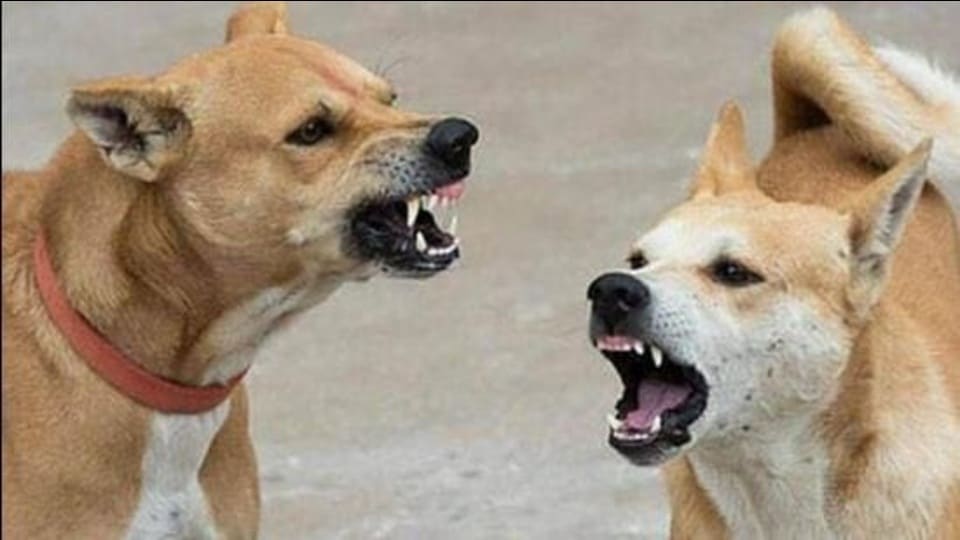
Punjab continues to witness a surge in dog bite incidents, with the state reporting nearly 930 cases daily. With 2.5 lakh cases reported till September 30, the state has already surpassed last year’s count of 2.13 lakh.
The data of the Punjab Health Department, a copy of which is with HT, revealed that Amritsar has reported a maximum of 40,331 dog bite cases this year. Amritsar is followed by Ludhiana and Patiala districts, with 27,701 and 18,047 cases, respectively.
Over the past five years, numbers have increased from 1.1 lakh in 2020 to 2.5 lakh in 2025 (until September).
Data further reveals that 1.7 lakh dog bite cases were of grade 2, while 38,852 cases were grade 3. A grade 2 dog bite means the dog’s teeth made contact with the skin but did not lacerate it. It also includes marks, scrapes, or minor bruising. Grade-3 dog bite cases are that where there is a single or multiple transdermal bite with contamination of the mucous membrane with saliva.
Dr Amandev Singh, assistant professor, community medicine department, government medical college, Patiala, said, “Of all the cases, around 80% of dog bite cases are that of stray dogs.”
He added that grade-3 dog bites require anti-rabies serum (ARS) along with anti-rabies vaccine as part of the treatment, while grade-2 dog bites require only vaccination.

Dr Sumeet Singh, programme officer, national rabies control programme, said that though rabies was 100% fatal but it can be avoided with timely treatment.
“People should not ignore any type of dog bite and seek treatment in the nearest health centre at the earliest. Treatment of dog bite cases is absolutely free,” he added.
No policy for compensation
Both the Punjab government and the health department is yet to issue any policy standard operating procedures (SOPs) for providing compensation to bite victims.
The state health department had constituted a five-member committee to formulate SOPs following the Punjab and Haryana high court orders last year, but no policy has been officially notified so far. The health department SOPs are necessary for the government doctors to diagnose bite cases and fix compensation for the victims.
HC, in its order, had said that the compensation should be ₹10,000 for each bite mark and ₹20,000 for every 0.2 cm of wound where the flesh is bitten off.
A dog bite victim in Patiala, who didn’t wish to be named, said that he recently approached a local court, following HC directions; however failed to secure any compensation as there was no policy.
A senior IAS officer, pleading anonymity, said, “The government has not formulated any policy. We have written to the state government to issue guidelines for providing compensation to dog bite victims.”


