
 E-Paper



Rajouri terror attacks trigger revival of J&K’s VDCs
Village defence committees, which successfully repulsed targeted attacks during the peak of militancy, being armed with automatic weapons


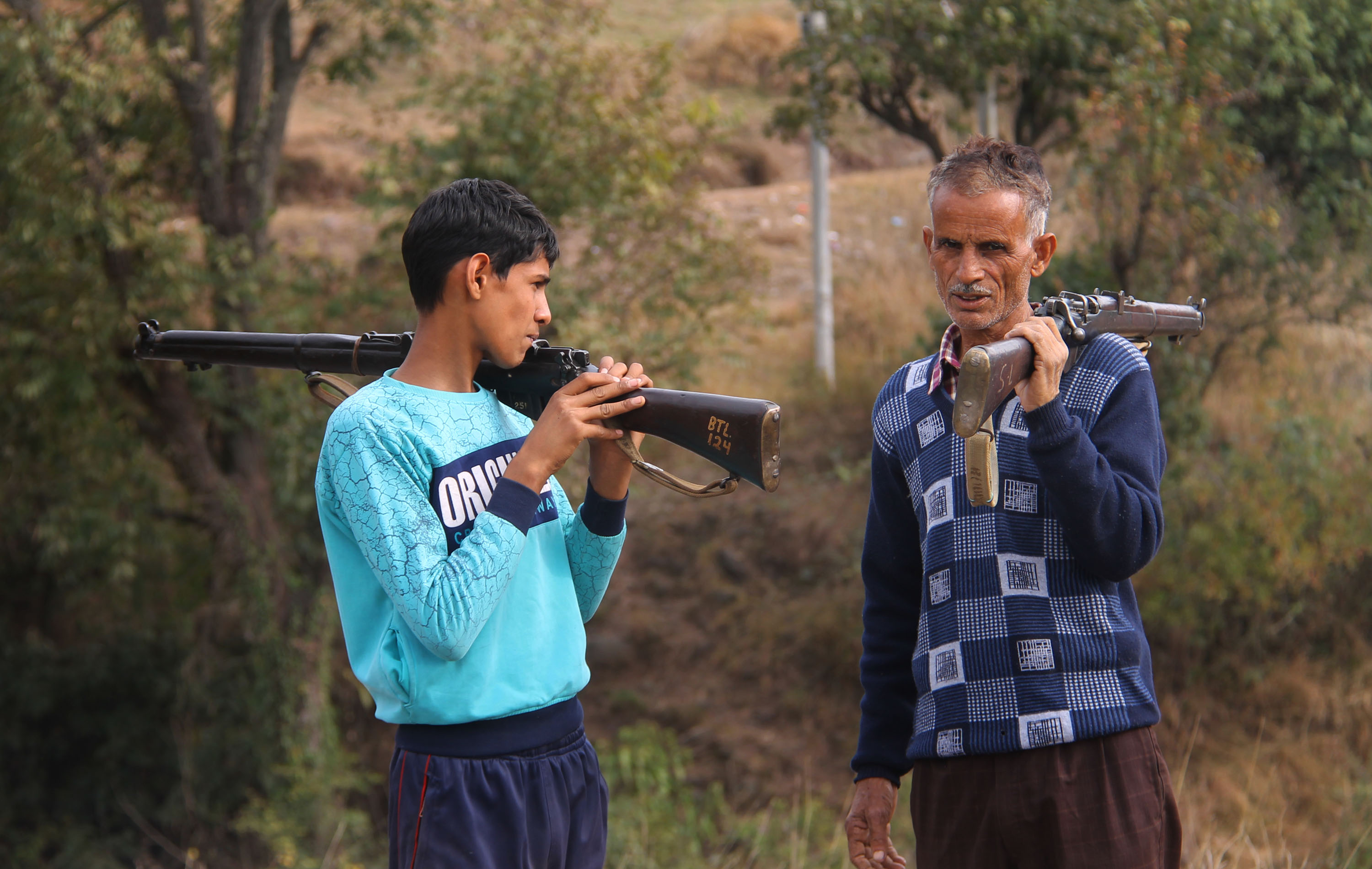
Armed with their .303 rifles and Aadhar cards, a motley group of villagers, including a woman, queue up in a small open space by a dingy two-room police picket at Baljarallan village, 5km from Dhangri in Rajouri district that came under terror attacks on January 1 and 2. They are members of village defence committees (VDC), the first line of defence in remote border villages of Jammu region that repulsed AK-47 wielding terrorists during the peak of militancy in the ’90s. The recent targeted attacks on Hindu families at Dhangri that left seven members, including two children, dead, triggered the revival of VDCs across the Rajouri, Poonch and Jammu districts. A majority of residents in this belt south of the Pir Panjal are Hindus who fled Pakistan-occupied Kashmir after Partition.
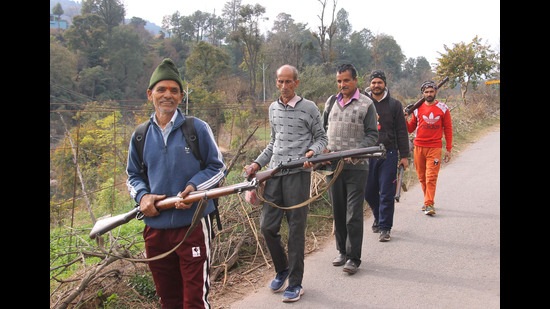
On January 2, Jammu and Kashmir lieutenant governor Manoj Sinha said the VDC in Dhangri will be given self-loading rifles (SLRs) for effective protection. Sarpanch Dheeraj Kumar Sharma says, “We have 170 ex-servicemen and 72 VDC members but given the vast area and scattered population of 5,000, we need 400 automatic weapons. The administration has provided us 40 SLRs in the first phase.”
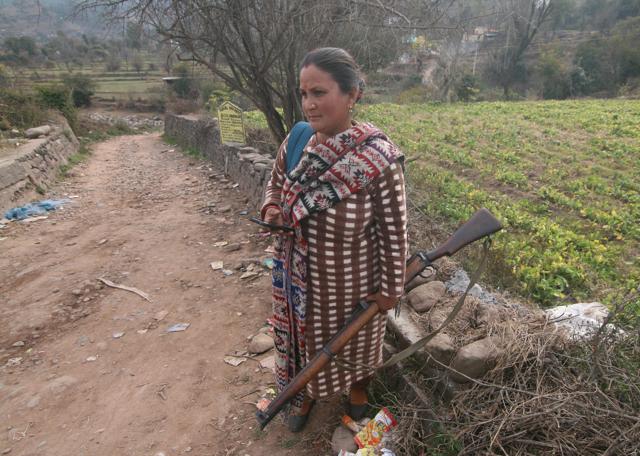
Dhangri, 10km from Rajouri town, is in a valley spread over 20 sq km surrounded by mountains.
At the police post, Rajouri station house officer Fareed Ahmed checks the rifles and keeps a count of the ammunition provided to 40 VDC members of Baljarallan and adjoining villages. “The police asked us to get our credentials verified. They are inspecting our weapons and accounting for the ammunition,” says ex-serviceman Om Prakash Sharma, 57, from Peho Manyala.
Weapon upgrade and training
The administration is taking back .303 rifles from VDC members who have attained 60 years and issuing them to eligible members in their families after police verification. Several youngsters have applied for the weapons.
“The administration’s priority is that at least one SLR should be given to an ex-serviceman in each VDC, while the rest of the members should have.303 rifles. Where ex-servicemen are not available, the SLR is being given to a responsible villager with a clean record,” says the Dhangri sarpanch.
Army, CRPF and police have started training VDC members in phases in villages of Rajouri, Poonch, Kishtwar, Doda, Ramban, Reasi, Udhampur, Kathua, Samba and Jammu districts.
Pakistan’s design to set off migration
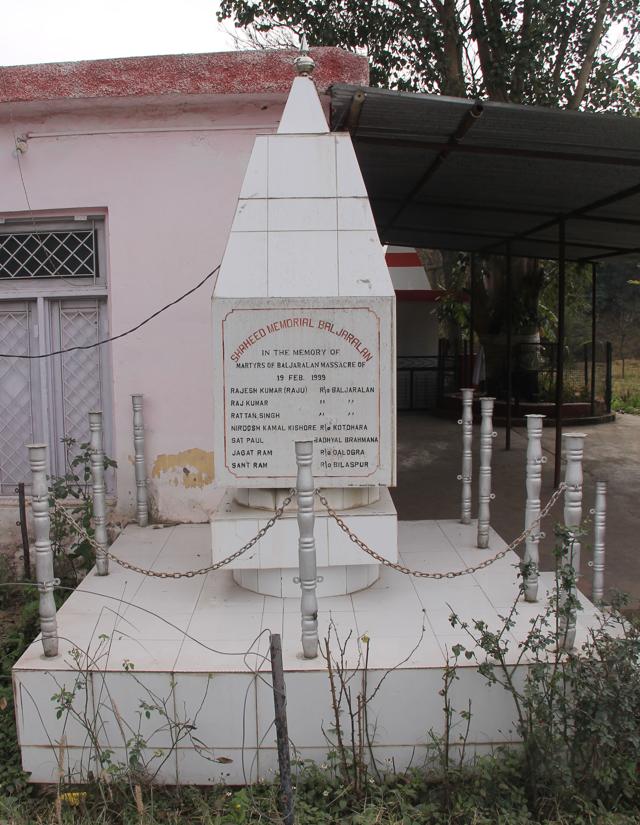
The Dhangri attack comes after February 1999 when Baljarallan witnessed a massacre with terrorists firing indiscriminately at the wedding of a Hindu family, killing seven members. Sushil Kumar Sharma, now 58, recalls how his younger brother Rajesh Kumar, then 26, had fallen prey to terror that fateful night. “Hindus are on their radar again,” he says.
A senior police officer said the two terrorists who struck at Dhangri were from Pakistan and suspected to be from the Lashkar-e-Taiba.
There are 4,125 village defence committees in Jammu region with 5,200 VDC members in Rajouri district alone.
Rajouri and Poonch, which have a hilly terrain spread over 4,304 sq km along the Line of Control, remain the preferred route of infiltration for terrorists from Pakistan.
VDC members of Dhangri, Baljarallan, Peho Manyala, Laddore and Bindi villages say that the recent attacks were part of Pakistan’s design to trigger migration of minorities from the hills of Jammu.
Though the Union ministry of home affairs rushed 18 companies of Central Reserve Police Force (CRPF) to flush out militants from the dense jungles in the two districts and crack down on terrorism, villagers believe only better-armed VDCs can guarantee security.
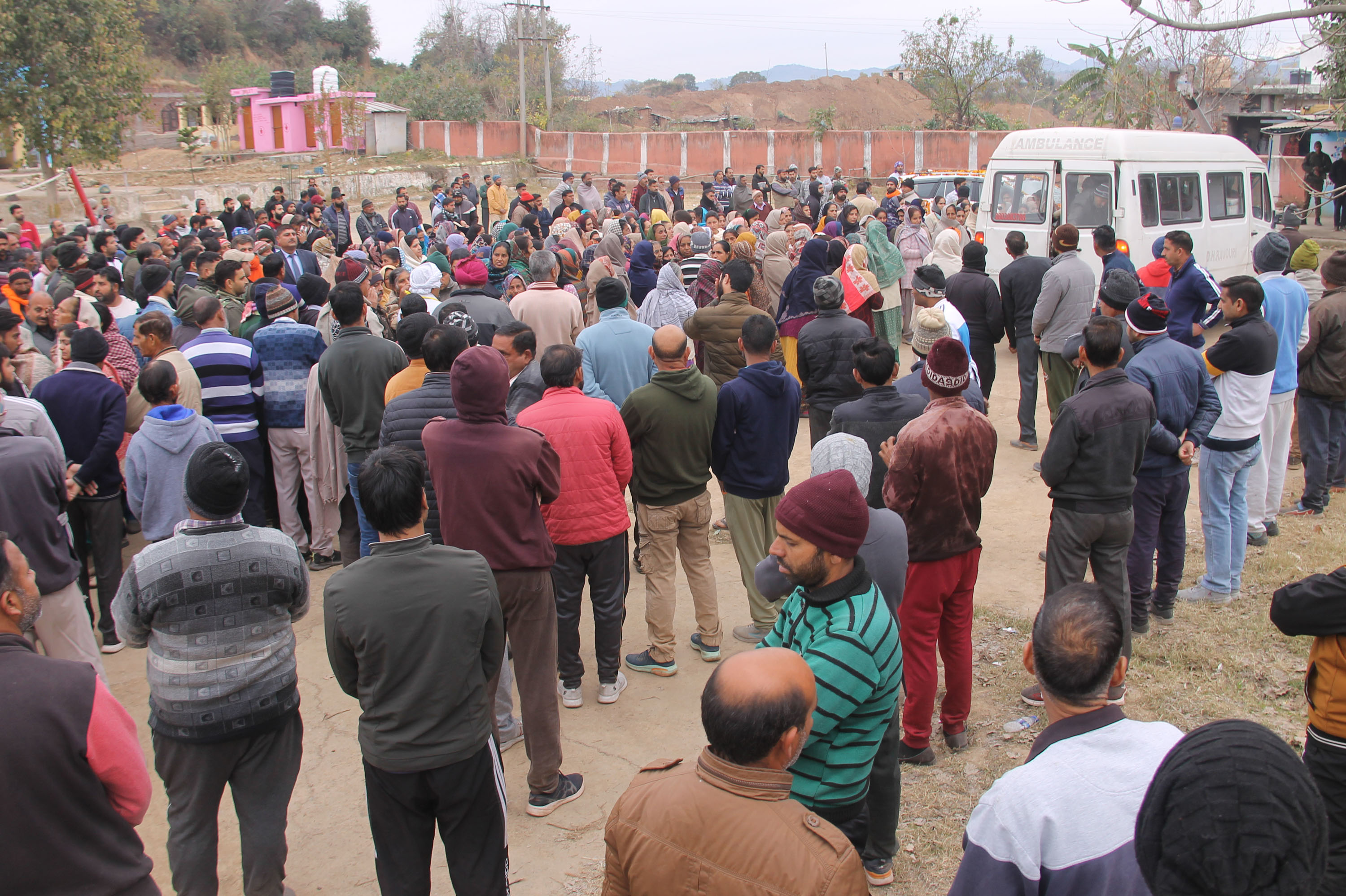
Former J&K Police chief SP Vaid, the man behind the successful experiment of VDCs, agrees that what unfolded at Dhangri was part of Pakistan’s strategy to trigger migration from remote areas of Jammu.
“During the peak militancy in the early ’90s, we created VDCs. I was the Udhampur SSP when terrorists attacked the far-flung village of Bagankote, now in Reasi district. Villagers took on the terrorists with axes and inflicted casualties. They demanded weapons to take on militants and that’s how the first VDC was set up,” he recalls, adding he sought then DGP MN Sabharwal’s permission to give 10 rifles with ammunition to the villagers.
Similar demands came from remote villages of the region, prompting then principal secretary, home, SS Billowria to moot a proposal to then governor General KV Krishna Rao (retd), who in turn got the Centre’s approval to arm VDC members.
After the security situation improved over the years, VDCs were rendered dormant. Though their mandate was to protect villagers in case of a terror attack, there have been complaints against members for misusing their weapons to settle personal scores. An estimated 100 FIRs have been registered against VDC members for murder and rioting since their inception.
VDCs indispensable for fighting terror
2023 is a crucial year for J&K as it is set to host G20 summit meetings and the assembly elections are to be held. “At Dhangri, Pakistan wanted to inflict more casualties among Hindus to see a backlash in the form of Hindu-Muslim clashes and show the international community that J&K is disturbed,” the former DGP says, anticipating more such attacks.
“VDCs have played a crucial role in breaking the backbone of terrorism. It’s high time they are revamped with better weapons, training and emoluments. Had the then government not constituted VDCs in Jammu, terrorists would have succeeded in triggering migration from the upper reaches of Jammu region, like what we saw in Reasi district in the ’90s. Only VDCs checked the disturbing trend. Today, Pakistan is trying to repeat what it did in Kashmir. VDCs should have members from all communities. Terrorism has killed more Muslims than Hindus in the region,” he says.
In shadow of the gun
Balkrishan, 40, the lone VDC member of Dhangri who fired from his .303 rifle that forced the terrorists to flee on January 1, reiterates that only VDCs can ward off terrorists and it’s time all members are provided automatic weapons. “Security forces can’t be deployed in every village,” he says.
Well before dusk, he tends to his cattle, shifts his children and mother to the basement of his house located at the far end of the village, picks up his rifle and stands guard.
Residents of Dhangri, which resembles a town, have sought an army camp to dominate the hills. Located 10km from Rajouri and 50km from the Line of Control, the village is remote given its topography.
After the recent attacks, 72 VDC members have formed a WhatsApp group to stay connected and lay a cordon in case of an attack. The group includes ex-servicemen and officials of the administration.
The revival of VDCs was overdue, says a 50-year-old member from Peho Manyala, requesting anonymity. He was issued 100 cartridges for his .303 rifle and has fired only five rounds during a practice session organised by the army in 2001 and since then 95 cartridges are lying with him. “In 22 years, there has been no firing practice,” he says, doubting the ammunition.
Living in fear
Sunita Devi, 47, who runs a private school at Baljarallan, and her husband, Yashpal Sharma, 50, a government teacher, say, admit there is a sense of fear among residents in the area. “We are back home well before 6pm. We lock the gate, bolt the doors and place heavy objects to prevent the entry of any intruder. We step out only after 7.30am,” says Sunita.
The couple, which has been considering shifting to Jammu, endorsed the demand to strengthen VDCs.
“Targeted attacks trigger silent migration. Though no one has left Baljarallan village so far, the families of the seven Hindus killed in 1999 have shifted to Jammu,” says Yashpal.


