
 E-Paper



Record 4.3 lakh tourist visited Kashmir’s Tulip garden this year
The numbers went up 15% from last year’s 3.77 lakh visitors and almost doubled the 2.3 lakh that visited the garden in 2021


Tourist influx at the Kashmir’s iconic Tulip garden — the largest in Asia has witnessed a surge with each passing year.
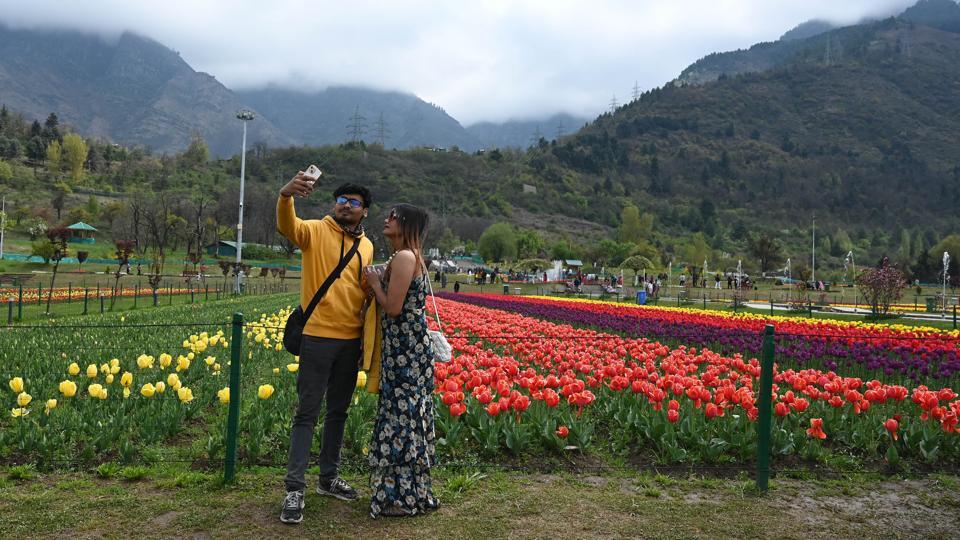
As the authorities decided to close the garden for this season from Thursday, a record footfall of 4.35 lakh-- highest since its inception in 2006, was witnessed this year.
As the authorities decided to close the garden in the picturesque capital Srinagar for this season from Thursday, the place witnessed an all-time record footfall of 4.35 lakh tourists and visitors this year. These numbers were despite incessant rains in April and fall in day temperatures in the valley owing to the light snowfall over mountains.
The numbers are 15% more than last year’s 3.77 lakh visitors and almost double of 2.3 lakh in 2021.
“We recorded an all time high number of 4.35 lakh tourists mostly from various parts of the country, locals and some foreigners who visited the garden till Tuesday. We expect the number to increase to 4.5 lakh as the day ends after which the garden will be closed to the public,” said incharge of the garden, Asif Yatoo.
The garden, which has earned a spot in the World Book of Records (London), was opened on March 23 with over 1.7 million tulip bulbs.
The magnificent 30-hectare terraced garden is situated on the foothills of Zabarwan mountain range, on the banks of the Dal Lake in Kashmir’s summer capital Srinagar. It was laid in 2006 and has caught the imagination of visitors from across the country and outside.
“While 80% were tourists from various states, over 1,000 foreign tourists were also among the visitors,” Yatoo said.
The floriculture department, which takes care of the garden, had added five more varieties of tulip taking the overall types to 73. Usually, the tulip bloom starts by late March. The average life of a tulip flower is 20 days and can stretch up to 25-30 days with overall bloom getting extended by adding late-blooming varieties of tulips. The temperature-sensitive flowers need temperature above 15 degrees and below 25 degrees.
The Valley witnessed intermittent rains in Spring causing the temperatures to dip and delaying the bloom. As the life of tulips have ended now, the flowers have almost dried leaving behind their bulbs which will be meticulously removed and stored to be planted again for next year’s bloom.
“Despite the weather, we set a new record of arrivals this year,” Yatoo said.
Alongside the iconic tulip bloom, there were also delicate daffodils, fragrant hyacinths, resplendent roses, charming ranunculi, vibrant muscaria and enchanting iris creating an enchanting tapestry of colours and fragrances. There is a central fountain channel with waterfalls and high-rise fountains.
The garden is divided into 36 plots with 16-18 beds in each plot. There are three parks also inside the garden where the visitors can sit and visualise themselves in a sea of colours, dominated by the Zabarwan Mountains. Various small ornamental trees including the tulip tree decorate the sides of the numerous paths of the garden.
The garden played an important part in wooing more tourists during the past few years. Last year the garden witnessed an all-time high footfall of over 3.7 lakh visitors including locals, up from 3.6 lakh visitors in 2022 and 2.3 lakh in 2021.
“The money flows when 4.5 lakh people visit a place just as the winter ends. This is very good for the tourism sector and for the people associated with it,” Yatoo said.


