Chandigarh has been dear to Deepti Naval, a city she visits frequently to be with her aunt and cousin, and a stopover always in her journeys to mountain retreats. So, it was natural that the City Beautiful would be on the literary map for the launch of her latest book, A Country Called Childhood: A memoir.
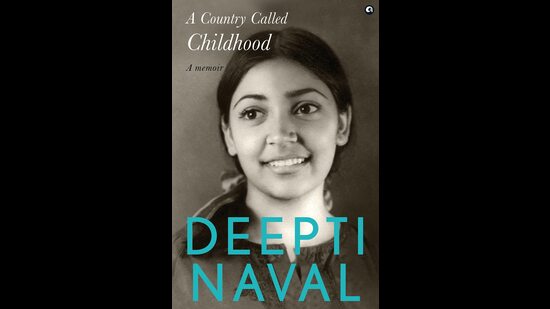
Born in Amritsar in 1952, the actor-writer spent the first 19 years of life in the Chandrawaali family home next to the old mosque in Amritsar’s Khairuddin Masjid. Come August, she will launch her book at Majha House in her home town, and though the structure no longer stands, but it has stayed alive in her mind and heart. This family home comes alive in her memoir with every nook and corner etched out with the finesse of a painter, which she is.
In her first book of poems, Lamhe Lamhe (1983), she takes the readers to her roots in a single line: ‘Kaisa hoga Mumbai sochate thhe ham apne Punjab mein’. Now, why was this chirpy Punjabi girl dreaming of Mumbai. The answer is simple – she nurtured dreams of becoming an actor and collected pictures of Meena Kumari and Sadhna. The family dismissed it as an adolescent dream. They hoped she would pursue painting, a gift she had inherited from her mother, little knowing that this girl of many talents would dabble in much more with rare sensitivity, making a mark always.
There is an interesting anecdote I recall of the time when accompanied by poet-filmmaker Gulzar, Deepti was visiting poet Amrita Pritam’s Hauz Khas home in Delhi. The doors of the poet’s home were always open to visiting writers, no appointments were ever needed. I had taken two little nieces visiting from Darjeeling for a Dilli Darshan trip from Chandigarh and wanted the older one, who showed literary flare even at the age of 10, to show her a great writer, Hamari Amrita of course! But, we had to wait a long time as, she was reading Naval’s manuscript and my niece, Rubina, murmured: “Bhuaji, you must become a great writer, but not so great that we have to wait so long to meet you!”
{{/usCountry}}There is an interesting anecdote I recall of the time when accompanied by poet-filmmaker Gulzar, Deepti was visiting poet Amrita Pritam’s Hauz Khas home in Delhi. The doors of the poet’s home were always open to visiting writers, no appointments were ever needed. I had taken two little nieces visiting from Darjeeling for a Dilli Darshan trip from Chandigarh and wanted the older one, who showed literary flare even at the age of 10, to show her a great writer, Hamari Amrita of course! But, we had to wait a long time as, she was reading Naval’s manuscript and my niece, Rubina, murmured: “Bhuaji, you must become a great writer, but not so great that we have to wait so long to meet you!”
{{/usCountry}}After Deepti and I became acquainted, and I was helping her find some of Amritaji’s books, which were not easy to trace, I reminded her of that day. Deepti, who was playing the poet on stage in Ek Mulaqat with Shekhar Suman playing Sahir Ludhianvi, told me how precious that meeting was for her: “Amritaji read my poems, called her publisher and said ‘this girl, Deepti, writes beautiful poetry.’ He asked for the manuscript and the book was out in a few months. Later, the two of us had a good poet-to-poet bonding. When I was offered this play, I accepted it at once for it would be my return gift to her,” she said.
Amritsar in her heart
All carry their childhood in their hearts and blessed are those who have had a happy childhood, which remains forever an oasis to return to in the stormy and dusty deserts of life. So, it is with Deepti. No wonder, it took her some two decades to complete the book as the author returned with care to each moment, lest anything be lost.
There is the home with grandparents, doting parents, a sister, relatives and many friends. But, not just that, she captures very well the spirit of her hometown of Amritsar where faith, hope and togetherness had not been lost in spite of the wounds of Partition. Deepti says, “ Since the mosque was so close to us with the minarets touching the walls of our home we felt it bonged to us. We would listen to the azaan five times a day for the words first touches our ears and then spread onto others”.
She recounts the touching story of victims of the Jallianwala Bagh massacre being brought to the mosque for their last rights ,as per their faiths for among them were Muslims, Sikhs and Hindus. The next day a collective jalsa of protest was held. “Such was the culture of the people there before Partition, and when talk would start of the communal killings of 1947, people would blame it on the times rather than one another.”
Such was the mood of Amritsar in her salad days and the tranquillity of the shabads written by sages filled the air around Sri Harmandir Sahib (The Golden Temple) and this was the legacy that accompanied her through life, and which she shares with the reader.
Return of the native
Her academic father and educated painter mother were the world for her and her sister. Her father could not get a job as per his qualification, so a decision was taken. They fled the home and hearth to a distant land and culture so that their girls could get better lives. Her father got a teaching job at the New York City University, and Deepti studied liberal arts at Hunter University, but being a determined soul, she returned to Mumbai not Amritsar to fulfil her dream to be an actor. She made a place for herself in the parallel cinema of the 1980s, holding her own in times of major talents such as Smita Patil and Shabana Azmi. She went on to paint, write books, direct and tell lovingly the story of a childhood that gave her dreams and strength to never say die.