For my mother, who was born and raised in orthodox Rawalpindi of the pre-Partition times, the sight of a teenaged girl in a frock riding a bicycle on the lane opposite her home and whistling as she pedalled on was among the first happy memories in Chandigarh in the mid-‘50s.
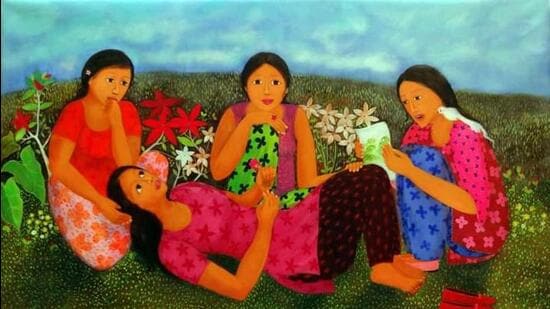
The city, created to replace the lost Lahore as the capital of India’s Punjab, indeed became the symbol of modernity offering equal opportunities to its girls and boys. The route government officials and legal luminaries took from Lahore was via Shimla, the erstwhile summer capital of British India, to the new city designed by Le Corbusier.
One opened one’s eyes to four homes in the city where our extended families were living with children galore in those pre-family planning times and there were lots of older sisters with academic achievements that one looked up to. All this comes to mind for this week came the sad news of my older exuberant cousin Rama Joshi passing away at the age of 82 after a brief illness in Birmingham, which was home to her for the past 55 years.
Sisters in struggle
{{/usCountry}}Sisters in struggle
{{/usCountry}}Mind you, I say cousin now, but in those times it would have been a sacrilege to do so for no such distinctions were made and she was Rama bahenji to us all. The emotional and economic scars of 1947 had affected all and in those hard times the education of the girls gained importance as did the urgency of the boys in the clan of our middle-class family to join the armed forces as Class I officers so that the families could make up for the loss of property and assets in the mass migration from one capital of Punjab to the other.
The girls in our family who showed exceptional intellect were Rama, the elder daughter of my father’s middle brother. and Kamla, the elder daughter of his youngest brother. Not only did they have a special flair for the sciences but were deeply interested in literature, and Rama of course had a great voice and sang beautifully.
While Kamla pursued her higher studies in science, Rama had to make the difficult decision of not joining a medical college because that would have meant big expense but to teach in a school in Shimla as she studied privately to support her younger siblings. And she did it with great aplomb, and a big smile on her charming face.
Look back in love
One of my earliest memories of Rama, after she and her family moved to the city in 1959, was of her learning to ride a bicycle, with we, who were four or five years old at the time, running after the cycle in excitement and glee.
Equally bright in Hindi and English, she got a job as a Hindi teacher in St John’s High School that had just started that year. While teaching there she completed her Masters in English with flying colours and joined as lecturer of English in Government College for Girls in Sector 11. Our close-knit clan was always together for festivals, birthday celebrations, picnics at the Sukhna Lake on moonlit nights, winter-time excursions to the Pinjore Gardens or visits to the old temple at Mansa Devi. The stars at the gatherings would be Rama singing soulful ghazals and Punjabi folk songs and Kamla reciting poetry of Majaz and Neeraj with such finesse: Karvan guzar gaya ghubaar dekhate rahe (The caravan departed and we stood looking at the dust).
Kamla went to the United States of America for higher studies and Rama to the UK after marriage to a suitor, who would just not take ‘no’ for an answer or listen to her excuses about familial responsibilities. While excelling in their respective areas at work, their love for literature remained. Kamla became a short-story writer in Hindi with several books to her credit and turning to poetry in English later in life.
So did Rama after her retirement, publishing short stories and poetry and being sought after in the Hindi literary circles there. And to us younger ones they were always there to encourage and support. Rama’s younger sister, Neelam, worked hard and studied medicine almost as a gift to her older sister who had to sacrifice her ambitions to support her kid brothers and sisters.
When one reads books and research papers about women being pushed into the workforce and empowered as one of the consequences of Partition, we already know it as we have seen our older sisters do so in our own city. It is Kamla who writes thus about the daughters of Partition in a poem titled ‘City named after Goddess Chandi’: In vengeance, a large number of daughters, of Chandi’s city, became doctors, engineers, magistrates, teachers and journalists. They lived...”