
 E-Paper



Sangrur hooch tragedy shows liquor mafia thrives in Punjab
The recent death of 20 labourers in villages reveals a well-organised network of bootleggers, while vend owners complain of police inaction on substandard, cheaper liquor trade costing them dear


The recent death of 20 people, all of them daily wage labourers, in an illicit liquor tragedy in Sangrur, chief minister Bhagwant Mann’s home district, has again exposed the easy availability of toxic alcohol in villages through a well-organised network, puncturing the Punjab government’s claims of clamping down on the mafia.
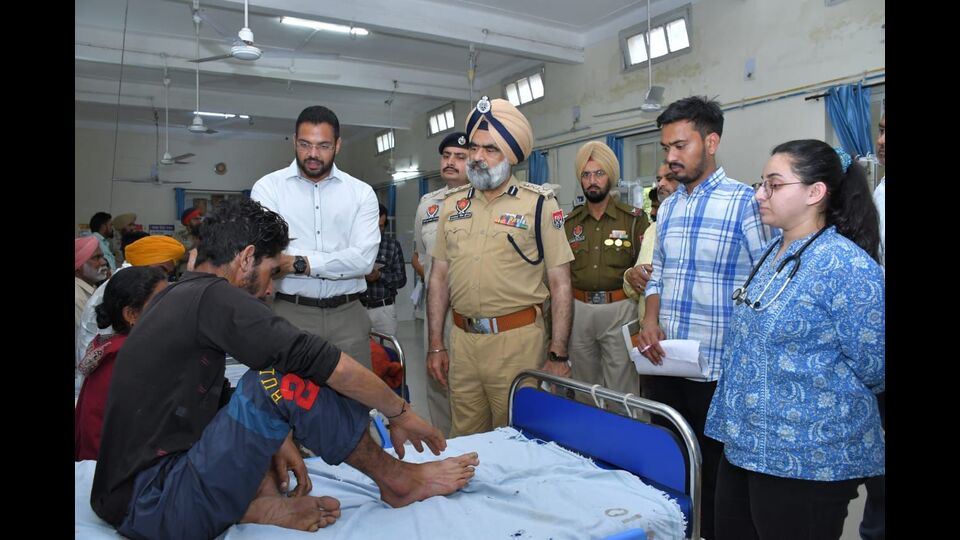
It seems no lessons have been learnt since the Tarn Taran and Amritsar liquor tragedy of 2020 in which 123 people, most of them villagers, lost their lives to spurious liquor. In the Sangrur illicit liquor case, of the 10 accused arrested, police found nine were already involved in the trade for years.
The new entrant to the racket was mastermind Harmanpreet Singh, 35, of the adjoining Patiala district, who made the liquor by mixing cheap methyl alcohol or methanol instead of ethanol and distributed it through a network of bootleggers.
Police said that Harmanpreet, who had served an 11month jail term in a kidnapping case in 2022, used to make the substandard liquor, which cost him ₹30- ₹40 a bottle, at his house in Taipur village of Patran block. Unlike the banned hooch brewed by villagers through traditional methods that take weeks, the spurious synthetic liquor can be prepared in a 12x12 sq ft area within hours by just mixing methanol, a flavour, water and colour.
According to the Sangrur police, Harmanpreet sold a case of 12 bottles for about ₹1,000 to bootleggers, who further sold it to labourers in villages of Sunam and Dirba blocks for ₹150 a bottle.
Somi Singh of Ravidaspura Tibbi village, a victim who was discharged after treatment after the incident, admitted that he had bought the liquor for ₹150 from a bootlegger, Mangal Singh, who has been arrested.
Vends complain of losses
It is learnt that one of the accused, Gurlal Singh, had got the consignment from Harmanpreet and distributed it on March 18, a day before the victims consumed the liquor. Gurlal’s accomplices sold the hooch to villagers in Sunam and Dirba blocks of Sangrur district.
This despite owners of government-approved liquor vends complaining to the police about the illicit liquor trade that was causing them losses.
When contacted, Patiala Range deputy inspector general (DIG) HS Bhullar said that the police had been taking action whenever a complaint was made. “People should come forward to inform the police about the sale of illicit liquor. The identity of the individual providing the tip-off will be kept confidential,” he said.
Labour union leader Dharampal, however, argued that the illicit liquor trade couldn’t flourish without the connivance of police personnel. “The intelligence department knows everything. In this case, the accused were already involved in the sale of illicit liquor,” said Dharampal, who is the secretary of the Krantikari Pendu Mazdoor Union.
Police look the other way
The probe into the tragedy shows that residents of Gujran, where – eight villagers died, had been complaining about the sale of illicit liquor and a case was registered against Manpreet Singh under Section 61 of the Excise Act on January 29. Manpreet managed to get bail and started the sale of illicit liquor in the village again. He had supplied the hooch at Gujran.
In April, last year, three people had died after consuming spurious liquor at Mirza Pati Namol village in Sunam block.
Asked about police inaction in the case, DIG Bhullar said that he was not aware of it and would look into the matter.
Cheap and easy access
Labourers fall victim to the cheap liquor supplied at their doorstep. Usually, illicit liquor sold by smugglers in villages is ₹50- ₹80 cheaper than the liquor sold at authorised vends.
Another reason labourers patronise smugglers is that the liquor is available on credit. “Given the doorstop delivery and credit system, labourers often fall prey to the illicit liquor sold by bootleggers,” Dharampal added.
Flagging illicit hooch’s effect on the human body, Dr RPS Sibia, head of the medicine department, at Government Rajindra Hospital, said that consumption of even a small amount of Methyl Alcohol was dangerous.
“Methyl alcohol is converted into formic acid by the liver which damages the brain and optic nerve. If a victim gets medical attention during the first six hours after the consumption then fatalities can be avoided by performing haemodialysis,” he said adding that a couple of victims of the Sangrur hooch tragedy had lost their eyesight.
Sangrur assistant excise and taxation commissioner (AETC) Rohit Garg said that they had been constantly conducting raids in the villages infamous for illegal distillation of ‘lahan’ (raw material used for making liquor).
Citing the preliminary probe in the Sangrur’s hooch tragedy, he confirmed that the accused had used Methyl Alcohol instead of Extra Neutral Alcohol (ENA) in making spurious liquor.
“All our excise inspectors are keeping a vigil in their respective areas 24x7 with the help of local police. In Sangrur itself, we have lodged around 55 FIRs under the Excise Act over the past three months. We have also seized illicit liquor and lahan during the raids,” Garg said.
Garg said after a case under the Excise Act is registered, its investigation is handed over to police. “We hand over the list of bootleggers to the police to keep a tab on them after the accused get bail from the court,” Garg said, when asked about how come many accused in the Sangrur hooch tragedy case, who already had cases pending against them were still running the racket.


