
 E-Paper



Smog has reduced sunshine by an hour in Punjab: PAU study
Stubble burning is leading to photochemical smog every kharif season that is not just injurious to the human health but also affects the growth of crops

 Prefer HTon Google


Stubble burning has reduced the duration of sunshine by over an hour during the kharif season in Punjab.
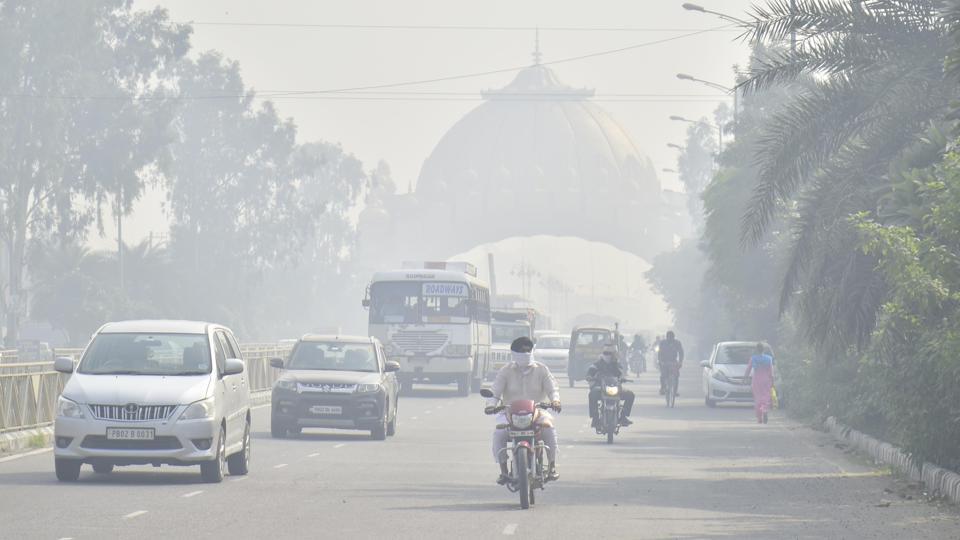
This unscientific disposal of paddy stubble is leading to photochemical smog that is not just injurious to the human health but also affects the growth of crops.
These are the findings of a study conducted at the Punjab Agricultural University, Ludhiana.
Dr Prabhjyot Kaur Sidhu, who heads the climate change and agricultural meteorology department at the varsity, said the study spanning over three decades has revealed that sunshine hours have been reduced significantly during the kharif season.
“Now, crop residue burning has compounded the problem. Due to the thick layer of smoke, sunlight is not reaching the surface and we are witnessing reduced sunshine by 1 hour and 6 minutes,” she said.
Explaining the phenomenon, which is called photochemical smog, Dr Sidhu said that it is a type of smog produced when ultraviolet rays from the sun react with nitrogen oxide in the atmosphere.
“It is visible as a brown haze, and is most prominent in the morning and afternoon. It used to be witnessed especially in densely populated cities with high-emission levels, but nowadays it is being witnessed in villages of Malwa region as well,” she said.
Dr Sidhu said that Barnala and Moga districts in Malwa, which are witnessing a high number of farm fires, are also recording close to zero wind speed that is compounding the problem. “The wind speed in Barnala was just 1 kilometre per hour on Tuesday. It creates a closed room atmosphere, where nothing goes in or out,” she said.


