
 E-Paper



Stopping stubble burning: IARI begins field trials of short-duration paddy varieties
To deal with the menace of paddy stubble burning, Indian Agricultural Research Institute has started trials of high yielding short duration variety PR-2090, as an alternative to PUSA-44, which has now been put in the category of being hazardous to the environment for high quantity of crop residue and a water guzzler.

 Prefer HTon Google


To deal with the menace of paddy stubble burning, Indian Agricultural Research Institute (IARI) has started trials of high yielding short duration variety PR-2090, as an alternative to PUSA-44, which has now been put in the category of being hazardous to the environment for high quantity of crop residue and a water guzzler.
According to IARI director AK Singh, the new variety for which the yield performance data has been recorded and sent for trials at 14 different locations. He hoped that variety will be ready for cultivation in two years.
Paddy growers are not opting for short duration varieties and are sticking to PUSA-44 because so far none of the short duration varieties are matching yield with the old variety which is becoming obsolete. PUSA which takes 155 days to mature while short duration gives a yield of 32-35 quintals per acre. The new variety is expected to match the yield in 120 days, informed AK Singh.
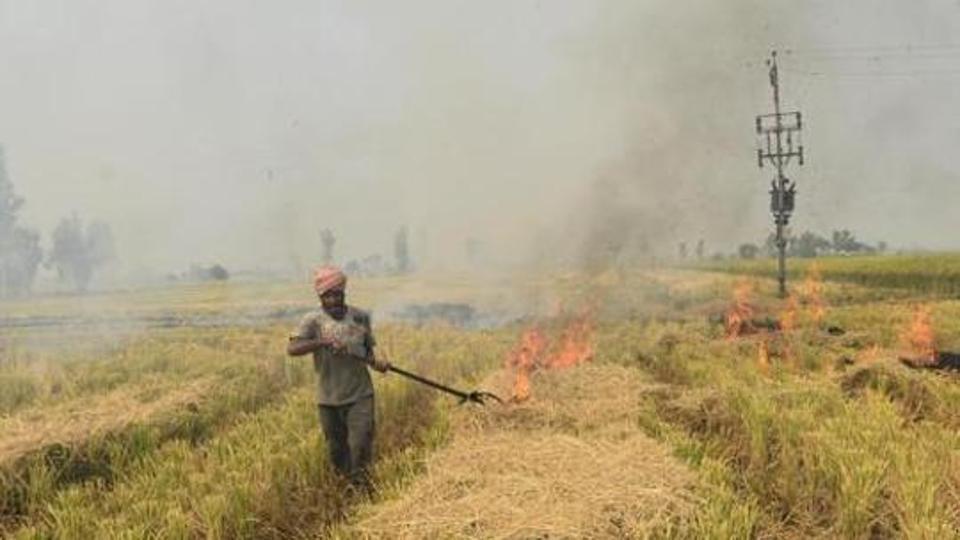
In kharif season, paddy is cultivated over about 31 lakh hectares (76 lakh acres) and as a season’s average, about 185 lakh tonnes stubble is produced, out of which only 49% is managed and the rest goes up in flames.
IARI’s short-duration varieties -- PR126, Pusa Basmati-1509, Pusa Basmati-1692 -- that matures in four months are released in Punjab, has been taken up in only 5-6 lakh hectares out of the total paddy area of 31 lakh hectares in the state owing to the low yield.
If duration of a variety is reduced by a month, yield loss is 1 tonne per hectare, meaning a loss of about ₹ 20,000 per hectares to farmers as against a long-duration variety,” said AK Singh.
He added that the farmers’ perception of incurring loss from growing a short-duration variety does not hold true when the economics of growing these varieties are evaluated by taking into account various inputs and operations. The new variety will sort out the issue, he said.
Short-duration paddy varieties are ready for harvesting in mid-September or October-end, providing one month window to prepare the fields for wheat sowing. Whereas the long-duration paddy varieties are harvested in October-end or first week of November, shrinking the scope for managing paddy straw by in-situ or ex-situ way so farmers are left with no option other than setting it ablaze. Growing a short-duration variety not only gives the farmers 25 days to manage the stubble and also saves irrigation water and input cost, added Singh.
Paddy decomposer to be made better IARI, according to AK Singh is also working on improvements in paddy decomposer by reducing its effectiveness timing. Earlier the experts of Punjab Agricultural University (PAU) have rejected decomposers as time consuming, impractical, laborious and costly process to treat stubble. “We are adding fungal compound, (along with bacterial compound which it already has) so that its action time is reduced from existing 25 days,” he added. The state last season has used the decomposer over 5,000 acres and in the upcoming harvest the area will be expanded to 10,000 acres.


