
 E-Paper



Sukhbir accuses Mann of double standards on anti-sacrilege bill
Instead of indulging in a drama on this sensitive issue, the Punjab CM should take up this matter with the central government and get it passed, said Sukhbir

 Prefer HTon Google


Ahead of a special assembly session called for April 13 to introduce the anti-sacrilege bill, Shiromani Akali Dal (SAD) president Sukhbir Singh Badal on Saturday charged the Bhagwant Mann government with maintaining double standards on the sensitive religious issue.
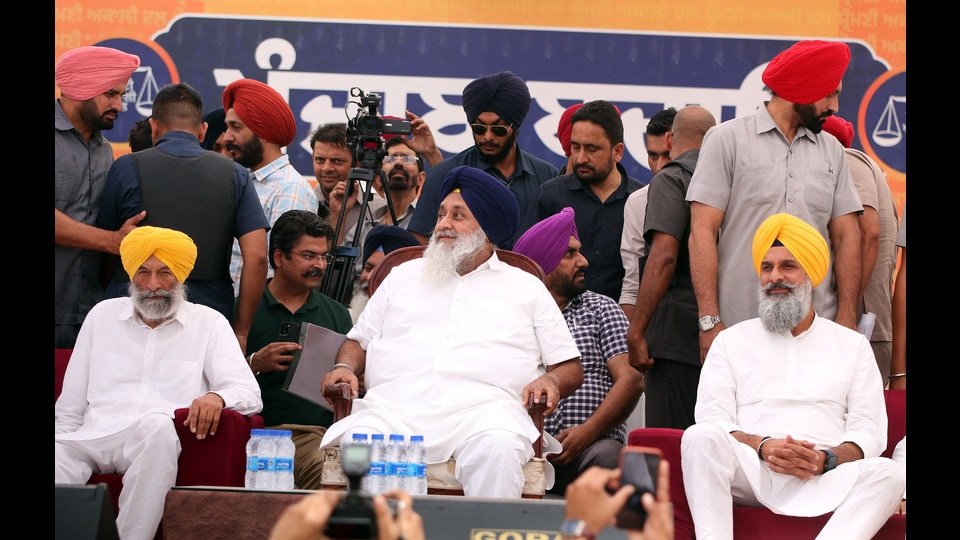
Addressing the last rally of SAD’s Punjab Bachao programme in the first phase, at the holy city of Talwandi Sabo in Bathinda, Sukhbir said the anti-sacrilege bill passed by the assembly in 2016, during the Akali regime, stipulated a life sentence to anyone committing sacrilege of Guru Granth Sahib. “The bill has yet to be ratified by the Centre. Instead of indulging in a drama on this sensitive issue, the CM should take up this matter with the central government and get it passed,” he added.
He said in the last 10 years, during different governments, there were a total of 597 sacrilege incidents, but protests were held only during the Akali regime.
“All individuals at the forefront of these protests remained silent when sacrilege events occurred during the tenures of the Congress and AAP. It clearly reflects that certain agencies were behind these protests intending to weaken the Akali leadership,” Sukhbir alleged.
He urged traditional party sympathisers to consolidate politically to strengthen the SAD, claiming it was the “voice of the Sikh community and Punjabis”.


