
 E-Paper



Wildbuzz: Dogs binge, vultures scavenge
Only a part of the carcass is consumed by the opportunistic dogs, who get distracted and kill the next fawn that ventures to water in the rising heat. That leaves major portions of the carcass for vultures.


* It is not often that while rambling through reeds engulfing the marshes, a huge vulture is flushed out instead of startled, migratory Mallards and teal. Last week at the Jainti Mata dam in the Shivalik foothills, a Himalayan vulture rose from the reeds and flapped noisily to a perch on the flanking hillock. I suspected it had been feeding on a carcass of a wild animal, most probably of a Sambar fawn slaughtered by domesticated dogs. The dogs foray opportunistically from neighbouring villages as shorelines advance and water retreats in the run-up to monsoon.

My assumption flowed from the happenings of 2021 when a drought at the dams had led to wanton killing of fawns by dog packs. Vultures had descended in big numbers to the dams and picked clean to the bone the carcasses, unlike the messy consumption of the same by dogs. Only a part of the carcass is consumed by the opportunistic dogs, who get distracted and kill the next fawn that ventures to water in the rising heat. That leaves major portions of the carcass for vultures. This is safe food for critically-endangered vultures as it is free of Diclofenac and such veterinary drugs administered to ailing cattle. When vultures feed on cattle carcasses carrying residues of drugs, there is mass vulture mortality.
The importance of such safe food was underscored in 2021 when a satellite-tagged vulture released from Pinjore made it to Siswan dam and fed on fawn carcasses. Dogs cause immense harm to wildlife and its habitats. However, as wildlife authorities are not willing to act against dogs under intimidation from urban dog advocacy groups, the safe fawn food in a difficult and complex conservation situation emerges as a positive.
“Vultures prefer eating carcasses of wild creatures, as these are lower in fat content and higher in proteins. So, if there are carcasses of a Cheetal and buffalo lying side by side, vultures will opt for the Cheetal and only later go for the buffalo,” Dr. Vibhu Prakash, raptor biologist and national consultant on vulture programmes, told this writer.
Mere hath rang de basanti
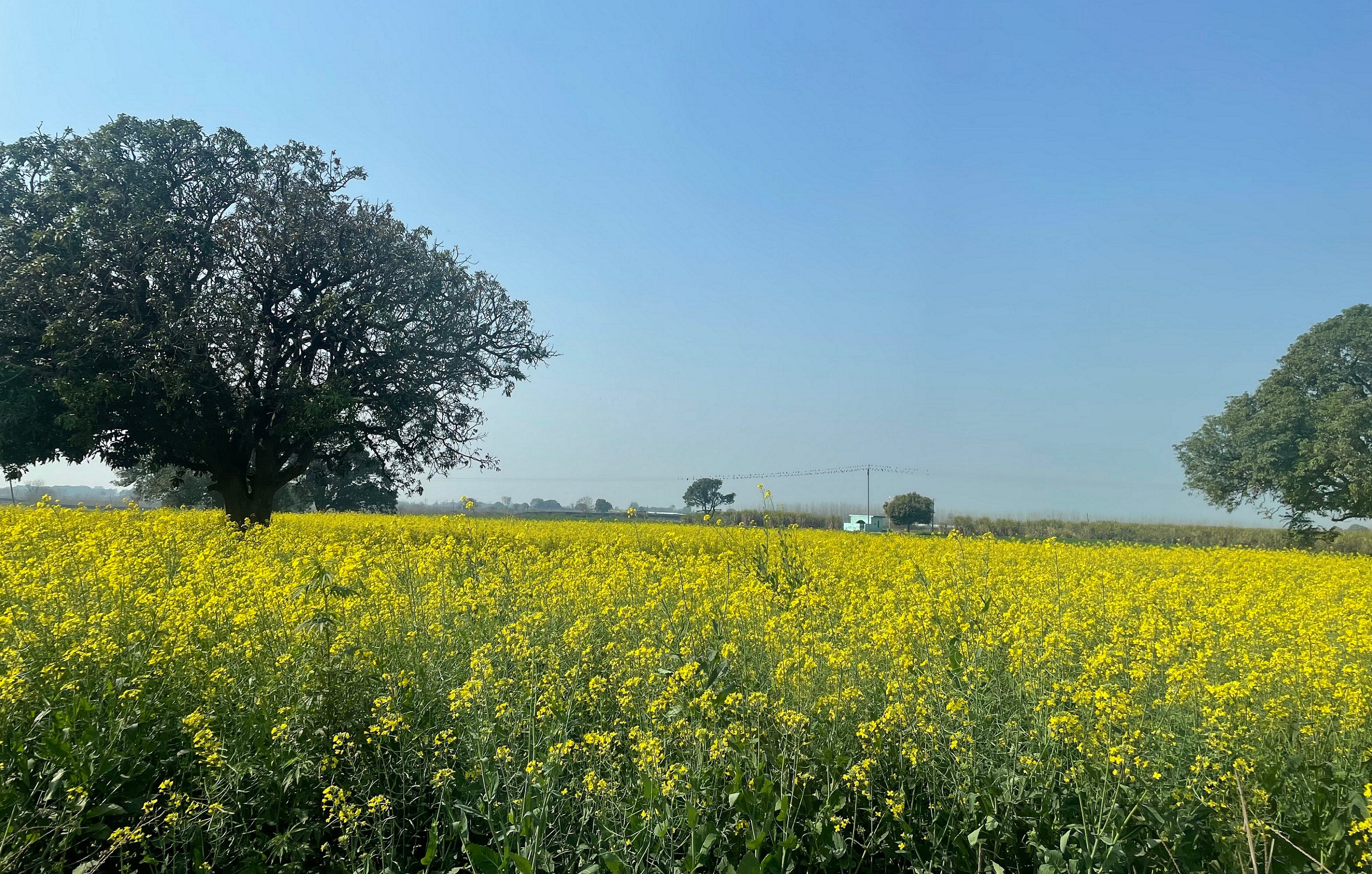
* The sun’s angle changes vividly in February having gradually rid itself of its winter remoteness. The glance of the sun’s beams are kinder, they kindle warming glows. The flora, bushes and trees dance to ‘basant ki hawaein’, each producing a distinctive musical note to wind’s ruffling passage. Mustard fields ripen to a flaring gold, the colour of dawn on a spring day. The yellow mops attract the buzz of honeybees. Little birds like bushchats dangle on slender, swaying stems singing songs to beautiful flowers. Lithe, blonde mustard is a favourite set for cavorting film stars -- the ‘90s song, Tujhe dekha toh yeh jana sanam, sparks from musical memory.
The Shivalik foothills are redolent with mustard’s gentle fragrance. On Valentine’s Day, we took a picture of mustard fields on our drive to Mirzapur dam for a picnic lunch. My wife, Hemani, posted it on her Convent of Jesus & Mary (CJM, Delhi) WhatsApp alumni group. For all its bane of spouting pseudo-intellectualism, WhatsApp throws up nuggets of instant humour, word play and poetry --- individualistic, original thoughts destined to usually remain unsung in the slide of WhatsApp’s unrelenting scroll. The same evening, Manisha Kapur (1988 batch, CJM) found an imaginative way to escape the fumes and grey skies of Delhi. With Hemani’s mustard photo as the muse, Manisha penned and posted in the group a poem as an ode to love, spring’s joy...and its impermanence. Out of reach of ordinary Delhi mortals but not to a poet’s restless energies and imaginative flights:
Khetaan vich vi ugg gayi sarson
Arriye, hun na kar aj kal parson
Bachpan de vaade te sarson da saag
Kadi na bhule uss da swaad
Khet hun harey toh ho gaye ne peeley
Mere hathan nu vi tere rang naal kar geeley
Chhetti aa, khushboo phaili hai bhini bhini
Garmi toh pehlaan baabe ne vadd suttnee
(The fields are lush yellow with mustard flowers
My love don’t keep procrastinating, come fast
Oh, the promises of childhood love, the taste of fresh sarson
Who can ever forget them, they stay with you ever so
The fields have turned from green to ripening yellow now
My love, I wish to adorn my hands with the mehndi of your vow
The mild fragrance of mustard flowers is in the air
I will be married off before the season turns, if you don’t dare)
vjswild2@gmail.com


