
 E-Paper



With locals’ contribution, Abohar’s city museum to revive its heritage
The ‘Abohar History Project’ team completed the first phase of six months of citizen engagements in June where residents were encouraged to contribute their family possessions to raise the unique public museum

 Prefer HTon Google


: Peeved at being tagged India’s 3rd dirtiest city in 2020, Abohar municipal corporation is coming up with a city museum dedicated to its forgotten heritage.
Besides expediting sanitation and infrastructure development projects, the local body has also engaged Yogesh Snehi, an assistant professor of history at the School of Liberal Studies, Ambedkar University Delhi (AUD) for the ambitious ‘Abohar History Project’.
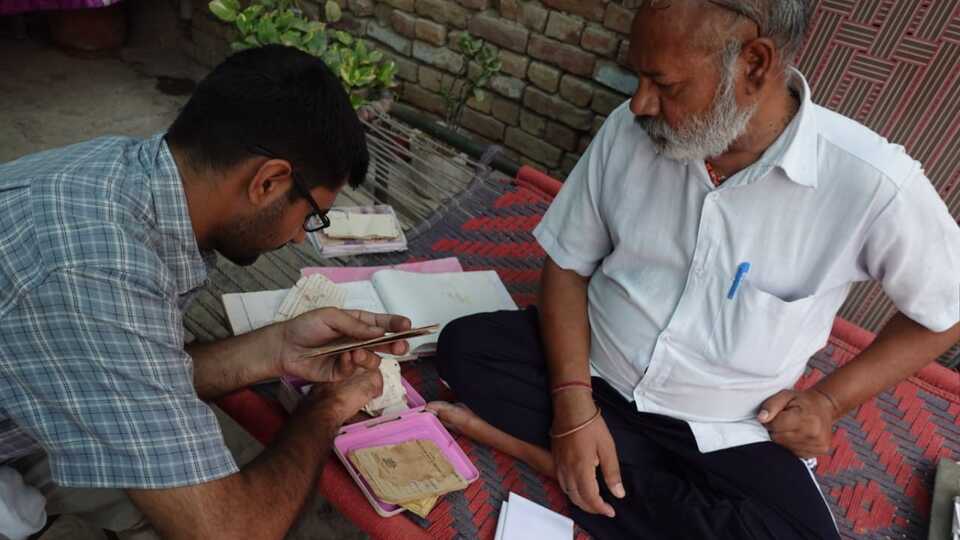
A native of Abohar, Snehi’s team completed the first phase of six months of citizen engagements in June where residents were encouraged to contribute their family possessions to raise the unique public museum.
“People are contributing old photographs, artefacts and other materials. We hope to gather more materials in the next phase as our team is trying to motivate residents. These contributions are being archived in a storytelling format,” said Snehi.
He said the modern Abohar was developed by the Britishers on the pattern of New York and a report of the Public Health Administration of Punjab published in 1934-35 adjudged ‘this small town as one of the most progressive in the province from the sanitary point of view.’
“During the British regime, Abohar was the hub of horse breeding and a major cotton trade centre having business with Karachi and other mandis. But after India’s partition, this town was neglected. It is important to make people familiar with the rich past of the town,” said the expert.
MC’s official files are a potential heritage which can be digitised for a better understanding of British and post-Independence.
Conceptualised in 2021
Former municipal commissioner Abhijeet Kaplish, a 2015-batch IAS officer, who was tasked to improve sanitation levels of the city after it fared badly in the 2020 national cleanliness audit, was the brain behind the project.
“Abohar is a unique small town of Punjab having lingual and cultural fusion with adjoining Haryana and Rajasthan. During the course of urban development planning, I came across Snehi and thus struck the idea to prepare a database of this historic city. Experts were engaged and six mohalla or neighbourhood museums were curated,” said Kaplish.
Abohar mayor Vimal Tathai said the local body has agreed to engage research fellows who will work on different themes, including wool and cotton trade activities in the colonial period, migration and new settlements after India’s partition, every year and display the collected materials.
People are hesitant to share their memoirs and possessions and MC is working to break the barriers, he said.
“It is heartening to see documentation of how this city grew since the Kushan period dating back to 2,000 years. We were not aware that the 14th-century Moroccan scholar and explorer Ibn Battuta had referred to Abohar in his historic travelogues,” said Tathai.
Fazilka deputy commissioner Himanshu Agarwal, who also holds the charge of Abohar municipal commissioner said the Archaeological Survey of India (ASI) has been contacted to work on the remnants of a protected mud fort in the city.
“Excavation may throw more light on Abohar’s heritage and the city may be developed to attract heritage enthusiasts,” he said.


