
 E-Paper



Chandigarh’s air quality least affected by stubble burning in 2016: PGI study
The study covered Chandigarh; Amritsar, Fatehgarh Sahib and Bathinda in Punjab; and Sirsa, Rohtak and Sonepat in Haryana.


Air quality during the stubble burning period in 2016 (September to December) was affected the worst in Amritsar, and the least in Chandigarh, a study has found.
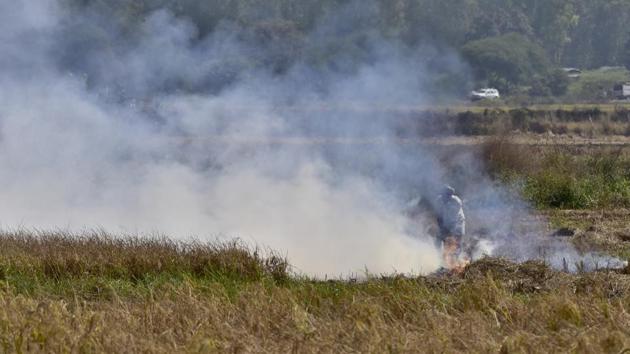
The study, conducted by the Post-Graduate Institute of Medical Education and Research (PGIMER), and the department of health research (DHR), Indian Council of Medical Research (ICMR), surveyed the air quality of seven cities — Chandigarh; Amritsar, Fatehgarh Sahib and Bathinda in Punjab; and Sirsa, Rohtak and Sonepat in Haryana.
Dr Ravindra Khaiwal, additional professor of environment health, PGIMER, said air pollutant emissions due to burning of crop residues adversely affected human health, environment and climate.
Amritsar had the highest average concentration of atmospheric particulate matter (PM2.5), followed by Rohtak and Sonepat, whereas Chandigarh recorded the lowest concentration. The concentration of gaseous pollutants NO (nitric oxide), NO2 (nitrogen dioxide) and SO2 (sulfur dioxide) were also observed highest in Amritsar.
Besides, the concentration of particulate matter was found significantly higher than the national ambient air quality standards of 100 and 60 μg/m3 for PM10 and PM2.5, respectively, for 24 hours at all locations during the study period.


