
 E-Paper



Covid-19: Cases rise from 18 to 158 in Pune’s Janata Vasahat causing concern
The maximum number of cases were reported on May 31 (53 cases) and May 28 (36 cases)


Janata Vasahat, Pune’s largest slum at the foothills of Parvati hill, has seen an exponential rise in the number of Covid-19 positive cases in May.
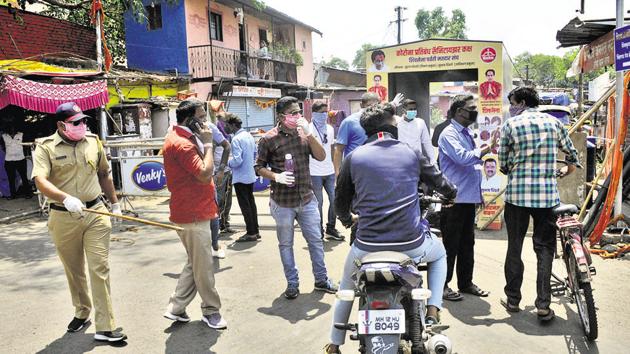
As per the data with Pune Municipal Corporation’s (PMC) smart city war room, the Janata Vasahat-Dattawadi area which had about 18 Covid-19 positive cases as of May 16, reported that the count touched 158 by May 31.
The maximum number of cases were reported on May 31 (53 cases) and May 28 (36 cases). The area falls under the Sinhgad road ward which had reported a total of 193 cases as of May 31, of which 158 were from Janata Vasahat and Dattawadi.
The slum is located between a canal and the Parvati hills which restricts the movement of people from outside. However, intermingling within the slums has made it difficult for the authorities to keep a check on the spread of the virus.
The area is spread across approximately 2.5-3 sq km and has about 7,000 to 7,500 houses with 4-5 members in each house. The civic administration which is currently dealing with the slums and congested areas in Tadiwala road and Bhawani peth is now facing new challenges with this rise in cases.
Bosekar Jayant Shyamsundar, deputy commissioner, PMC Zone 3 said, “The first index cases found in these areas was that of one person who was infected possibly from the medical store at Sadashiv peth and another who was visiting a hospital for dialysis. These two were the index cases and the remaining were also close contacts.”
He added, “As soon as we recorded the first case, we identified as many close contacts as possible and started testing them. Since the area was a non-containment zone, people freely moved and so there were too many contacts. We have currently sealed around 10 gallis (narrow slum lanes) from 0-56 lanes which have cases, while the remaining 7- 108 lanes do not have any cases as of yet. The public toilets in the area are thoroughly washed with sodium hypochlorite for at least 3-4 times a day. We have sealed the entry exit points of all these lanes, but we cannot stop the mingling of people within the area. The geographical area of the slum is such that we cannot completely seal if off physically.”


