E-Paper



Uttarakhand slammed for Van Gujjar community living ‘below animal existence’
Migrating Van Gujjars were forced to live under open skies in tough conditions after they were denied entry to Govind Pashu Vihar National Park in Uttarkashi.

 Prefer HTon Google


Uttarakhand high court has slammed the state government for “callousness” and for forcing families of Van Gujjars—a nomadic tribe of pastoralists who dwell in the Himalayan region-- to survive in conditions “below animal existence”. The court also ordered the government to provide them accommodation, food, water, medicines and get them tested for Covid-19 before letting them enter Govind Pashu Vihar National Park in Uttarkashi district.
The state government reasoned before the court that letting the tribe enter the national park, may endanger the wildlife as the Sars-Cov-2 virus may spread from humans to animals.
The directions were issued by the division bench of chief justice RS Chauhan and justice Alok Kumar Verma during the hearing on a public interest litigation (PIL) on Tuesday. HT has a copy of the order.
The PIL was filed by a Delhi based NGO, Think Act Rise Foundation in 2019 to highlight the plight of Van Gujjars, who continue to occupy certain areas of the forests in the state. The PIL pleads for the community to be made a beneficiary under the Forest Right Act, giving them land rights and quashing petty cases against them.
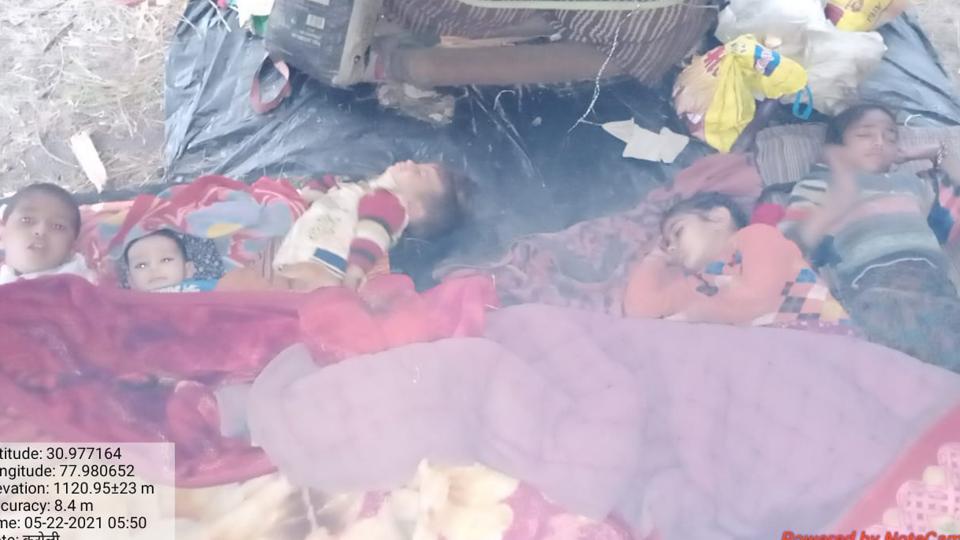
The HC noted that some migrating Van Gujjars were forced to live under open skies in tough conditions after they were denied entry to Govind Pashu Vihar National Park in Uttarkashi by the deputy director of the park, Komal Singh, despite holding permits.
The HC order also cited the petition to note that since these families cannot sell the milk produced by their cattle due to the Covid-induced lockdown, their life was reduced to “below animal existence” for they have neither shelter, nor economic means to survive.
Uttarakhand advocate general, SN Babulkar, said unless the families are declared to be Covid negative they cannot be allowed to enter the park as their migration may endanger the wildlife, the court order noted.
The HC order cited photographs submitted by the petitioner to note that families are forced to live in open tents and fields under the open sky. “The photographs also show small children, and new born babies, being wrapped in blankets, and sleeping on the ground…It is, indeed, trite to state that Article 21 of the Constitution of India forbids the State from reducing the lives of its people below the animal existence,” the court order said.
The court further underlined the right of every citizen to live with dignity and said, “However, it seems that the callous attitude of the deputy director of the park, and of the civil administration has forced these families to survive in conditions, which are below animal existence. Therefore, prima facie, the fundamental right to life under Article 21 of the Constitution of India is being violated by the respondents.”
The HC then directed Uttarkashi district magistrate and the deputy director of the park to submit their compliance reports by June 15. The next hearing in the case will be on June 16.