The Wildlife Institute of India (WII) has begun work on a decade-long management plan for the Asola Bhatti Wildlife Sanctuary with a focus on increasing the leopard population, and simultaneously mitigating the man-animal conflict , Delhi forest department officials said on Friday. The plan is likely to be ready by next year, the officials said.
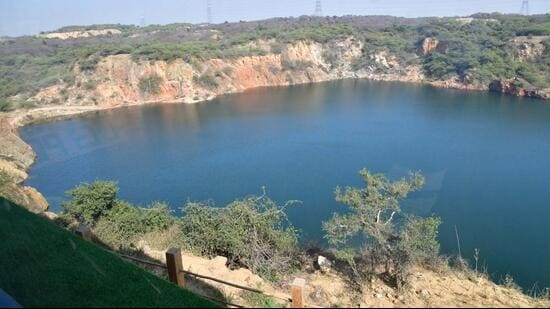
The existing management plan of the sanctuary came into force in 2015 and will remain in place till next year, before the new plan replaces it. The previous plan, prepared by the Forest Research Institute (FRI), Dehradun, focused heavily on restoration of degraded habitats at the sanctuary, particularly old mining pits. The other focus area of the plan was to create a fruit-rich natural habitat for the monkeys in the area and to weed out invasive plant species, particularly the vilayati kikar (prosopis juliflora) and lantana (lantana camara).
A senior forest department official said WII carried out its first ground survey earlier this month, with research to commence from next month for a period of one year, in which a team of at least five researchers from WII will set up camera traps, study micro-habitats within the sanctuary, assess the types of flora and fauna and interact with people living in the vicinity of the sanctuary.
“The previous management plan, which was also overseen by us, focused on habitat restoration to a large extent. The new management plan will be focused on man-animal conflict mitigation. We will look to replicate successful models such as the Sanjay Gandhi National Park in Mumbai, where locals in the vicinity have learnt to live fearlessly with the leopard population,” said Delhi’s Chief wildlife warden Suneesh Buxy, and added that WII is preparing the plan on behalf of the forest department.
{{/usCountry}}“The previous management plan, which was also overseen by us, focused on habitat restoration to a large extent. The new management plan will be focused on man-animal conflict mitigation. We will look to replicate successful models such as the Sanjay Gandhi National Park in Mumbai, where locals in the vicinity have learnt to live fearlessly with the leopard population,” said Delhi’s Chief wildlife warden Suneesh Buxy, and added that WII is preparing the plan on behalf of the forest department.
{{/usCountry}}He said the plan will also include water and soil-conservation measures; raising awareness about conservation measures and wildlife through eco-tourism and to increase the greenery in the sanctuary further through native species.
Management plans list long-term targets or measures that a wildlife sanctuary or national park needs to focus on for the next decade. It also identified conservation practices that need to be prioritised and species which need special attention.
Though leopards were a rare sight when the last management plan was made in 2014, their number has increased rapidly over the past decade. A study carried out jointly by the Delhi forest department and the Bombay Natural History Society (BNHS) in 2022 has shown that there were at least eight leopards in the sanctuary. In January 2023, another two cubs were captured on camera, indicating there may be as many as 10 leopards living in the sanctuary.
A second forest department official said through the course of research for the management plan, researchers from WII also aim to look at possible routes the leopards are taking and accordingly, formulate measures to reduce man-animal conflict. “The research period will be one year, based on which the final plan will be prepared. During this period, the team will also interact with locals in the vicinity and create awareness on how to co-exist with leopards and the remaining wildlife inside,” the official said, on condition of anonymity.
In December last year, leopards were seen in the on different occasions in Sainik Farms area for almost a week, prompting the forest department to set up cages to trap the animal.
Experts say with proper awareness, such incidents can be avoided. “A management plan gives an insight into the predators and the prey present in the area and through it, one can maintain an ideal prey to predator balance. Habitat restoration is still required in parts of Asola, as the overall area was highly degraded when the sanctuary was formed. As habitat gets systematically restored, more herbivores like the spotted deer will naturally come, which in turn provides ample food for the leopards,” said C.R Babu, head of the Centre for Environmental Management of Degraded Ecosystems (CEMDE), stating a management plan also includes guidelines on what needs to be done when animals like leopards stray out.
“Awareness needs to be created in the neighbouring areas, as part of the new plan, which includes not provoking the animal when sighted, not dumping litter or waste near the sanctuary which can attract the animal and to alert authorities if a sighting is made. People need to be taught not to panic or attack the animal and the animal will also not retaliate,” he added.
Stay updated with all top Cities including, Bengaluru, Delhi, Mumbai and more across India. Stay informed on the latest happenings in World News along with Delhi Election 2025 and Delhi Election Result 2025 Live, New Delhi Election Result Live, Kalkaji Election Result Live at Hindustan Times.
Stay updated with all top Cities including, Bengaluru, Delhi, Mumbai and more across India. Stay informed on the latest happenings in World News along with Delhi Election 2025 and Delhi Election Result 2025 Live, New Delhi Election Result Live, Kalkaji Election Result Live at Hindustan Times.