E-Paper



500 jhuggis invade Saket forest patch, residents demand action
“Over 500 jhuggis are now thriving in the forest patch and waste and trees are regularly burnt there,” says RWAs


Residents from Saket have written to the Delhi Police and approached the new south Delhi MP, Ramvir Singh Bidhuri, over growing encroachments in a six-hectare forest patch between Press Enclave, a local hospital and the Saket Sports Complex, saying that over 500 jhuggis have occupied the area and solid waste was regularly dumped and burnt at the site.
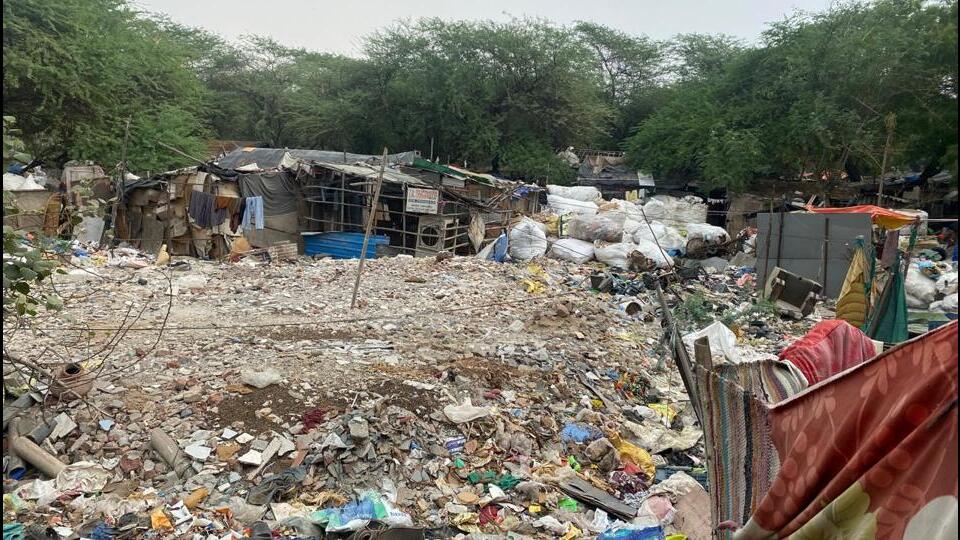
Locals said that despite a forest department inspection last April, no action has been taken against the squatters, with the numbers only growing.
“Over 500 jhuggis are now thriving in the forest patch and waste and trees are regularly burnt there. It is difficult for residents due to the pollution caused by the waste, or the materials being burnt,” said Ajay Sud, president of the Press Enclave residents’ welfare association.
The Federation of Resident Welfare Associations in Saket (FRWA), an apex body of over 15 Saket RWAs, said various local RWAs have been approaching them over the last few months.
“Initially, only Press Enclave was impacted, but over the last few months, other RWAs have also approached us, alleging waste burning inside the forest. They have also tried to make semi-permanent and permanent houses inside the forest. If this is not stopped, the entire forest area will be lost,” said Rakesh Dabas, president of FRWA.
Dabas said they approached the local MP on June 19 and wrote to the Delhi Police on June 20 and plan to file a petition in the National Green Tribunal soon.
In a submission in April 2023, the forest and wildlife department informed NGT that it found encroachments and waste dumped in the forest patch.
The findings were part of two inspections carried out by the department in June and November 2022, following a petition in NGT alleging encroachments in the forest with the possibility of trees being felled.
“On the land, some jhuggis were present near the Kadeem Zari Muslim Eidgah in Hauz Rani village. During the survey of these jhuggis, scrap material shops were found operating by the people living in these jhuggis. Plastic, polythene bags, and other dump materials were also found dumped in this land,” the report had said.
The forest department, when contacted, said it will carry out a fresh inspection of the area based on the complaints. “If this is the case, the forest will again be inspected and a report will be prepared. However, the Delhi Development Authority (DDA) is the land-owning agency in this case and further action will have to be taken by them,” said a senior forest official, on condition of anonymity.
DDA did not respond to HT’s queries.
The forest department’s submission in NGT last year also flagged that DDA was supposed to number the trees in the area, which has not been done yet.
The deputy conservator of forests (south) had further said that after the joint inspection in September 2022, they did not receive any communication from DDA regarding the numbering of trees, adding that they wrote several letters to the land-owning agency.
NGT had, in May 2022, formed a joint committee comprising DPCC, MCD, and the forest department to look into a plea by a Delhi resident who alleged illegal felling of trees in this forest patch, along with possible encroachments.