
 E-Paper



A smelly trail from barracks to grounds: Regiment’s daily battle in Delhi
For decades, soldiers have trudged through sewage four times daily in south Delhi. No bridge has been built despite repeated requests

 Prefer HTon Google


Every morning, like clockwork, over 3,000 soldiers of the Rajputana Rifles march out of their barracks and head for the parade ground. But to get there, they must first duck under a narrow, crumbling culvert, entirely covered in garbage, that straddles a foul-smelling drain. Four times a day—twice before breakfast and twice after dusk—this is the path they must cross, navigating muck and stench.
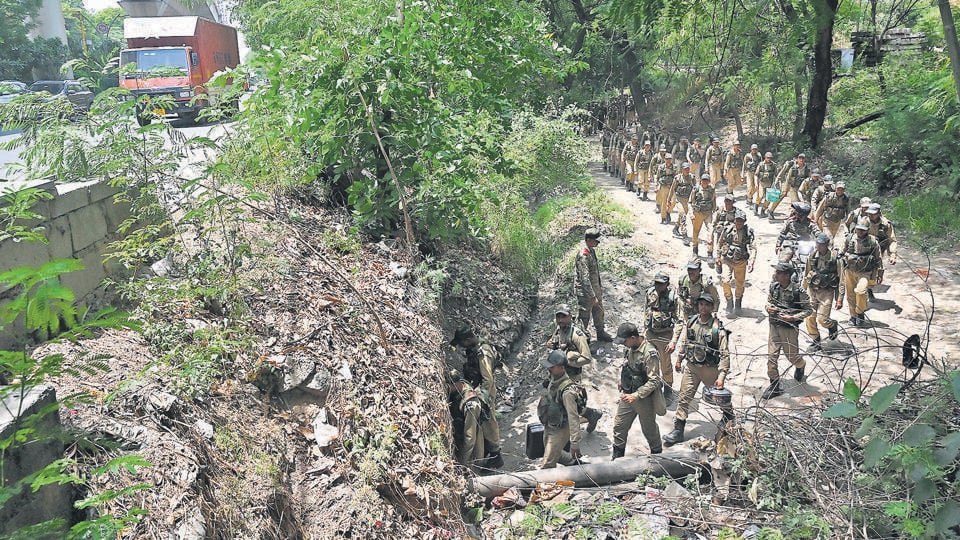
This isn’t an image from a neglected outpost or a border camp.
It’s the daily reality inside the headquarters of the Rajputana Rifles, the oldest rifle regiment of the Indian Army, located in Delhi Cantonment, a short walk from the bustling Delhi Cantonment Metro Station.
And with monsoon clouds beginning to gather, their path to the parade ground is about to become even more treacherous. Every year, as the rains swell the nallah, the already-difficult crossing becomes a hazard. Flooded, slick with sludge, and nearly waist-deep in places, it forces soldiers to roll up their fatigues and wade through water. They do this till the water reaches a level when it is hazardous to even try crossing the culvert.
Locals said that the culvert was flooded again on Sunday morning after heavy rains in the area, disturbing the morning training session of the soldiers. The water drained out only by early afternoon.
“Today was not an exception. This is the ordeal that the soldiers have to face every single time it rains. The purpose of the culvert actually is to drain out water and to provide passage to the men. They use it as there is no other way,” said Aditya Tanwar, a local activist.
“I was recruited in 1990, and we had to use the same drain crossing for training even back then. It got dangerous at night and during the rains. Now, 35 years later, when I’m posted here again, I find the situation hasn’t changed,” said a soldier who asked not to be named. “There have been multiple requests for a foot overbridge, but the Delhi government has done nothing.”
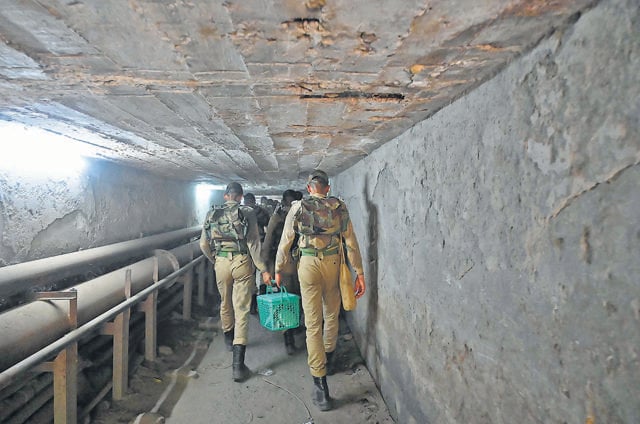
It is a cruel irony. Even as the nation celebrates its military strength with symbolic marches and political speeches lauding the success of Operation Sindoor, the soldiers at its heart are left to wrestle with crumbling infrastructure in the very Capital.
What deepens the irony is the Delhi government’s aggressive push to build foot overbridges (FOBs) across the city since coming to power in February. The Public Works Department (PWD) has sanctioned multiple new FOBs over arterial roads and busy markets. Several lie underutilized or locked up, while one of the city’s oldest military institutions continues to be denied a bridge that has been requested for years.
“The proposal has been acknowledged several times. But nothing moves beyond the files. This isn’t just about convenience—it’s about safety and respect,” said a senior official from the regiment who asked not to be named. “Even Olympian Neeraj Chopra used this culvert during his training. The new batch of Agniveers will do the same. We are soldiers—we don’t complain. But this is not how it should be.”
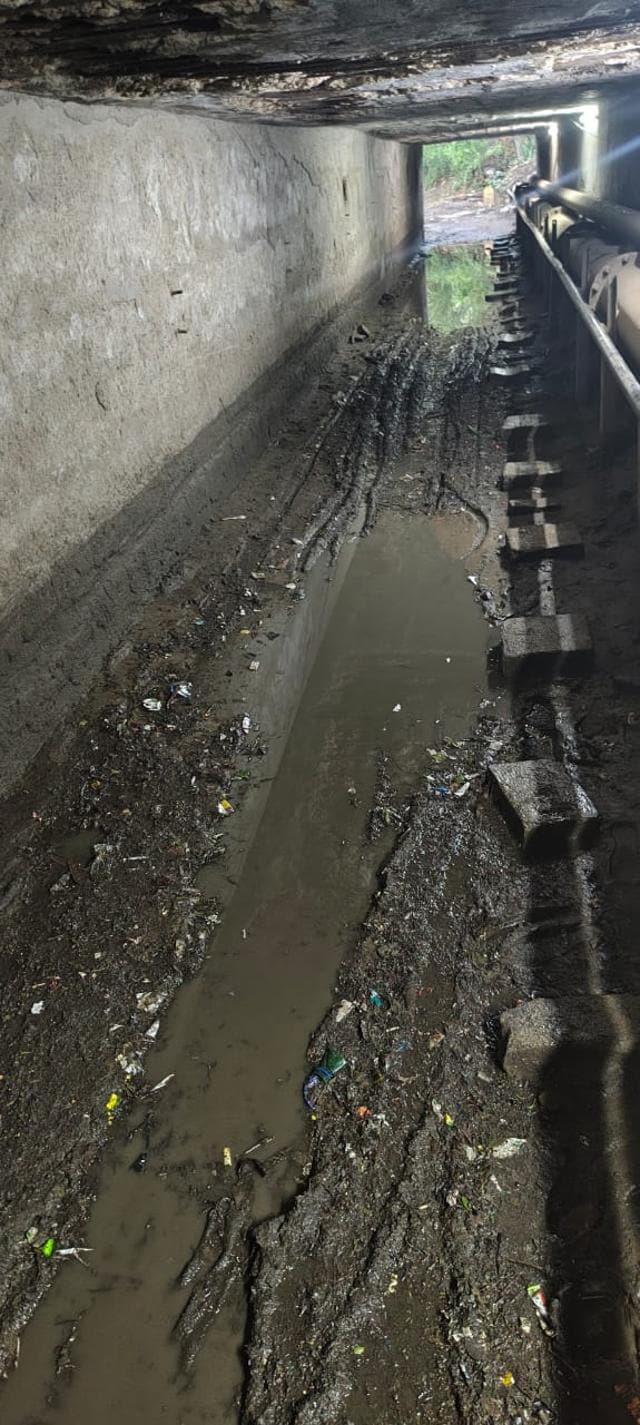
When the culvert floods over during monsoon, which it invariably does, soldiers are forced to walk nearly 2.5km to a traffic light to cross the six-lane Ring Road. The road above is pristine—well-paved, painted, flanked by wide walking paths and six-foot-high iron grills to deter jaywalking. Below it, however, the soldiers inch through filth.
Nearby residents have long witnessed this daily indignity. Civil society activists have raised the issue repeatedly.
“We’ve written to the Public Works Department (PWD), to the lieutenant governor, to the defence ministry. Everyone agrees that an FOB is needed here. But there’s been no action. We even moved the court, which asked the government to look into it. We met the chief minister—she gave a positive response, but that was a month ago,” said Paras Tyagi, founder of the Centre for Youth, Culture, Law and Environment, who has led the campaign.
PWD officials maintain they are “considering the matter” and are assessing financial feasibility. But people familiar with the matter admit the file has moved little in two years — despite a strongly worded recommendation from the Central Road Research Institute (CRRI), which is part of Delhi’s subway committee and oversees feasibility assessments.
Velmurugan S, chief scientist, CCRI, said in the letter: “It is understood that a minimum of 1,500 commuters must be using this informal pathway with the peak flow of 400 to 500 RRR commuters/soldiers at any instant of time during each of the morning drills, afternoon lunch and evening dinner timings... Considering the prevailing inhuman condition at the site and inadequate facilities for the saviours of our nation, the feasibility of the construction of an FOB is fully justified without having the need to conduct any traffic study. This is because of the fact that the above quantum of commuters is fixed considering the regimented schedule of training every day. The approach of the FOB landing at the RRR Centre side can be oriented to have two landings one on the Ring Road and the other within the premises of the RRR having a gated facility manned by Army.”
PWD did not respond to a request for comment.
Aditya Tanwar, the activist, recalled how the initial CRRI inspection happened at 11am—long after soldiers had crossed the culvert. “The team reported that no one used the route. But we requested a second visit at a more relevant time, and they were shocked to see the volume of daily movement,” he said.
That second visit changed everything.
“I sent a revised letter to the PWD, stressing the urgency,” said Dr S Velmurugan, chief scientist and head of the traffic engineering and safety division at CRRI. “What I saw was inhumane. Soldiers, who are supposed to be our protectors, being made to crawl through a drain to train. How has no government thought to build a footbridge here in all these years?”
As monsoon approaches again, the need for a decision grows more urgent.
Everyone—from local officials and urban planners to military officers and civil society—agrees that a bridge is needed. Yet the papers continue to languish in offices.
Until then, soldiers trained to cross mountains, rivers, and deserts will continue to use their skills to duck beneath a broken culvert in the nation’s Capital.


Stay updated with all top Cities including, Bengaluru, Delhi, Mumbai and more across India. Stay informed on the latest happenings in World News along with Delhi Election 2025 and Delhi Election Result 2025 Live, New Delhi Election Result Live, Kalkaji Election Result Live at Hindustan Times.


