E-Paper



Air quality in summer stayed poor but govt yet to spell action plan
Government officials said that there was a delay in announcing a new plan this year due to the recently held Lok Sabha elections

 Prefer HTon Google


The Capital is yet to see a summer action plan against air pollution despite the city recording an air quality index in the “poor” or “very poor” category in 37 out of the last 102 days (nearly 36%) since March 1. The summer action plan was introduced by the Delhi government in each of the last two summers to tackle dust and other summer-related pollutants.
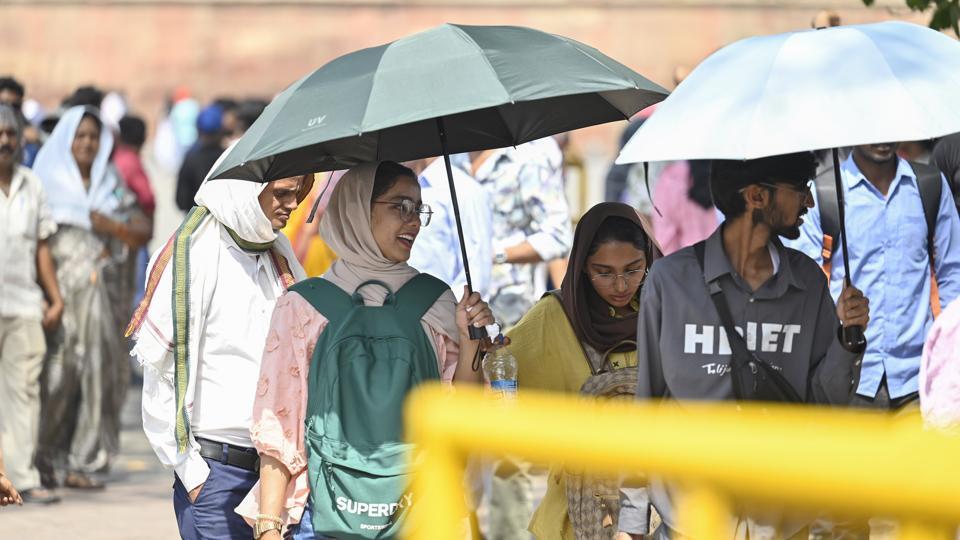
Government officials said that there was a delay in announcing a new plan this year due to the recently held Lok Sabha elections and for which the model code of conduct was in place. However, this year’s plan is likely to be out soon, they added.
HT looked at the Central Pollution Control Board’s (CPCB’s) air quality index (AQI) data from March 1 onwards, when temperature is high and dust becomes a significant pollutant, leading to a rise in the PM 10 concentration. Gases such as ozone, carbon monoxide and nitric oxide also become prominent pollutants at this time of the year, when meteorological conditions are otherwise favourable.
Data showed that each of the four months of March, April, May and June (till June 10) have been worse than the corresponding period last year, recording a higher average AQI and more “poor” or “very poor” days during this period.
The average AQI in March this year was 176 while it was 170 last March. It was 182 this April as against 180 last April. May recorded a significantly worse average AQI of 223, as compared to 171 last summer. In the first 10 days of June, the average AQI so far is 203, up from last year’s corresponding period, when it was 150.
CPCB classifies an AQI between 0-50 as “good”, between 51 and 100 as “satisfactory”, between 101 and 200 as “moderate”, between 201 and 300 as “poor”, between 301 and 400 as “very poor”, and over 400 as “severe”.
Data also showed that Delhi recorded “poor” or “very poor” air quality on 37 days this summer – five in March, seven in April, 20 in May and five so far this month. In comparison, the figure was 30 for the corresponding period, with the highest, 12, in April.
The Delhi government told HT that Delhi’s environment minister Gopal Rai will hold a meeting with the forest and environment department on Tuesday to finalise a plan for this summer.
“The delay was mostly on account of the recent elections. The model code of conduct was also in place. Now that it is lifted, the plan will be out soon,” a government official said on condition of anonymity.
Last year, Rai had started holding meetings with the departments of the Delhi government from April onwards and a 14-point summer action plan was launched by Delhi chief minister Arvind Kejriwal on May 1. The plan had short-term, medium-term and long-term measures to tackle sources such as dust pollution, industrial pollution, open burning and solid waste management, with the government deploying 84 mechanised road sweepers, 609 water sprinklers, 185 anti-smog guns, along with patrolling teams – both during the day and night to keep a tab on pollution sources in Delhi.
In 2022, the plan was introduced on April 12 and the 14-point plan focused on road dust and burning of waste, both in the open and at landfill sites. Prior to that, the government had only been releasing action plans for air pollution in the winter.
“We discussed the problem of air pollution with the departments concerned and came to a conclusion that in order for the winter action plan to be effective, a constructive summer action plan is also required,” Rai had said.
Anumita Roychowdhury, executive director, research and advocacy at the Centre for Science and Environment, said seasonal-specific action plans target the sources that are unique to that season, which in this case is mainly dust. “This helps to take emergency action to some extent. We need such plans in place, as this has been a difficult summer, particularly a dry one, in which dust and ozone can be prominent pollutants. At the same time, it is important that the government focuses on round-the-year action,” she said.