
 E-Paper



At 3°C, Capital wakes up to its coldest morning in 3 years
Delhi faces a cold wave with temperatures dropping to 3°C, the lowest in three years. An orange alert warns of health risks, but some relief is expected soon.

 Prefer HTon Google


Residents of the Capital endured a cold wave for the third consecutive day on Tuesday, with the city recording its lowest minimum temperature in at least three years. The mercury plunged to 3 degrees Celsius (°C), the lowest temperature recorded in the city in nearly three years and a stark 4.4 degrees below what is considered normal this time of the year.
The India Meteorological Department (IMD) has issued an “orange alert” for cold wave conditions for Wednesday, indicating continued health risks for vulnerable populations. However, a sliver of relief is forecast later this week with the arrival of a “feeble western disturbance” expected to gradually raise nighttime temperatures from Thursday onward, according to IMD’s forecast.
Tuesday’s minimum of 3°C at the Safdarjung observatory, the primary weather station for Delhi, is the lowest recorded in January since 2.6°C on January 18, 2023. The chill was widespread across monitoring stations: Lodhi Road also recorded 3°C, while Ayanagar registered 3.2°C, Palam 4°C, and the Ridge 4.4°C. For context, the all-time record low for Delhi remains -0.6°C from January 1935, with the lowest in the past decade being 1.1°C on January 1, 2021.
IMD classifies a “cold wave” when the minimum temperature dips below 10°C and is at least 4.5°C below normal, or when the actual minimum falls to 4°C or lower – a criteria met at four out of the five manual monitoring stations or observatories in Delhi. “Cold wave conditions persisted, with these likely on Wednesday too. A rise in minimum temperature is likely from Thursday,” an IMD official stated.
In a striking testament to the severity of the cold, ground frost was reported in isolated pockets of the National Capital Region (NCR). Amateur weatherman Navdeep Dahiya shared images from Gurugram’s suburbs showing frost and a handheld monitor reading of -0.9°C. To be sure, the official reading lodged at Gurugram’s IMD station stood at 3.3°C on Wednesday.
Similar conditions were observed in Delhi’s Sainik Farms, where a private weather station recorded a low of 1.1°C.
Sahil Pershad, a 42-year-old resident of Sainik Farms, noted the visible impact. “While more frost was observed, particularly on top of cars on Monday, it was much less on Tuesday. Though milder in comparison to Monday, the minimum still fell to 1.1°C,” he said.
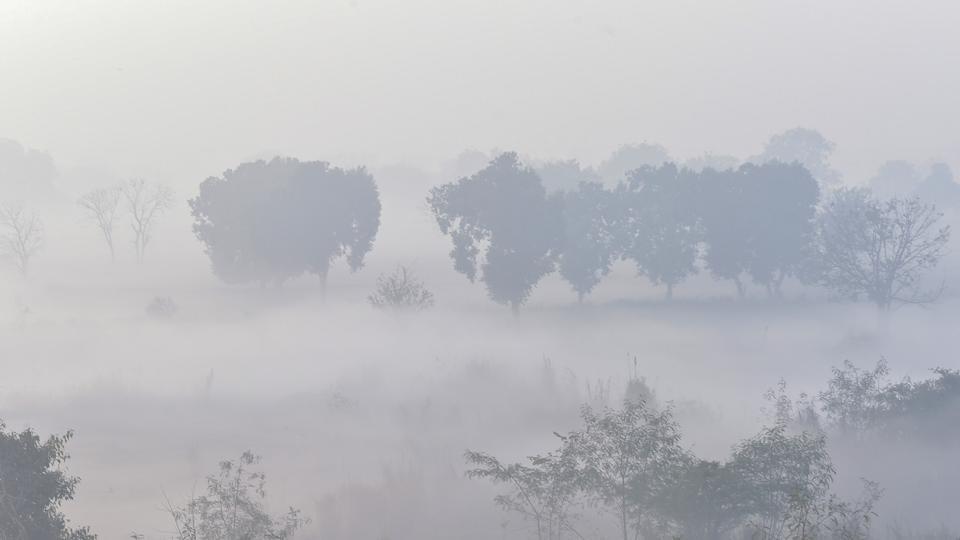
The daytime, however, offered some reprieve from the biting cold, with a maximum temperature of 21.6°C recorded on Tuesday – two degrees above normal. Morning fog was shallow, with visibility dropping to only 600 meters before giving way to bright sunshine after 9am, according to IMD.
Meteorological experts point to a shift on the horizon. “The first western disturbance is expected to be mild though, but will still change the wind direction and prevent cold northwesterly winds from blowing across the plains,” explained Ashwary Tiwari, an amateur weatherman who runs the account IndiaMetSky on X.
Mahesh Palawat, vice president of private forecaster Skymet Weather, said: “The western disturbance will start impacting the mountains from January 15 and bring snowfall there. But its impact over plains will be minimal. What it will do is lead to a change in wind direction to southwesterly, thus reducing the wind chill factor,”
IMD’s forecast outlines a gradual warming trend: minimum temperatures are expected to rise to 4-6°C on Thursday, 5-7°C on Friday, and 8-10°C by Sunday. A series of more western disturbances after January 15 are predicted to halt the mercury’s further descent and may bring fresh snowfall to the Himalayan upper reaches.
Air quality worsens
Compounding the discomfort of the cold, Delhi’s air quality deteriorated sharply, slipping back into the “very poor” category with an Air Quality Index (AQI) reading of 360 at 4pm. This followed two days in the slightly less severe “poor” zone. The cold wave conditions, often characterised by calm winds and low mixing height of the atmosphere, trap pollutants near the ground, leading to such accumulations.
The government’s Air Quality Early Warning System (EWS) forecasts that “very poor” air quality will persist until at least January 16, with little immediate improvement expected.


Stay updated with all top Cities including, Bengaluru, Delhi, Mumbai and more across India. Stay informed on the latest happenings in World News along with Delhi Election 2025 and Delhi Election Result 2025 Live, New Delhi Election Result Live, Kalkaji Election Result Live at Hindustan Times.


