Air quality in the capital this year in November was the worst since the Central Pollution Control Board started maintaining detailed records in 2015, with average Air Quality Index (AQI) at 376. Delhi had last seen air this bad in November 2016, when average AQI was 374.
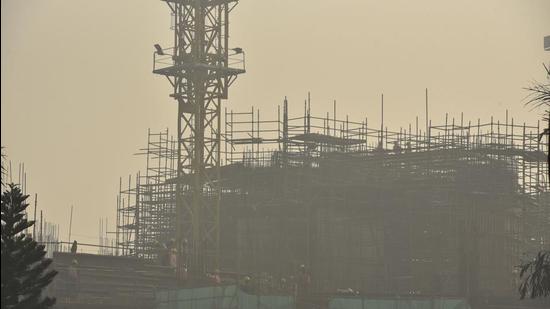
The national capital also recorded the maximum of 11 days in November when the index rose above 400, which is considered severe by the pollution watchdog, as it affects healthy people and seriously impacts those with prior illnesses.
Also Read | With list of dos and don’ts, Delhi pollution body asks residents to join air pollution fight
Besides human activities like construction and transportation that leads to harmful emissions, unfavourable meteorological conditions worsened the situation. Delhi usually sees at two western disturbances in the month, which often brings rain, but more importantly, stronger winds that help in dispersing pollutants. This year, there were none, according to R.K Jenamani, a scientist at the weather office.
“A western disturbance can bring rain and also increase wind speed a day before it is approaching, and when it is departing too,” Jenamani said. “This generally gives a two-three day window where air quality improves.”
{{/usCountry}}“A western disturbance can bring rain and also increase wind speed a day before it is approaching, and when it is departing too,” Jenamani said. “This generally gives a two-three day window where air quality improves.”
{{/usCountry}}Also Read | Delhi’s pollution drops to 7-day low but stays in ‘very poor’ zone
November, however, was slightly cooler than usual, as average monthly maximum temperature of 27.8 degrees Celsius was the lowest since 2013, when it was 27.3 degrees. The normal monthly maximum for the month is 28.2 degrees. Average minimum temperature was also slightly lower at 12.3 degrees compared with the normal 12.9 degrees.
All days except two saw AQI values exceeding 300, which means residents had no respite from the toxic blanket that smothered the capital through the month.
Last year, Delhi had light showers on November 17, and AQI dropped to a more breathable 171. In 2019, November saw the influence of a western disturbance towards the end of the month that provided some relief.
“Meteorological conditions, including wind speeds and mixing height, became increasingly unfavourable for dispersion of pollution as November progressed. Unlike November 2020, Delhi did not experience any rainfall in November this year,” said Tanushree Ganguly, programme lead at the Council on Energy, Environment and Water, a Delhi-based think tank. “Furthermore, this November was slightly cooler than last year, which suggests that emissions from local biomass burning for heating needs may have increased,”
This year, the peak pollution level for the month were recorded on November 12, when the AQI touched 471, while in 2016, the peak touched 497.
However, more air quality monitors could play a role in it, experts said. “The peak this year or that year may not be that different, since only nine stations were considered for the 2016 reading, while now, there are 36 to 38 stations in Delhi and the average reading gets impacted,” said Anumita Roy Chowdhury, executive director at the Centre for Science and Environment, an advocacy group. “Both can be equally dangerous,”
In contrast, October was the cleanest since 2015, with an average AQI of just 173, as a delayed monsoon kept pollution levels at bay.
Stay updated with all top Cities including, Bengaluru, Delhi, Mumbai and more across India. Stay informed on the latest happenings in World News along with Delhi Election 2025 and Delhi Election Result 2025 Live, New Delhi Election Result Live, Kalkaji Election Result Live at Hindustan Times.
Stay updated with all top Cities including, Bengaluru, Delhi, Mumbai and more across India. Stay informed on the latest happenings in World News along with Delhi Election 2025 and Delhi Election Result 2025 Live, New Delhi Election Result Live, Kalkaji Election Result Live at Hindustan Times.