E-Paper



DDA takes over Delhi club that was once the home of cricket
Officials of the club said the sealing was done despite a stay from the Delhi high court, valid till October 6

 Prefer HTon Google


It was at Delhi’s Roshanara Club on a winter day in December 1928 when, after much deliberations, the Board of Control for Cricket in India (BCCI) took shape. In the next three years, the club, founded in 1922, hosted what was to be the first unofficial Test match between India and England. It has also hosted several first-class matches and Ranji trophies over the years.
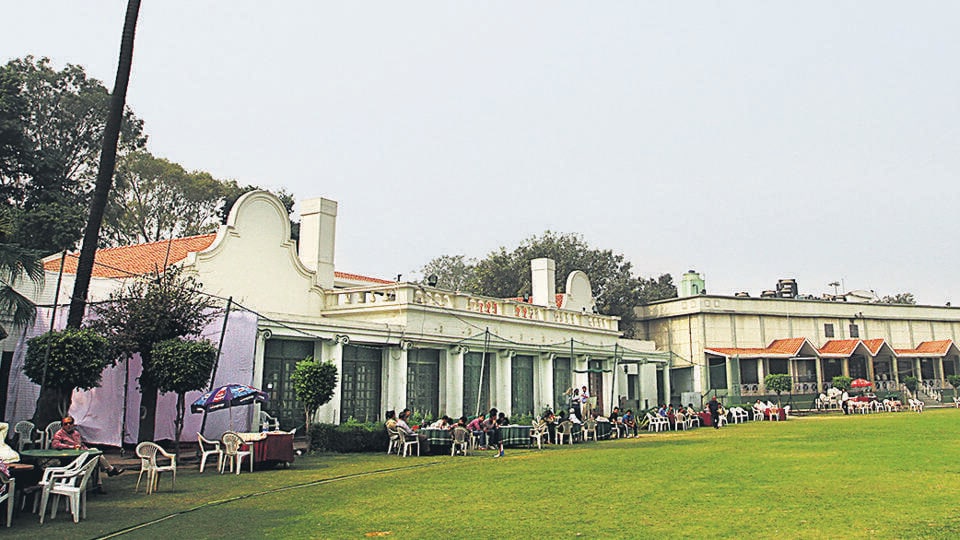
On Friday, around 5am, the Delhi Development Authority (DDA) with ostensibly a 500-strong team of officials, sealed the club and took its possession. The seemingly ignominious turn of events for what used to be the home of cricket in India was triggered by the lease for Roshanana expiring, the officials said.
The land on which Roshanara Club was set up involved two leases, each covering half of the area. The first lease was issued in 1922 and the second in 1928 by the then government department while India was still under British rule. The earliest leases were for 30 years and were renewed in 1952 and 1958, then again in 1982 and 1988.
The first lease has expired since 2013 (it received an extension in 2012 for year) and the second expired in 2018. Club functionaries said the DDA did not renew the leases, citing a new policy in the works by Union urban housing ministry for all clubs in Delhi.
The DDA, on the other hand, has said that due process was followed and the sealing was carried out because the club had allowed encroachments.
“About a year ago, when we pursued the authority to extend our lease. We were told that MoHUA is making a policy for all clubs in Delhi... But six months ago, we got a notice from DDA to vacate the premises, after which we reached out to the Delhi high court for an extension. The court directed us to pursue the matter at a lower court but also stayed the eviction of the club till the policy was formed. Obviously, there is no policy yet. So, there should be no reason to seal the club,” said Rajan Manchanda, general secretary of the Roshanara Club.
Manchanda added that the lower court dismissed the club’s plea on September 25 and the order was uploaded online on September 27. “There will be no cricket played... We had planned under-19 and under-23 matches, and a Ranji match in January. It is a ground where players like Tiger Pataudi, Abbas Ali Baig, Bishan Singh Bedi, Harbhajan Singh and Virat Kohli have played,” added Manchanda.
DDA officials said they sent two notices last month regarding the sealing and alleged that “the club was in a state of disrepair and was illegally encroached upon”. When contacted, DDA said it took action under provisions of Section 5 (2) of the Public Premises (Eviction of Unauthorised Occupants) Act (PPE), 1971, which deals with encroachments.
“During the eviction proceedings, it was found that apart from illegally occupying land worth thousands of crores for years together, the management of the club had allowed about 3.5 acres of precious land, out of 23.29 acres leased to the club, to be encroached. The cost of the encroached land itself works out to more than ₹180 crore as per the prevalent circle rate. In addition to this, the management of the club had also unauthorisedly let out land to nurseries and illegal hutments... the Club... had become the private property of certain individuals,” a statement by the land-owning agency said.
But, officials of the club said the sealing was done despite a stay from the Delhi high court, valid till October 6.
To date, the ground has consistently been used by the Delhi Ranji Trophy team as a second venue. The club was founded after the British, then-bureaucrats and emerging Indian elites, all residents of the Civil Lines, joined hands.
It is located in a corner of the iconic Roshanara Garden from which it derives its name. The garden was named after Roshanara Begum, the daughter of Mughal emperor Shah Jahan, who laid it out in the year 1650. The club’s founding members included Sir Sobha Singh, a prominent builder of Lutyens’ Delhi and father of Khushwant Singh, Rai Bahadur Sultan Singh and RE Grant Govan.
Today, a membership costs ₹13 lakh with a monthly charge of ₹1,200.
Spread over 22 acres with a sprawling garden, a banquet, a restaurant, and a plethora of sports facilities, the club boasts among its A-list politicians, lawyers, judges, bureaucrats and businessmen. Back in the day, the club was frequented by dignitaries like Jawaharlal Nehru, Zakir Husain, VV Giri and Dr Rajendra Prasad.
A long list of cricket stalwarts were frequent visitors too, ranging from Lala Amarnath, Mohinder Amarnath, Virender Sehwag, Virat Kohli, Gautam Gambhir, Ishant Sharma, Yuvraj Singh, Rahul Dravid, Shikhar Dhawan and many others.
The club members now plan to file a special application as their legal team believes the stay of the sealing was applicable till October 6. On Friday, the election for the governing body of Roshanara Club was also scheduled, which was not held after the sealing took place.
DDA, on its part, plans to restore the club before restarting it, and will make efforts to retain all existing members, a statement by the agency said.