
 E-Paper



Death penalty to Batla convict cut to life term by Delhi high court
The court said there was nothing on record to attribute the shot responsible for Delhi Police inspector Mohan Chand Sharma’s death to a particular accused


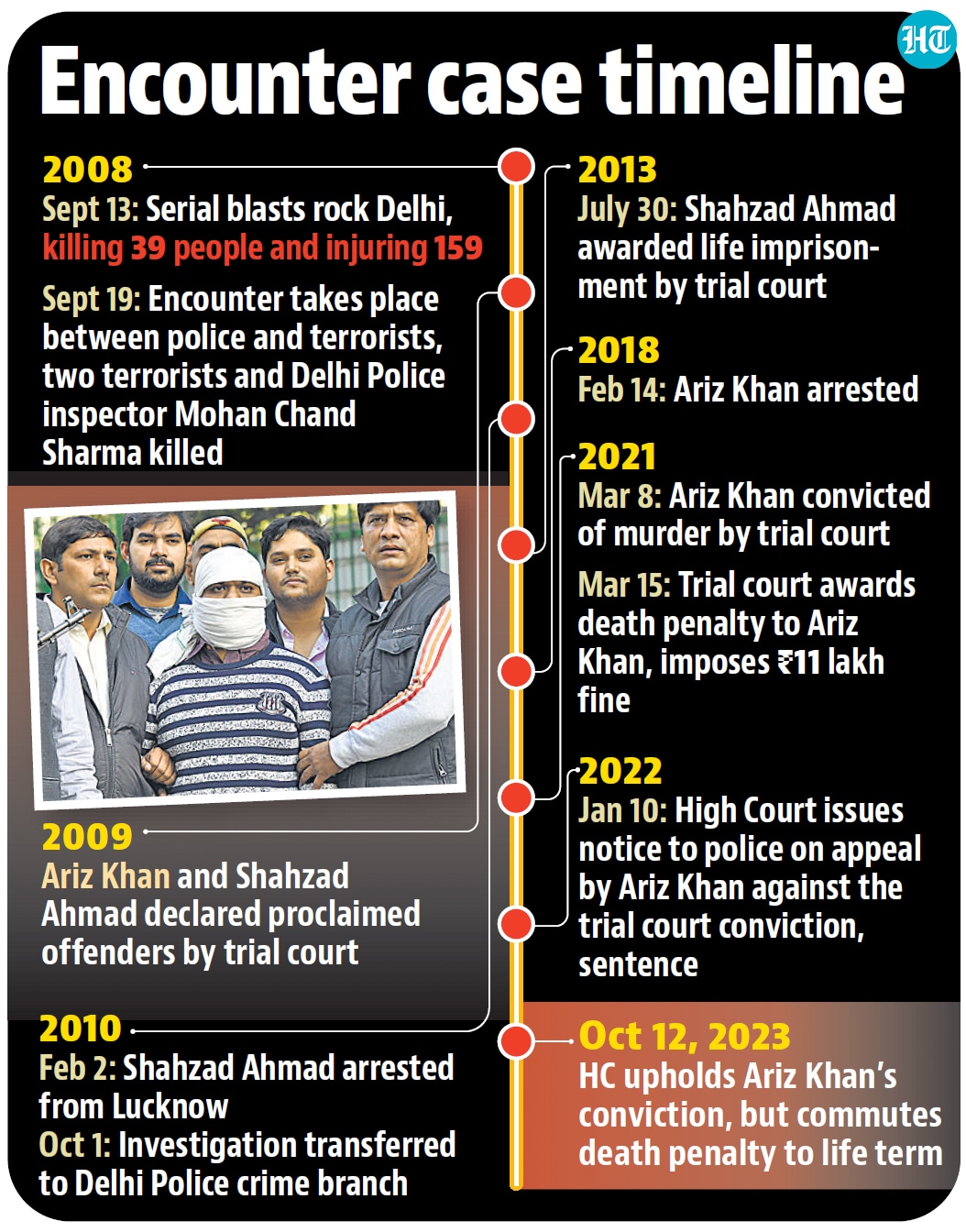
The Delhi high court on Thursday commuted the death sentence given to Indian Mujahideen operative Ariz Khan in connection with the 2008 Batla House encounter case — in which decorated Delhi Police inspector Mohan Chand Sharma was killed — to life in prison. The court held that circumstances in the case were not sufficient for it to fall under the category of a “rarest of rare case.”
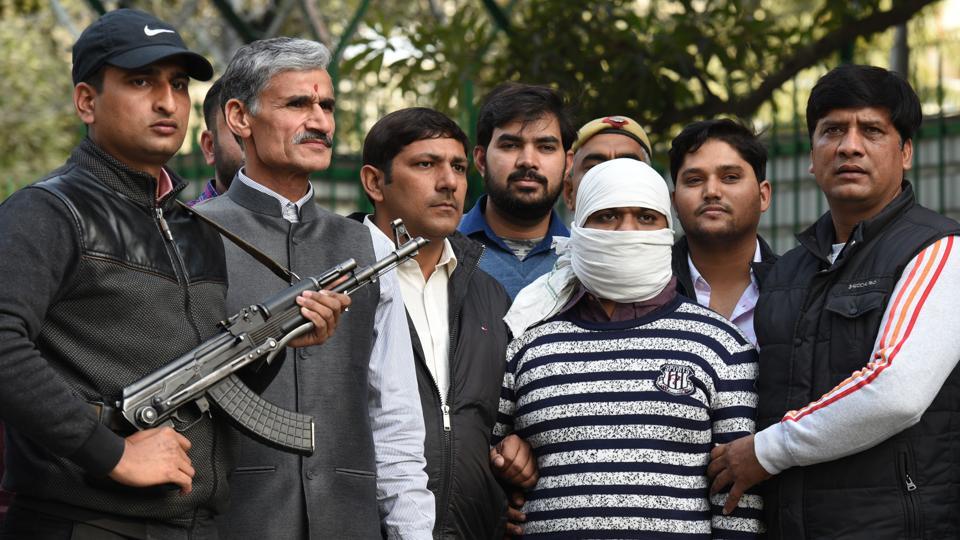
The gunfight in question took place on September 19, 2008 — six days after a series of explosions in Delhi led to the death of 39 people, with more than 150 people injured. Inspector Sharma of the special cell got a specific tip-off about Indian Mujahideen terrorists involved in the blasts hiding in a flat at Batla House in Jamia Nagar.
Also read: Fed up with sexual abuse, 14-year-old boy slits throat of tutor, say police
After Sharma and his team arrived at the spot, an encounter broke out, and two terrorists — Mohammad Atif Ameen and Mohammad Sajid — along with Sharma were killed.
On Thursday, a bench of justices Siddharth Mridul and Amit Sharma was of the view that there was nothing on record to attribute the shot responsible for Sharma’s death to a particular accused.
“But at the same time, it is pertinent to note that there is nothing on record to attribute the fatal shot responsible for the death of late inspector Mohan Chand Sharma to any particular accused. At this stage, it is pertinent to note that this court is conscious of the fact that during the incident, the country lost a decorated police officer who sacrificed his life in the line of duty... However, the circumstances of the present case, as discussed hereinbefore, are not sufficient for it to fall under the category of a ‘rarest of rare’ case,” the bench said in a 105-page verdict, authored by justice Sharma.
The court, however, upheld Khan’s conviction under multiple sections of the Indian Penal Code and Arms Act, opining that eyewitness testimony and corroborating material not only established his presence at Batla House, but also the fact that he fired at the police and fled from the spot.
“In the present case, we have already held that the testimony of the eyewitnesses and other corroborating material establish the presence of the appellant at the place of incident and the factum of his firing at the raiding party while fleeing from the spot,” the court said.
The high court’s verdict came on an appeal filed by Khan against a trial court’s March 2021 order, handing down him the death penalty. The trial court, while sentencing Khan to death, took note of the fact that he was involved in bomb blasts that had resulted in the “death of hundreds of innocent people”, and had concluded that his case fell under the category of “rarest of rare case” as him firing at the police party without any provocation itself showed that he was a threat to the society and also an enemy of the state.
Khan’s counsel advocate MS Khan submitted before the high court that the trial court’s verdict suffered from legal and factual infirmity as his participation in the shootout and escape from Batla House was not proved by the state beyond reasonable doubt. He further argued that none of the eyewitnesses gave any description regarding Khan’s physical appearance or clothes.
However, the Delhi government, through special counsel Rajesh Mahajan, argued that the verdict did not suffer from any legal infirmity as Khan’s presence on the spot was built on testimonies of six eyewitnesses, who attributed a special role to him for shooting at the police.
The special counsel also argued that Khan’s act of firing at police personnel during the course of his duty fell within the category of aggravating circumstances that are required to be considered while handing down the death sentence.
Mahajan was referring to the case State of Punjab vs Bachan Singh (1980), wherein the Supreme Court laid down the aggravating and mitigating circumstances that are to be considered and balanced before handing down the death sentence.


