
 E-Paper



Delhi assembly ends 3rd session of 9th legislative assembly as three bills passed
Describing the session as “productive and meaningful”, assembly speaker highlighted the passage of three major bills and discussions on urgent civic issues.


The Delhi Assembly wrapped up its third session of the eighth legislative assembly on Friday after 19 hours and 40 minutes of deliberations spread over five sittings from August 4 to 8 during the monsoon session, speaker Vijender Gupta said on Saturday.
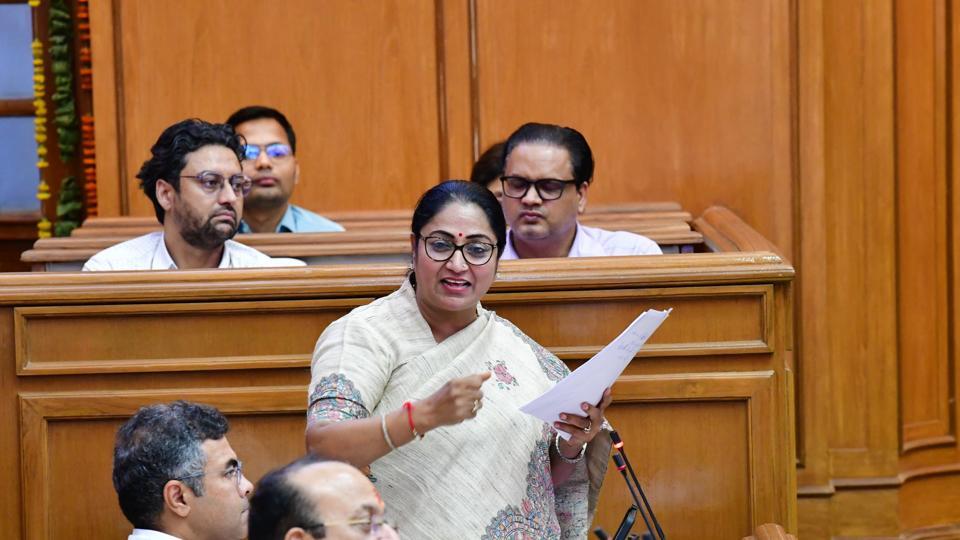
Describing the session as “productive and meaningful”, Gupta highlighted the passage of three major bills and discussions on urgent civic issues.
The House passed the Delhi School Education (Transparency in Fixation and Regulation of Fees) Bill, 2025, tabled by education minister Ashish Sood, and two GST amendment bills moved by chief minister Rekha Gupta. The education bill was debated over two days, with 24 members participating, before being passed by voice vote. The CM called it a “landmark move to protect parents”, while describing the GST amendments as measures to “bring relief to thousands of traders”.
The Delhi school education bill aimed at curbing “arbitrary” fee hikes by private schools seeks to establish a long-term framework for protecting the interests of parents and students. Covering all 1,677 private unaided schools in the capital, it introduces a three-tier grievance redressal mechanism, mandates parental involvement in fee decisions, and prescribes penalties of up to ₹10 lakh for violations.
The Delhi Goods and Services Tax (Amendment) Bill, 2025, according to Chief Minister Rekha Gupta, is designed to simplify tax administration, enhance compliance, and provide significant relief to businesses and taxpayers across the city.
Gupta said the House also discussed Delhi’s water crisis and the condition of several hospitals. Two calling attention motions were taken up, one on reconstructing a dilapidated hospital in Mustafabad, raised by deputy speaker Mohan Singh Bisht and answered by health minister Pankaj Kumar Singh, and another on the water crisis, raised by Jitender Mahajan and replied to by water minister Parvesh Sahib Singh.
In all, 171 special mention notices were received under Rule 280, with 62 taken up in the House and referred to departments for replies within 30 days. The Assembly also passed congratulatory motions for astronaut Shubhanshu Shukla’s mission to the International Space Station, the launch of the NISAR satellite, and the success of Operation Sindoor and Operation Mahadev, commending the Prime Minister, Union ministers, armed forces, and intelligence agencies.
One of the session’s most striking moments came when Speaker Gupta raised concerns over the controversial “Phansi Ghar”, inaugurated in 2022 “without historical evidence”. He said ₹1.04 crore was spent on its construction, leading to tampering with a heritage building and “misleading the public”. He noted that no authentic evidence was presented by the Opposition during the debate. On his orders, the “Phansi Ghar” was renamed “Tiffin Kaksh” to restore the distorted history.
Several key reports were tabled during the session, including the CAG’s audit on construction workers’ welfare, referred to the Public Accounts Committee, and the financial statements of the Delhi government and regulatory bodies. Gupta said the House had “upheld transparency, accountability, and historical integrity” and reinforced its “unwavering commitment to the people of Delhi and the values of the Constitution.”

Stay updated with all top Cities including, Bengaluru, Delhi, Mumbai and more across India. Stay informed on the latest happenings in World News along with Delhi Election 2025 and Delhi Election Result 2025 Live, New Delhi Election Result Live, Kalkaji Election Result Live at Hindustan Times.


