
 E-Paper



Feeding centres in Delhi’s Ridge to keep monkeys off SP Marg
The department said around four different points had so far been set up by them over the last one month where forest officials feed the monkeys a mixture of grams, peanuts and fresh fruits


To lure rhesus macaque monkeys away from the footpaths that run along Sardar Patel Marg and Mother Teresa Crescent, the state forest and wildlife department has begun setting up feeding points inside the Central Ridge forest, officials said.
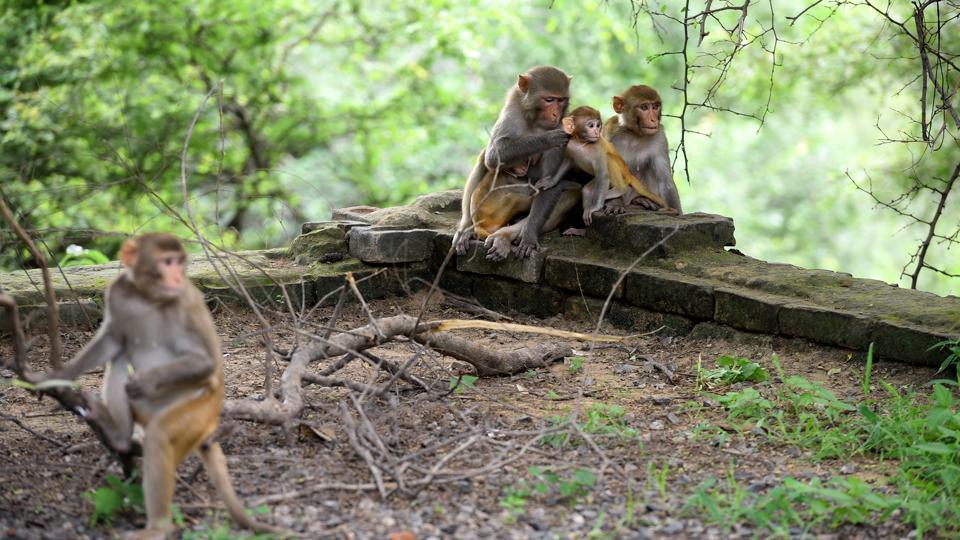
The department said around four different points had so far been set up by them over the last one month where forest officials feed the monkeys a mixture of grams, peanuts and fresh fruits every day.
“The idea behind this is to provide the monkeys a fixed feeding point which is away from the footpath and the roads adjacent to the Ridge. We have seen several monkey deaths on the roads that run along the Ridge, and this usually happens when monkeys head out in search for food. Such a feeding drive is being done for the first time at Central Ridge. Forest guards and rangers will feed the animals at points that are deep inside the Ridge and where there is minimal human intervention,” said a senior forest official, adding that the monkeys are also less likely to venture out of the forest now in search of food.
The department said not only will this prevent roadkill incidents, but it will also ensure that the beautification work done for the G20 summit along these stretches are not damaged.
The department said in the coming weeks, more such points will be identified.
“The monkeys are not being caught or being removed from the points where they were commonly seen. Instead, we are drawing them deeper inside through fresh food and once a suitable point is identified, we begin to feed them there,” said a second official associated with the project.
Interestingly, the forest and wildlife department had last month said that rhesus macaque monkeys will now be the sole responsibility of the Municipal Corporation of Delhi (MCD), owing to it no longer being a scheduled animal as per the recently amended Wildlife Protection Act, 2022, which came into force from April 1 this year. The department had said the animal will now be treated similarly to urban animals like community dogs or cattle. When asked why the department had decided to feed these monkeys, a forest official said this was being done to prevent roadkill deaths. “This is something that the department is doing consciously on its own.”
The forest department has been feeding monkeys at the Asola Bhatti Wildlife Sanctuary since 2007, following a Delhi High order that year which asked for monkeys to be relocated there. It is estimated that there are around 25,000 monkeys at the sanctuary. However, there is no estimate for the population outside, with the department failing to initiate a monkey census multiple times over the last few years.
The forest department also spends around ₹8 lakh every month to feed monkeys at Asola sanctuary. However, officials said an estimated cost for feeding monkeys at the Central Ridge was yet to be fixed. “Since more feeding points are being set up, we will continue to assess the requirement for food,” the second official added.
While different agencies in the past have issued notices and warnings of fines against people feeding monkeys, this has seldom been imposed on the ground. In 2007, a public notice issued by the forest department had said that the MCD and New Delhi Municipal Council (NDMC) will fine people found feeding monkeys in public areas. In December 2021, the Delhi Cantonment Board had issued a notice, warning a fine of ₹5,000 per offence under its jurisdiction. This, it had said, had been issued after directions were given by Delhi’s chief wildlife warden to discourage feeding in public places.
Faiyaz Khudsar, scientist at Yamuna Biodiversity Park (YBP) and scientist-in-charge of the biodiversity parks programme of the Delhi Development Authority, said while it may be difficult to confine the monkeys to the forest alone, this plan can certainly minimise their movement. “Even with feeding points, the monkeys will not stay in one area alone, as they usually have defined routes or paths that they take. It will take time to change this habit. But gradually, we will see lesser monkeys near the road,” he said, adding that the foliage and fresh fruits were the ideal diet for the animal if it had to be fed in such a manner.


Stay updated with all top Cities including, Bengaluru, Delhi, Mumbai and more across India. Stay informed on the latest happenings in World News along with Delhi Election 2025 and Delhi Election Result 2025 Live, New Delhi Election Result Live, Kalkaji Election Result Live at Hindustan Times.


