
 E-Paper



Delhi govt ups action against owners of vehicles without pollution papers
All these vehicles are on the radar of the transport department, which is launching a campaign to ensure owners of such vehicles are brought to book, officials said.

 Prefer HTon Google


In a city where pollution is a menace for much of the year, 1.7 million vehicles registered in Delhi, including 300,000 cars, do not have valid pollution under control (PUC) certificates, officials of the transport department have said, adding that these certificates are to be renewed periodically, usually every year, to ensure tailpipe emission control.
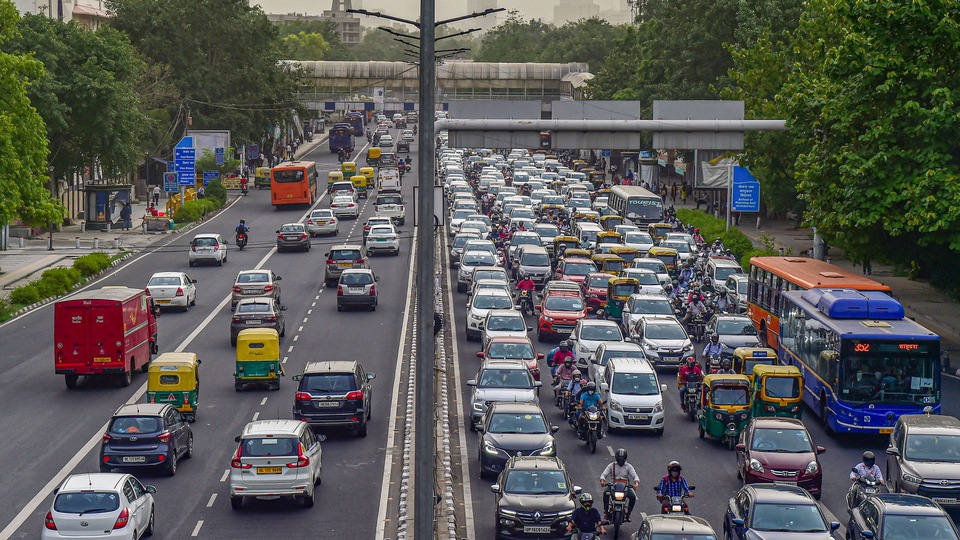
All these vehicles are on the radar of the transport department, which is launching a campaign to ensure owners of such vehicles are brought to book, officials said.
Transport minister Kailash Gahlot said, “We are running a campaign to urge owners of vehicles without valid PUC certificates to immediately get their vehicles checked and certified. Our target is to ensure that no vehicle without valid PUC runs in Delhi. For that, we need the cooperation of vehicle owners. Enforcement will also be tightened and vehicles without valid PUC certificates will face penal action,” he said.
A PUC certificate is a mandatory document certifying that the vehicle’s tailpipe emission falls within permissible limits. A vehicle plying without a valid PUC certificate is liable to be prosecuted under Section 190(2) of the Motor Vehicles Act and may lead to imprisonment of up to three months or fine of up to ₹10,000, or both.
A transport department official said the department has identified 1.7 million vehicles in the capital that do not have a valid PUC certificate. “Among the 1.7 million vehicles, nearly 288,000 are cars, 1.37 million are two-wheelers, and the rest are vehicles such as trucks, auto-rickshaws, four and three wheeled goods carriers, etcetera. All of these vehicles are on our radar and their owners are being sent text messages asking them to renew the PUC certificates at the earliest,” said a transport department official, asking not to be named, adding that the department did not have figures on how many of these vehicles are still plying.
Sharing the long-term plan to ensure PUC compliance, a second senior official said the department is planning to start issuing fines at the doorstep of owners who fail to renew their vehicles’ PUC certificate.
“Under the MV Act, only vehicles plying without PUC certificates can be fined. We are planning to develop some mechanism at fuel stations to track such vehicles when they come for refueling and then issue them fines,” said the official, asking not to be named.
The official said the department is likely to float a request soon, inviting firms with expertise to implement a ‘vehicle scanning mechanism’ at petrol pumps. “That will likely take some time,” said the official.
A vehicle owner may get her vehicle checked for emissions at any one of the numerous PUC certifying centres across the capital. Delhi has around 966 such centres spread over 10 zones. The list of authorised centres is available on the website of the transport department.
The fee for pollution checking is ₹60 (excluding GST) for two- and three-wheelers, ₹80 for four-wheelers, and ₹100 for diesel vehicles.
The certifying process is computerised and each certificate is valid, usually for a year, and has to be renewed periodically, officials said. The data of vehicles received by PUC centres is forwarded to the transport department which maintains integrated centralised data records of vehicles.
An official at one of these centres said towards the end of last year, there was a software upgrade after which the issuance of the certificates is running smoothly. A PUC centre operator in east Delhi said currently there is no “unusual rush” at the PUC centres but people are coming to get their vehicles checked.
The transport department has been issuing public notices for PUC norms compliance and is also running an enforcement campaign. The data of fines issued in the last one month for pUC norms violations was not readily available with the department.
Anumita Roychowdhury, executive director (research and advocacy), Centre for Science and Environment, said studies have shown that vehicles are the second highest contributor to particulate pollution in Delhi and their share increases during winter.
“Vehicles are also responsible for high toxic exposures. Proper maintenance and repair of vehicles is necessary to keep them low emitting during their useful on-road life. While 100% compliance based on credible PUC tests is necessary, it is also important to upgrade to more advanced vehicle emission surveillance systems, such as remote sensing, for more stringent monitoring,” she said.


