
 E-Paper



Delhi: Non-fiscal incentives crucial for EV adoption, say experts
India's EV adoption may stall without revising building codes for charging infrastructure, despite 32 states having EV policies in place.

 Prefer HTon Google


Even in Norway – hailed as the world’s model for electric vehicle (EV) adoption – resistance came not from policymakers but from neighbourhoods, where housing associations blocked residents from installing chargers in shared complexes. A legal intervention in 2017 mandating the right to home charging proved pivotal in breaking that deadlock, according to Markus Rotevan of the Norwegian EV Association.
Meanwhile, an analysis by the International Council on Clean Transportation (ICCT) has found showed that while 32 of India’s 36 states and Union territories now have an EV policy in place, only half have taken the crucial step of revising building byelaws to mandate EV charging points in new constructions.
India has set itself the ambitious goal of ensuring 30% of all vehicle sales are electric by 2030. The ICCT report, The Invisible Push: The Role of Spatial Planning Norms in Accelerating Electric Vehicle Charging Infrastructure Deployment in India, argues that the country’s EV transition will falter unless building codes, urban planning, and charging infrastructure are aligned. The study shows a positive correlation between charging infrastructure availability – especially private or captive charging – and higher EV adoption rates.
“Revising spatial planning norms will anchor policy commitments into the built environment, allowing future investments and urban growth to align with national goals of electrification,” the report said. The findings become particularly urgent with India projected to add around 700–900 million square metres of new residential and commercial space annually until 2030.
Some states have already taken proactive measures. Andhra Pradesh, Karnataka, and Uttar Pradesh have gone beyond policy rhetoric to require EV charging provisions in both building complexes and public spaces. Within buildings, Andhra Pradesh, Delhi, Karnataka, Punjab, Uttar Pradesh, and West Bengal mandate charging infrastructure across most building types.
However, while fiscal incentives dominate most state policies, non-fiscal measures – such as amending building codes, reserving parking slots for EVs, or mandating charging in housing societies – remain limited. Experts warn that without these structural reforms, the pace of EV adoption could stall.
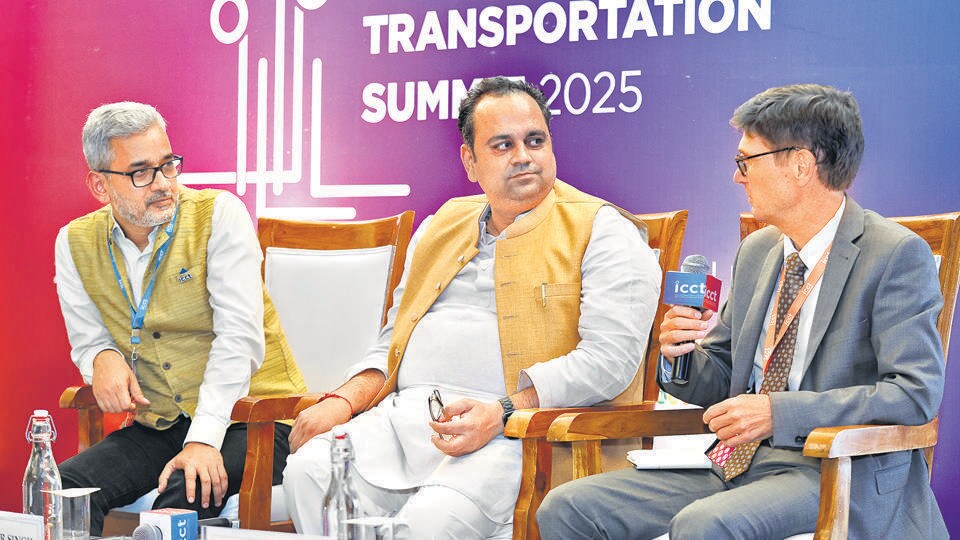
The analysis was released during a two-day annual flagship summit, organised by the ICCT with Norway as the partner country and supported by the Union ministry of heavy industries, brought together policymakers, industry leaders, and international experts.
Hindustan Times is the media partner for the event.
The neighbourhood roadblock
Even where policies exist, challenges emerge at the ground level. In cities like Delhi NCR, Bengaluru, and Mumbai, apartment owners’ associations and resident welfare groups have repeatedly opposed the installation of charging points, citing space constraints, safety, or electricity billing concerns.
“This is hardly unique to India,” Rotevan told the Indian Clean Transportation Summit organised by ICCT on Monday. “One of the most universal things in the world is probably grumpy housing association presidents. We have a lot of them in Norway as well.”
With Norway recording 97% of newly registered cars as fully electric in recent months, its journey underscores the importance of combining fiscal incentives with enforceable spatial planning reforms. For India, where the scale of urban growth is far larger, embedding EV readiness into building and planning codes may be the most decisive step yet.
Stay updated with all top Cities including, Bengaluru, Delhi, Mumbai and more across India. Stay informed on the latest happenings in World News along with Delhi Election 2025 and Delhi Election Result 2025 Live, New Delhi Election Result Live, Kalkaji Election Result Live at Hindustan Times.


