E-Paper



Delhi pollution body blames Haryana for dead fish in Yamuna
In a report submitted to the National Green Tribunal on Thursday, it said the sample lifted from the trunk drain eight had zero dissolved oxygen (DO) and biological oxygen demand (BOD) of 64 mg/l

 Prefer HTon Google


New Delhi
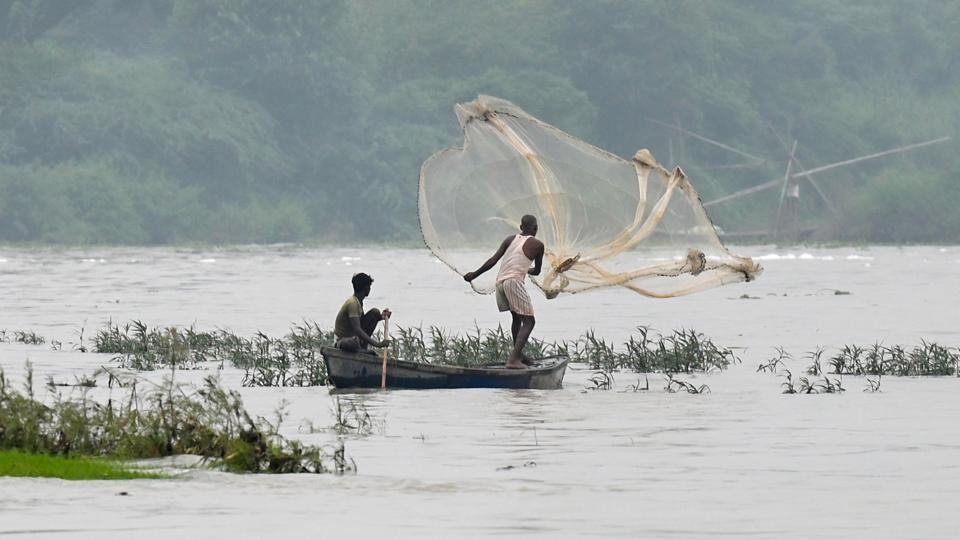
The Delhi Pollution Control Committee (DPCC) has blamed Haryana for fish deaths that occurred on a portion of the Yamuna between Palla and Wazirabad in July, alleging heavy pollution inflow through Haryana’s trunk drain number eight. Dead fish were reported from the Yamuna floodplains, on a stretch just before Wazirabad, over multiple days.
In a report submitted to the National Green Tribunal on Thursday, it said the sample lifted from the trunk drain eight had zero dissolved oxygen (DO) and biological oxygen demand (BOD) of 64 mg/l. The Central Pollution Control Board (CPCB) requires DO level over 5 mg/l and the BOD level less than 3 mg/l for aquatic life to survive.
The state pollution body said three samples were lifted: One from the stretch before trunk drain number eight, another from the drain and a third from the stretch after the drain meets the Yamuna. The respective DO levels were 8.9 mg/l, zero and 7.8 mg/l, and the respective BOD levels were 2 mg/l, 64 mg/l and 5 mg/l.
“The results show BOD of drain number eight, before meeting the Yamuna river is 64 mg/l. This indicates high pollution load in the drain, which discharges effluent into Yamuna causing deterioration of the water quality downside of its discharge, particularly in the lean season, resulting in this kind of incident,” the DPCC said in its report dated November 1.
DPCC was responding to an NGT order dated July 26, seeking details on the fish deaths, based on a news report. On July 5, HT reported images of dead fish floating in the Yamuna were surfacing daily, indicating high BOD and low DO.
DPCC further said it wrote to the Haryana State Pollution Control Board (HSPCB), seeking action and remedial measures for trunk drain number eight. “In this regard, DPCC had already issued a letter on January 11 this year,” the report said.
The Haryana State Pollution Control Board (HSPCB) however, denied the same. An official said that in July, it was already monsoon, making possibility of such high BOD and zero dissolved oxygen “next to impossible”.
“We also did not receive any communication from the DPCC regarding evidence sampling. Our own data shows the DO at both Palla and in the drain was 5 mg/l, which is enough to sustain fish,” the HSPCB official said.
In March, NGT directed Haryana to take remedial measures for trunk drains number eight and six, after the Delhi Jal Board (DJB) alleged that sewage and effluents from drain number six were mixing with stormwater in drain number eight and thus, contaminating not just the Yamuna, but Delhi’s water supply too. Raw water from drain number eight is also used for drinking purposes — after passing through several stages of open and closed treatment — in the Capital.