E-Paper



Over 24,000 challans issued for violating bus lane rules in Delhi
Till May 8, 162 challans were also issued to bus drivers for not using the designated lanes, officials said


The transport department has issued over 24,000 challans over a period of nearly 50 days to private vehicle owners, and drivers of autorickshaws and e-rickshaws for parking in bus lanes, since April 1, according to officials aware of the matter.
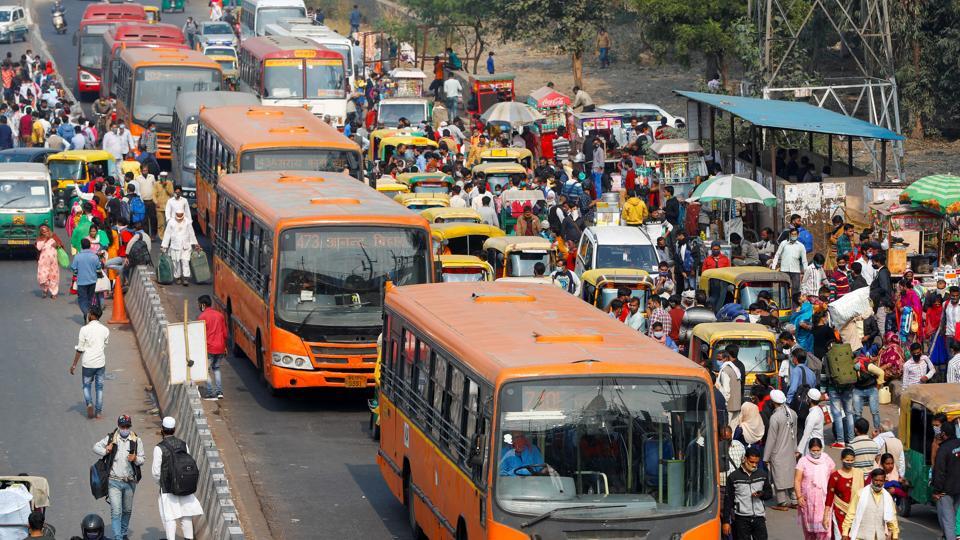
Additionally, till May 8, 162 challans were also issued to bus drivers for not using the designated lanes, the officials added.
This was part of an enforcement drive which ensured that buses and goods carriers use the earmarked leftmost lane, along some of the major roads across the city. Traffic challans are usually issued by the traffic police, while the transport department only issues challans during enforcement drives.
According to the officials, using bus lanes for movement and stopping briefly for pick and drop is allowed, but they cannot be used by private vehicles to park or halt for a long time.
“We issue at least 1,000 challans almost every day. Most of the challans are imposed on private cars. However, we also get several complaints now regarding autos and e-rickshaws parked wrongly. We are working on separate enforcement drives for them,” said Shahzad Alam, special commissioner, transport department.
Alam added that the initiative is aimed at reducing accident fatalities in Delhi by inculcating lane driving practice among drivers, along with ensuring that the lanes are kept free from encroachment and illegal parking.
Officials said that of the 162 challans issued to bus drivers, 70 were against Delhi Transport Corporation (DTC) buses and 92 were against cluster buses. The bus drivers are issued a penalty of ₹10,000 based on their permit conditions, while other vehicles are imposed with a fine of ₹500. According to traffic police data, DTC buses were involved in 37 fatal crashes last year in which a total of 39 people were killed.
In October 2022, the Delhi government earmarked 22 stretches with signage and thermoplastic paint, making it mandatory for buses to stay in the designated lanes, and 66 mobile teams were deployed for its enforcement, officials said.
The corridors with earmarked bus lanes include Mehrauli-Badarpur Road stretch, Ashram Chowk to Badarpur border, Janakpuri to Madhuban Chowk, Moti Nagar to Dwarka Mor, Mayapuri to Brittania Chowk, Britannia Chowk to Dhaula Quan, Rajghat to Sarai Kale Khan to Hauz Khas, Azadpur to Delhi University, Kashmere Gate ISBT to Apsara Border, Signature Bridge-Bhopura Border, Jahangirpuri Metro Station-Kashmere Gate ISBT and ITO-Ambedkar Nagar.