E-Paper



Delhi turns up the heat: Temperature may rocket to 37°C this week
The maximum temperature in the Capital, already hovering four-five degrees above the normal mark, is expected to soar further with mercury predicted to touch 36-37 degrees Celsius (°C) by the weekend, Met officials said on Monday

 Prefer HTon Google


The maximum temperature in the Capital, already hovering four-five degrees above the normal mark, is expected to soar further with mercury predicted to touch 36-37 degrees Celsius (°C) by the weekend, Met officials said on Monday.
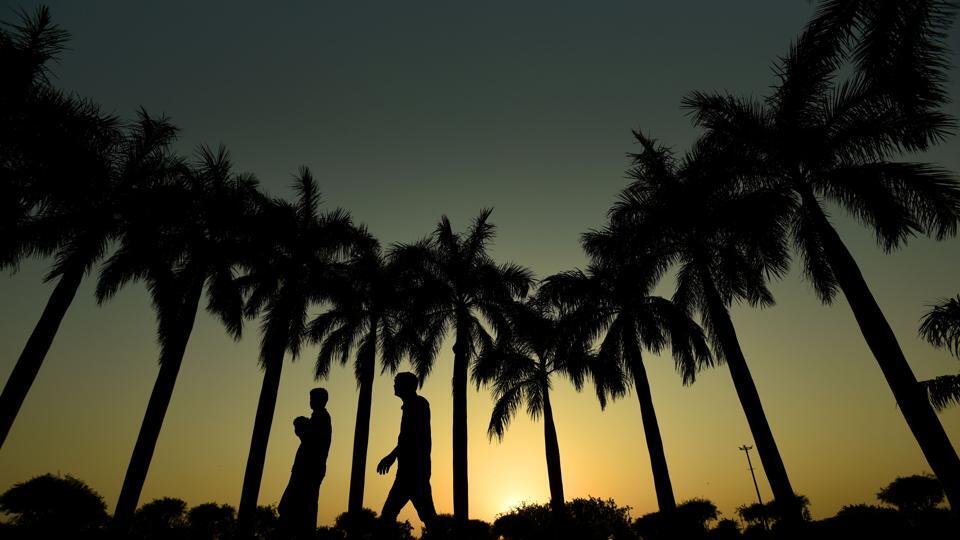
Safdarjung, the base station for Delhi’s weather, touched a high of 33°C on Monday – four degrees above the normal mark and the highest maximum so far this year. Weather stations at Najafgarh and Yamuna Sports Complex in east Delhi reported a slightly higher maximum temperature at 34.8°C.
Delhi also recorded a minimum temperature of 17°C on Monday – a degree above normal. This too is forecast to see a slight spike further this week, hovering around 18-19°C, IMD said.
For Holi (on Friday), IMD has forecast maximum temperature of around 35-36°C in most parts of Delhi.
According to India Meteorological Department (IMD), the maximum temperature at Safdarjung could touch 34°C on Tuesday and 35°C by Wednesday, with other areas also recording a slightly higher jump.

The maximum temperature has seen a gradual rise over the last three days in Delhi -- it rose from 31.2°C on Saturday to 32.6°C on Sunday and 33°C on Monday, the highest so far this year.
IMD scientist RK Jenamani said Delhi is unlikely to record any rain till March 20 – an occurrence last seen only in March 2018 and only for the second time in the last 10 years. “Lack of rain has played a key role in Delhi, recording above normal temperature. No rain making western disturbances have been recorded in March so far over Delhi, which will see the maximum touch 37°C by the end of this week,” he said.
While the normal average rainfall mark for March is 15.9mm, Delhi has failed to record any rainfall so far this month. Last year, Delhi recorded only 3.6mm of rainfall in March and the maximum temperature reached 40.1°C -- eight degrees above normal -- at the end of the month. In contrast, March 2020 saw 109.6mm of rainfall with the highest maximum temperature only touching 33.3°C.
Though the normal average maximum temperature for the second half of March is between 30.6°C and 32°C, Delhi has seen extreme highs in the last decade too.
While it touched 40.1°C in March 2021 -- the hottest March day since 1945 -- it touched 39.2°C in March 2019. In March 2018, the highest maximum was 38.6°C, a shade below the 38.8°C maximum recorded in March 2017.
“If a similar trend continues, parts of Delhi will already reach 37°C or 38°C by March 20. If no rain is recorded in the last week or so, it could touch close to 40°C again,” said Jenamani.
Meanwhile, Delhi’s air quality deteriorated to the ‘poor’ category on Monday, recording an air quality index (AQI) of 231, according to the Central Pollution Control Board’s daily 4pm bulletin. In contrast, the AQI was 193 (moderate) on Sunday.
“AQI is likely to improve in the next two days (Tuesday-Wednesday) but it will stay within the ‘poor’ category or the upper end of the ‘moderate’ category, as wind speed (6-30 km/h) and mixing layer height (around 1.2km) will be moderate to high. From March 17, the AQI is expected to degrade and likely to be within the ‘poor’ category due to relatively low wind speed which will reduce dispersion of pollutants,” said Safar, a government forecast agency.