E-Paper



Delhi: Civic bodies to suggest increasing fines for mosquito breeding spots
The municipal corporations will suggest increasing the fine from ₹500 to ₹5,000, and request amendments to the building bylaws to ensure “mosquito-proof” structures

 Prefer HTon Google


Senior officials of the municipal corporations in Delhi have said that they will recommend increasing fine imposed on owner of premises where mosquito breeding is found from the current ₹500 to ₹5,000, as well as amending the building bylaws to ensure “mosquito-proof” structures.
The national capital recorded 23 fatalities and 9,545 cases of dengue this year, according to the latest municipal corporation data. This is the second highest death and case count since 2015, when 60 people died of dengue and 15,687 got infected.
Noting that no corrective measures were taken by authorities to prevent the increase in dengue cases, the Delhi high court on Friday directed all civic bodies to constitute a task force headed by their commissioners to take steps to prevent the city from “being infested by mosquitoes”.
Expressing its displeasure over the “inaction of the authorities”, the court said, “Every year, for the past 20 years, we are suffering the same thing. And nothing seems to happen. Why does the Commissioner not take the moral responsibility and tender his resignation? What prevents him?”
A senior South Delhi Municipal Corporation official said currently a fine of ₹500 is imposed if domestic breeding checkers and inspectors find mosquito larvae in stagnant water in a property. “The fines were fixed over two decades ago, and we are going to recommend that at least a 10 times hike should be implemented. We will send a proposal to the Delhi government’s health ministry,” an official from public health department said.
According to the Delhi Prevention and Control of Malaria, Dengue, Chikungunya or any Vector Borne Disease Regulations, 2021, that were notified on October 14, 2021, all hospitals and health institutions have to mandatorily report any case of these diseases to the government.
The regulations also empower the domestic breeding checkers, officials appointed by the civic agencies to monitor various premises for mosquito breeding, who are often denied entry by owners of properties.
“For the purpose of enforcing the provisions of these regulations, the inspecting officer may.. enquire and inspect any land or building within his jurisdiction and the occupier of such building shall give all facilities necessary for such entry and inspection, and supply all such information as may be required for the aforesaid purposes,” the notification states. Violation of the order is punishable under section 188 of Indian Penal Code (IPC), the regulations said.
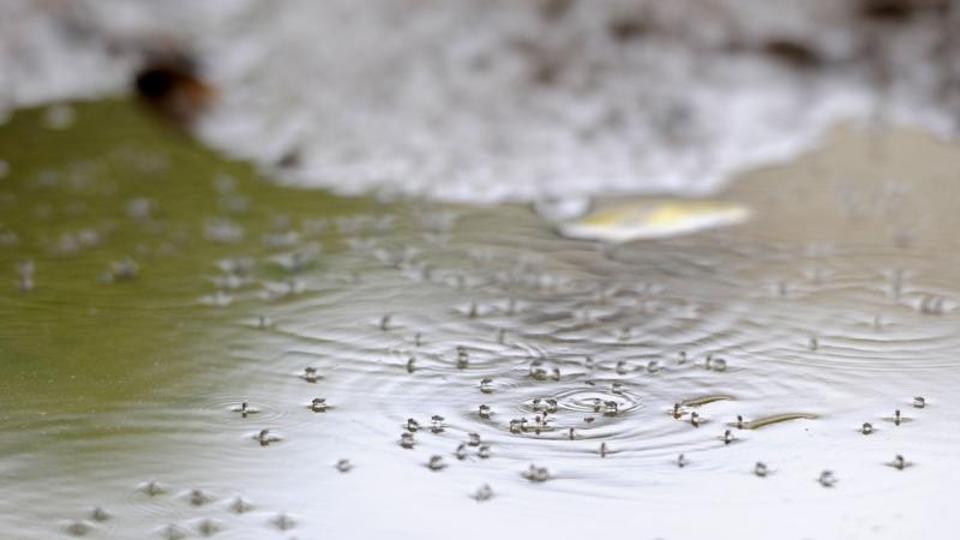
The annual data from the vector-borne diseases report released on Monday showed that mosquito breeding was found at more than 196,000 houses and properties.
A public health inspector who asked not to be named said a fine of ₹500 cannot be a deterrent. “Breeding checkers are often not allowed to enter houses. At construction sites and other large premises, we also add the cost of insecticides used to kill larvae to increase the quantum of fine,” the inspector said.