
 E-Paper



Delhi: Froth at Wazirabad raises alarm about Yamuna pollution
Toxic foam and odor at Wazirabad barrage raise pollution concerns for Delhi's drinking water, as contamination may spread upstream in the Yamuna.

 Prefer HTon Google


Toxic froth and an ammoniacal stench at the Wazirabad barrage, a crucial drinking water source for Delhi, have triggered fresh concerns about pollution levels in the Yamuna, with activists warning that contamination may now be creeping into upstream stretches of the river, once considered relatively cleaner.
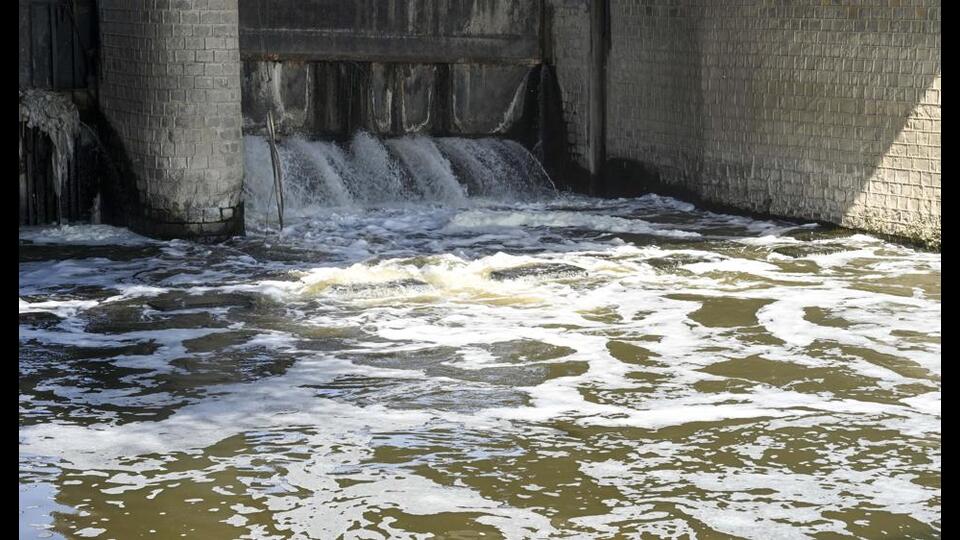
Typically, visuals of toxic foam on the river surface are observed downstream at Kalindi Kunj near the Okhla barrage, after 22 major drains add to the pollution load. The water quality at Wazirabad is generally considered relatively better, and the city draws raw water from the Wazirabad pondage area to feed two of its water treatment plants. Activists have expressed concern after recent photographs showed frothing near this site.
Yamuna activist Pankaj Kumar posted visuals of the froth at Wazirabad on X, tagging government functionaries, and wrote: “Normally, the stretch downstream of Wazirabad does not have this kind of visible toxic froth. Now, there is visible foam appearing upstream of the Najafgarh drain confluence point, and this same water is being treated and supplied to the people of Delhi. What is the reason for this froth in the upstream sections?”
The Yamuna enters Delhi near Palla and flows 48km through the national capital before exiting at Asgarpur. This includes the 22km stretch from Wazirabad to Okhla, which is the most polluted segment, as 22 major drains empty into it. The water up to the mouth of the Najafgarh drain is relatively cleaner, but recent water quality reports indicate a worrying trend.
Yamuna water quality reports from November and December indicate undesirable levels of faecal coliform, phosphate and ammoniacal nitrogen, along with deteriorating biochemical oxygen demand (BOD) and chemical oxygen demand (COD) levels, which are key indicators of organic pollution and overall river health.
According to Delhi Pollution Control Committee (DPCC) reports, faecal coliform levels at Wazirabad were recorded at 2,200 and 1,300 units in November and December, respectively, against a desirable level of less than 500 units. The December report also shows COD levels increasing from 8 mg/L at Palla to 12 mg/L at Wazirabad.
Bhim Singh Rawat, a Yamuna activist and member of the South Asia Network on Dams, Rivers and People (SANDRP), said froth formation at the Wazirabad barrage is alarming. “The city draws its drinking water from the barrage. There should be no phosphate or pollutant load at this point, but the situation is deteriorating. There are three drains in Haryana -- drain number 8, drain number 2 and Dhanora -- that release untreated effluents into the river. Drain number 8 is the main problem and has also caused large-scale fish deaths in the past,” he said.
Rawat added that negligible rainfall in February may have reduced freshwater flow, limiting dilution of pollutants.
During a spot check on Tuesday, HT saw froth in the water flowing through the barrage. An ammoniacal stench was also noticeable near Sur Ghat, adjacent to the barrage.
Ishwar Sharma, a priest at the ghat, said frothing was more visible in the morning. “These episodes occur every few months when the stench increases. We are told that tannery units upstream could be releasing dirty water into the river,” he said.
Kumar, who shared the videos, said he first noticed froth formation at Wazirabad in January, though briefly and at a different location. “It lasted only a few days, and we again saw similar froth briefly in February. Now, it has resurfaced in March at a different spot and this time right at the barrage,” he said, adding that though the scale is not comparable to Okhla, it remains a worrying sign.
“Even a little froth is concerning, as this is where Delhi draws its drinking water. The fact that there are no major drains between Palla and Wazirabad raises questions about the source of this pollution,” Kumar said.
He suggested the source could lie in Haryana, where industrial activity continues. Sewage and effluents entering Haryana’s trunk drain number six, he said, may be seeping into trunk drain number eight, a parallel channel meant to carry cleaner water for Delhi’s drinking supply.
“There is also the possibility of illegal industries in Sonia Vihar discharging effluents. Froth formation is often linked to detergents entering the river, so authorities must examine the sources at the earliest,” he added.
In November, the National Mission for Clean Ganga (NMCG), in an affidavit before the National Green Tribunal (NGT), said instructions had been issued to Haryana to urgently cover drain number six and share monthly water quality reports with the NMCG.
The affidavit came after the NGT took suo motu cognisance of a media report in July 2024 highlighting thousands of fish deaths in the Yamuna near Burari in north Delhi.
Similar fish deaths were reported around Burari in May last year as well, raising concerns about water quality deteriorating upstream of Wazirabad.
Taking note of the report, the NGT had sought responses from agencies on corrective measures. In its reply, the NMCG said a joint meeting was held on October 13, 2025, with officials from the Haryana Pollution Control Board (HPCB), DPCC and the Central Pollution Control Board (CPCB) to ascertain the causes of the fish deaths and prevent recurrence. It added that an action plan had been proposed.
Delhi govt reaction sought (No response so far)


Stay updated with all top Cities including, Bengaluru, Delhi, Mumbai and more across India. Stay informed on the latest happenings in World News along with Delhi Election 2025 and Delhi Election Result 2025 Live, New Delhi Election Result Live, Kalkaji Election Result Live at Hindustan Times.


