
 E-Paper



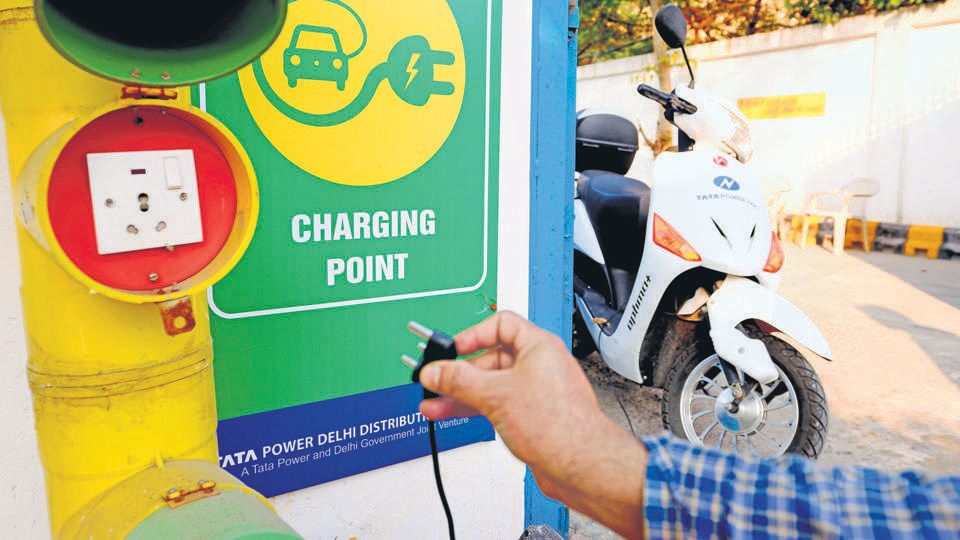
Delhi’s EV push not enough to cut transport emissions, warn experts
Experts further noted that India’s urban mobility planning has channelled significant investments into metro rail and electric buses, in line with national goals

 Prefer HTon Google


Transport and emissions experts on Tuesday said that while Electric Vehicle (EV) uptake in Delhi has crossed 12%, the transition alone may not be a viable solution to cut transport-related emissions in the Capital.
Speaking at a session during Connect Karo 2025 organised by WRI India, experts noted that frequent technological shifts and changing norms often deliver short-term, superficial results without addressing long-term challenges.
Gazala Habib, professor at IIT Delhi, said the rush to push EVs in Delhi overlooks the city’s lack of preparedness to deal with the waste generated.
“Increasing EVs is not really helping with ‘zero emission’ as it also means higher electricity consumption, and our power generation is still largely fossil fuel-based. Moreover, if all vehicles move to EVs, are we prepared for the disposal of batteries that will also increase? We do not have the infrastructure for it as of now,” she said.
Habib added that reducing emissions requires realistic monitoring and assessment, along with multiple measures, rather than relying on a single technology.
Representatives from the trucking industry also flagged practical concerns. Pradeep Singhal, general secretary of the All India Truckers Welfare Association, said, “The truck industry operates at a very low margin and already faces competition from railways and inland waterways. The push towards frequently changing vehicles—from BSIV to BSVI to electric—adds to costs. We do not mind switching if the technology is not obsolete before at least the loans are paid. It is a matter of livelihoods.”
Experts further noted that India’s urban mobility planning has channelled significant investments into metro rail and electric buses, in line with national goals. However, rising private vehicle use is worsening air quality, safety, and equity due to weak holistic planning and limited commuter data. They emphasised the need for a comprehensive, data-driven framework to guide future mobility policies.
Other panellists included Anumita Roychowdhury from Centre for Science and Environment, Dhavala Srinivas from Delhi Integrated Multi-Modal Transit System , Harshal Salve from AIIMS and Anup Patil from Intangles.


Stay updated with all top Cities including, Bengaluru, Delhi, Mumbai and more across India. Stay informed on the latest happenings in World News along with Delhi Election 2025 and Delhi Election Result 2025 Live, New Delhi Election Result Live, Kalkaji Election Result Live at Hindustan Times.


