
 E-Paper



Delhiwale: Monument to the bald
An old ruin in contemporary setting

 Prefer HTon Google


Standing atop a grassy mound, it has the remoteness of a tower. But it doesn’t look like a tower. It doesn’t even have a dome to which it could owe its name, Munda — the bald.
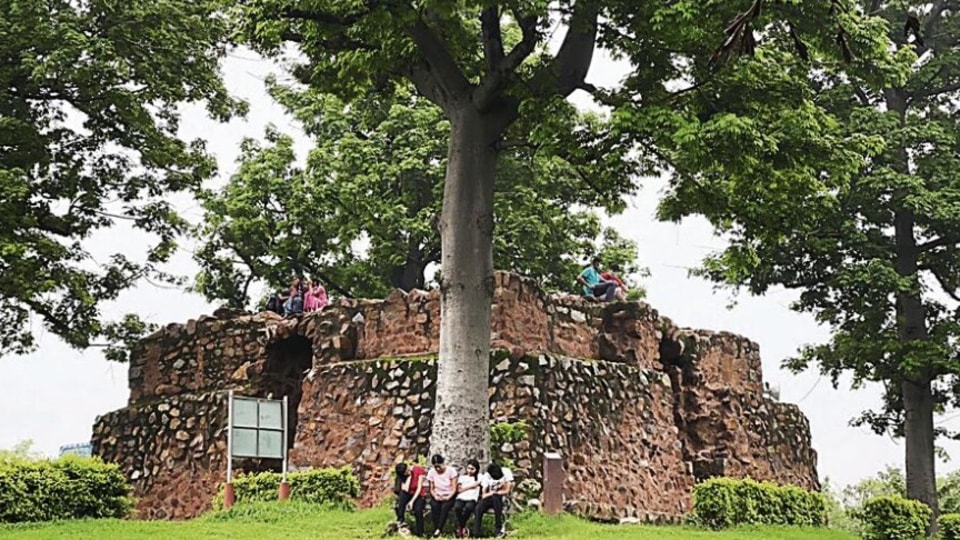
This 13th century stone pavilion in south Delhi’s Deer Park overlooks the Hauz Khas lake on one side and the park’s grassy greens on the others. In the early hours, elderly morning walkers from nearby Safdarjung Enclave sit by its weather-beaten walls to catch their breath. Some daring young men climb to its roof—there’s a staircase—in a show of swagger, and loudly stamp their feet on the stones. The edifice is guarded by tall and beautiful trees on its four corners, much like the four marble minars of the Taj Mahal in Agra.
This morning, the grass on the ruin’s low hill is drenched wet with the night’s rain. The darkened old stones have gone mossy in various places. Inside, the chamber is dark and dingy, and at least today the place is smelling of clothes when they have stayed humid for too many days. The chamber is filled with stacks of slim wooden twigs — they seem to have been used to block the stairways to the roof, but have been displaced. The daylight is streaming in through four arched doorways. Big makoras (ants) are marching along the floor as if in a military march. The walls are scrawled with declarations of love, and even post-love hatred. Shruti weds Mukul, says one of these scribblings.
It’s a relief to emerge into the open air from this dim and musty chamber, and see the world afresh in daylight. Down the slope, the pedestrian track is busy with walkers and their pedigreed dogs (to whom they loudly command in accented English), and beyond it is the still water of the lake, with little ducks peddling along it. The sky is punctuated with birds. Underneath one of the four trees is a bench. It could be an idyllic place to read poetry; right now two girls have taken over the place, listening to Guru Randhawa’s High Rated Gabru on mobile.
A tattered board informs that the Munda
Gumbad was built during the Khilji period, and was probably a double storey pavilion. It assumes that the missing second floor used to be topped by a dome.
Meanwhile, a bunch of pigeons are
wheeling about the gumbad repeatedly, as if
they were waiting for the missing dome to reappear so that they can finally rest on that perching spot.


