
 E-Paper



Delhiwale: The 22 March landmark
The tragic history of Nader Shah's invasion of Delhi is reflected in the Shahi Sunehri Masjid, a reminder of the city's complex past and human cost of conflict.

 Prefer HTon Google


The news from Iran remains troubling and tragic. In recent weeks, this page has reflected on Delhi’s long and layered connections with that land—bonds that mostly predate the modern Iranian state. Delhi’s Mirza Ghalib composed his finest poetry in Persian, a language that once linked cultures across regions. As with shared histories, these bonds also bear instances of rupture. Acknowledging those does not negate the good in the shared past.
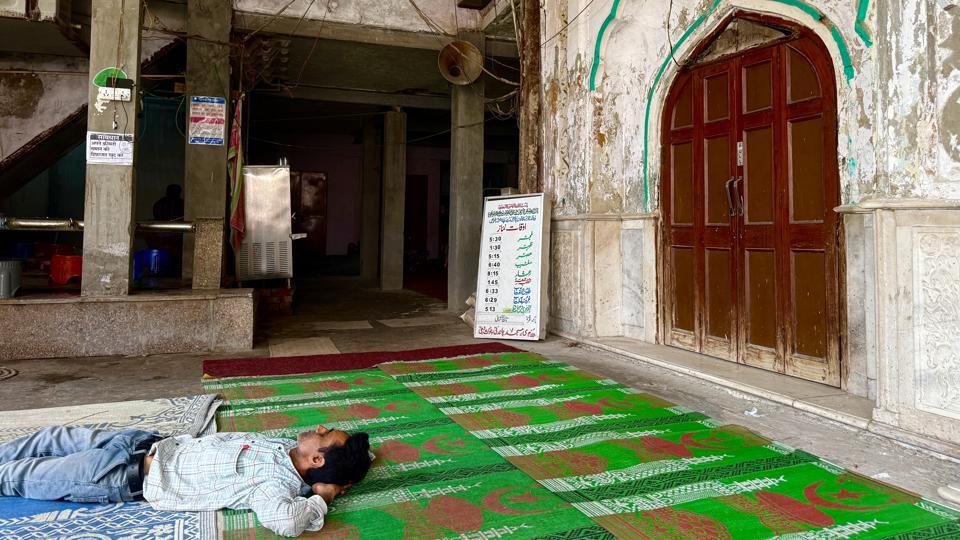
A souvenir of this complexity stands discreetly in Old Delhi’s Chandni Chowk. From the roof of the Shahi Sunehri Masjid, the Persian ruler Nader Shah oversaw one of Delhi’s most devastating episodes, 287 years ago. The anniversary falls this Sunday, offering a chance to reflect on the human cost of conflicts and the fragility of cities. In “The Sword of Persia: Nader Shah, from Tribal Warrior to Conquering Tyrant”, historian Michael Axworthy recounts that on the morning of March 22, invader Nader Shah rode toward the mosque. Stones were thrown at him. Ascending the masjid’s roof, he drew his sword, signalling the onslaught of a massacre.
Today, Chandni Chowk lies invaded by a dense, unceasing flow of life—shoppers, traders, labourers, tourists, rickshaw pullers, vendors. The Sunehri Masjid itself seems removed from this chaos. Facing Bhai Mati Das Chowk, it is partially obscured by buildings. The three gilded copper domes give the mosque its name—sunehri, or golden. Accessed via steep, narrow stairs, the monument doesn’t look as grand as its name. The only decoration is of green floral carvings that trace the three arched doorways to the main prayer hall; the doors are presently padlocked. A man is asleep on the courtyard floor, a 10-digit number scrawled across his palm.
The self-made Nader Shah emerged from a turbulent period in Iranian history, rising from tribal origins to ruthlessly reshape the political order of his time. He helped bring down Iran’s great Safavid dynasty. As Yale University historian Abbas Amanat notes in his authoritative book “Iran: A Modern History”, during his invasion of Mughal-era Delhi, Nader Shah carried away to Iran the entire treasury of the Red Fort—jewels, precious metals, and heirlooms worth about 700 million rupees, one of the greatest war booties in history. The loot included our legendary Koh-i-Noor diamond, the Darya-ye-Noor diamond, and the Peacock Throne. Infinitely more unfortunate was the massacre he ordered from atop the mosque, which claimed the lives of 20,000.
This moment in the afternoon, the mosque’s matted courtyard is immersed in utmost silence. Parts of the space are taken over by scaffolding stuff; a limply hung banner suggests that the building is undergoing some sort of “construction.” Like many aged edifices in Delhi, the masjid hosted a consequential episode and then receded from active role. Yet, its history remains, for passersby curious enough to notice.


Stay updated with all top Cities including, Bengaluru, Delhi, Mumbai and more across India. Stay informed on the latest happenings in World News along with Delhi Election 2025 and Delhi Election Result 2025 Live, New Delhi Election Result Live, Kalkaji Election Result Live at Hindustan Times.


