
 E-Paper



Delhiwale: Turkman, 50 years later
Turkman Gate, a symbol of India's Emergency era, reflects on its history and the lives of those who gathered there, marking 50 years since its dark past.

 Prefer HTon Google


Old Delhi’s Turkman Gate stands as a stark souvenir of India’s Emergency era. This year marks the 50th year of its fateful link with the monument. Consider author Patrick French words, describing those events that unfolded in 1976, in his book on India: “Standing by Turkman Gate in Delhi’s old city, he (Sanjay Gandhi) told a government official he wanted to be able to see the Jama Masjid, the main mosque. Over a period of six days the command was implemented and… 150,000 shacks were knocked down. (On 19 April) The police fired on a group of homeless protesters near Turkman Gate, killing several.”
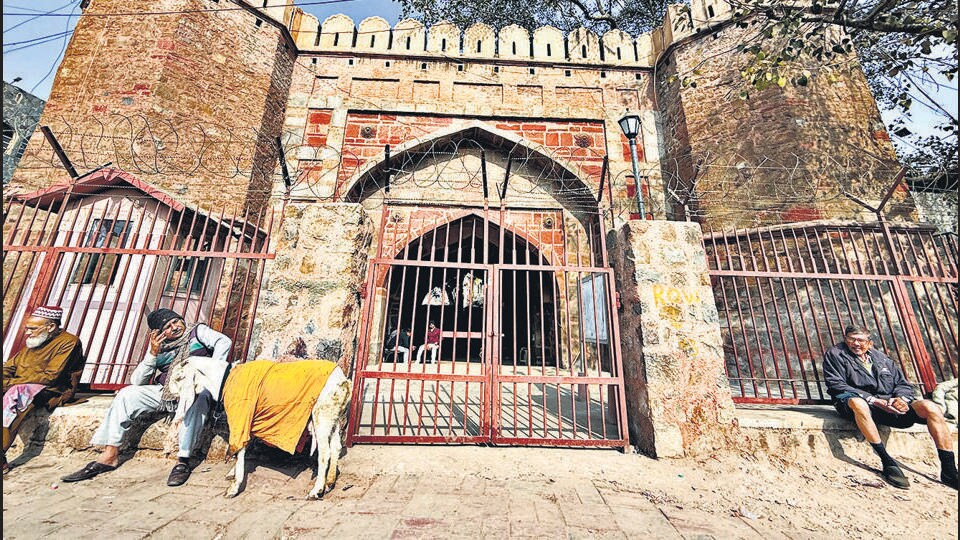
Half a century later, this afternoon in 2026, Turkman Gate’s side walls are flanked by a fruit seller, a paan seller, a dry fruit seller, plus scores of idlers, and a couple of beggars. Turkman Gate itself underwent some restoration that ended late last year.
On this landmark year of its history, this page will view Turkman Gate through multifaceted perspectives. The stone gateway dates from the Mughal-era, and forms one of the mostly vanished 14 gateways that punctuated the mostly vanished stone wall of the Walled City of Delhi. We start with the first perspective by invoking the lives of citizens, who, until recently, used to be a part of the historic landmark’s daily life. To be sure, all of these citizens would be seen spread around the monument, but never inside it. (This is because the monument itself stays deserted, the little metal gate into it remains locked.)
So, here to Turkman Gate’s gentry.
Every morning, a flower-seller would set up pavement stalls here. She died some years ago. Sadly, nobody around is able to remember her name.
Turkman Gate was also home to beggar Salma. She lived with husband, Shehzad, beside the stone wall, on the pave. Salma’s face had badly burnt following an accident. Every evening, Shehzad would be seen sitting beside the gateway, gently applying coconut oil on his wife’s face with pigeon feather. She died about a year ago.
The other long-time gateway resident was Mumtaz. A beggar, he had started his career as a truck driver. Following a road accident that left him disabled, the bearded man would sit all day long beside a corner of the gateway. He died some years ago.
Mumtaz had a friend in Bhoora, the brown dog, who also lived in the shadow of Turkman Gate. For their daily meals, Mumtaz would share with Bhoora whatever he would be offered by the passers-by. After Mumtaz’s passing, Bhoora developed a friendship with Abrar, a banana seller, who administers his stall by Turkman Gate. Bhoora disappeared some years ago.
Meantime, a goat in orange sweater has just been sighted outside Turkman Gate—see photo.


Stay updated with all top Cities including, Bengaluru, Delhi, Mumbai and more across India. Stay informed on the latest happenings in World News along with Delhi Election 2025 and Delhi Election Result 2025 Live, New Delhi Election Result Live, Kalkaji Election Result Live at Hindustan Times.


