The Delhi Pollution Control Committee (DPCC) will soon begin installing online continuous monitoring systems (OCMS) at 10 locations across the Yamuna, allowing real-time data collection of the quality of the river water, according to documents seen by HT.
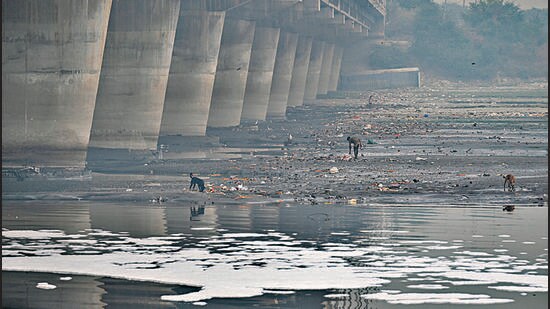
At present, water samples are collected manually from seven locations once a month. Officials said that to collect real-time water quality data from the remaining points, a mobile water testing lab will also be procured and the plan was approved during the latest DPCC board meeting in October.
A senior DPCC official said the proposal initially was to install OCMS at 53 locations across the river, including at outfall drains, but this was updated to cover only 10 points owing to the high financial costs involved.
“This will provide real-time data on the water quality of the river and reduce the need for manual sample collection. We can, at any time, analyse which drains are more polluting and the points at which pollution spiked more than others in the river,” said an official requesting anonymity. In the minutes of the meeting, dated November 14, DPCC said a committee was formed to complete the process, comprising the Delhi Jal Board, Central Pollution Control Board and DPCC officials.
“...this has been constituted for finalizing the terms and conditions and specifications of the monitoring systems to be purchased, before placing the order. The water lab of the DPCC should speed up the process at the earliest,” said the minutes.
{{/usCountry}}“...this has been constituted for finalizing the terms and conditions and specifications of the monitoring systems to be purchased, before placing the order. The water lab of the DPCC should speed up the process at the earliest,” said the minutes.
{{/usCountry}}A National Green Tribunal (NGT) appointed monitoring committee on the Yamuna had found that a 22-km stretch of the river, falling in Delhi, contributes to around 76% of the water’s total pollution.
DPCC currently lifts water samples manually once a month from seven locations across the Yamuna — including Palla, where the river enters Delhi, Wazirabad, ISBT Kashmere Gate, ITO bridge, Nizamuddin bridge, Okhla barrage and Asgarpur, after which the river exits Delhi. The latest monthly water data from November 2023 showed that out of the seven spots from where samples were collected, only one spot — Palla — was meeting the biological oxygen demand (BOD) standard of 3 mg/l.
BOD shows the amount of oxygen required by aquatic life and organisms in the river to survive. The higher the value, the greater this demand, which means aquatic life is unlikely to survive in the water.
Despite this, a report submitted by Delhi chief secretary Naresh Kumar to NGT earlier this week said there has been an improvement in the water quality of the river from January to November 2023 compared to the corresponding period last year.
Bhim Singh Rawat, a Yamuna activist, and member of the South Asia Network on Dams, Rivers and People (SANDRP) said such technology has existed but now needs to be proactively installed and worked with. “The National Mission for Clean Ganga had launched a ‘PRAYAG’ portal – a Platform for Real-time Analysis of Yamuna, Ganga and their Tributaries but we are yet to see states either install online systems or make such data public. This is an important step, to fix the Yamuna” he said.
Stay updated with all top Cities including, Bengaluru, Delhi, Mumbai and more across India. Stay informed on the latest happenings in World News along with Delhi Election 2025 and Delhi Election Result 2025 Live, New Delhi Election Result Live, Kalkaji Election Result Live at Hindustan Times.
Stay updated with all top Cities including, Bengaluru, Delhi, Mumbai and more across India. Stay informed on the latest happenings in World News along with Delhi Election 2025 and Delhi Election Result 2025 Live, New Delhi Election Result Live, Kalkaji Election Result Live at Hindustan Times.