Untreated waste from Haryana’s sewage treatment plants (STPs), heavy rain, and high organic and chemical pollution led to the depletion of dissolved oxygen (DO) in Najafgarh drain, causing the deaths of several hundred fish in July, a National Green Tribunal (NGT) report said Friday.
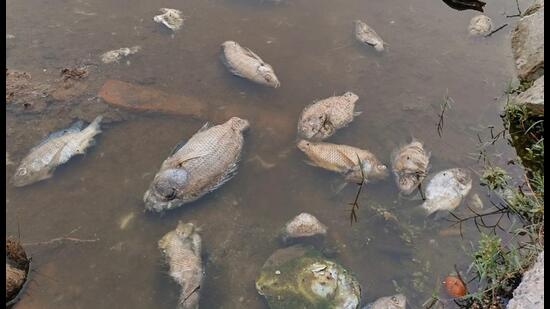
According to the report, a committee formed by the green court on July 14 – a week after the incident-- comprising officials from the Delhi Pollution Control Committee (DPCC), Central Pollution Control Board (CPCB), Delhi Jal Board (DJB), the irrigation and flood control department and the district magistrate of southwest Delhi inspected the drain and collected eight water samples on September 1, 2022. Of the eight locations they analysed in the drain, only two were found to be compliant with the general standards of discharge of environmental pollutants laid down by the CPCB.
“High concentration of organic and chemical pollutants was also found to be discharging from three drains from Haryana. This heavy pollution load, including high total soluble solids (TSS), eventually reached Najafgarh Jheel,” the report said.
The Najafgarh drain connects the Najafgarh Jheel to the Yamuna, with several drains from Haryana bringing sewage, sludge and effluents to the lake.
{{/usCountry}}The Najafgarh drain connects the Najafgarh Jheel to the Yamuna, with several drains from Haryana bringing sewage, sludge and effluents to the lake.
{{/usCountry}}The committee also found that the deaths only took place between a small stretch from Dhansa regulator and the Ghummanhera bridge, both located on the Najafgarh drain.
“Heavy rain occurred the day before these deaths did, which may have caused sediment churning, which choked the gills of these fish. During or after heavy rain, the dissolved oxygen (DO) levels gets depleted, causing ecological hypoxia,” the report said, adding on the same day, Haryana’s STPs are likely to have added to this problem by discharging untreated waste into the river.
“Washout of the deposited sewage sludge and other toxic chemicals at the bottom of the drain is also likely to have affected the water quality of the drain,” the report said.
In its recommendations, the committee has not only asked for real-time monitoring of the water quality of the drain, but also requested the NGT to direct both Delhi and Haryana to form an action plan that ensures 100% treatment of sewage, industrial effluents and waste.
“Haryana State Pollution Control Board (HSPCB) and Gurugram Metropolitan Development Authority (GMDA) should carry out random inspections and ensure compliance of environmental norms. They should also enhance the monitoring frequency of drains,” the report added.
Stay updated with all top Cities including, Bengaluru, Delhi, Mumbai and more across India. Stay informed on the latest happenings in World News along with Delhi Election 2025 and Delhi Election Result 2025 Live, New Delhi Election Result Live, Kalkaji Election Result Live at Hindustan Times.
Stay updated with all top Cities including, Bengaluru, Delhi, Mumbai and more across India. Stay informed on the latest happenings in World News along with Delhi Election 2025 and Delhi Election Result 2025 Live, New Delhi Election Result Live, Kalkaji Election Result Live at Hindustan Times.