
 E-Paper



Govt’s bill is not meant to protect parents – it’s to protect pvt schools: Atishi
Atishi said requiring a 15% parent quorum to complain about a fee hike, and debarring parents from going to civil court, is unjustified.

 Prefer HTon Google


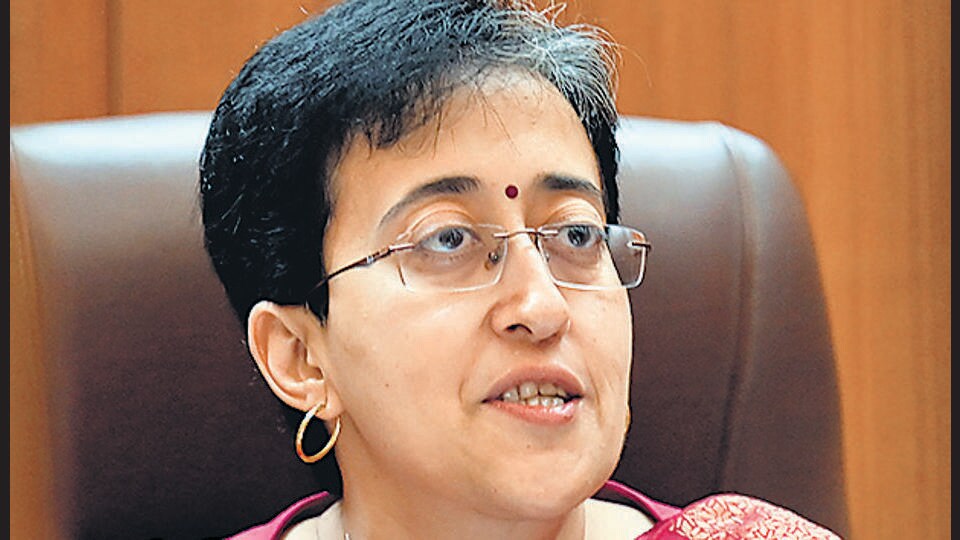
Hours before the Delhi Assembly passed the new education bill on Friday, former chief minister and leader of opposition in Delhi Assembly Atishi discussed in an interview with Alok KN Mishra and Varun Bhandari the provisions in the bill that the Aam Aadmi Party is opposing, the “phansi ghar” row, among others. Edited excerpts:
The Delhi government has come up with a bill to regulate arbitrary fee hikes by private schools. It is expected to bring relief to thousands of parents. Why is AAP opposing the bill?
You’re right that the current Delhi government has introduced a bill, but it’s not to protect parents – it is to protect private schools. If you look at the provisions of the bill and the larger issue, this is essentially a dispute between parents and school management. Whether a fee hike is justified can only be determined by auditing the school’s accounts. Yet, there is no mention or provision for an audit in this bill. Without an audit, how can anyone assess finances?
Secondly, who decides the fee hike? A committee headed by a member of the school management, with just five parent representatives – that too chosen by draw of lots. Everyone in Delhi knows that draws of lots can be manipulated. In fact, there was a case of EWS lot manipulation 10-15 years ago, where a chit was put in the freezer and the cold one picked. Even if we assume a fair selection, five parents can’t know everything, and their term is only two years, while the school management has no term limit.
Also, requiring a 15% parent quorum to complain about a fee hike, and debarring parents from going to civil court, is unjustified. This bill was delayed by four months after being passed by the Cabinet, during which the hiked fees collected by schools have now been legitimised.
Why do you think the Education Transparency Bill 2025 does not address the issue of arbitrary fee hikes by private schools?
The bill doesn’t mandate audits. So how do we know the financial condition of a school? Maybe they have surplus funds. The trusts that run schools and the schools themselves should be audited regularly so we understand fund flow and financial health. Otherwise, how will we know if money is being siphoned off into the trust?
Broadly speaking, this bill legitimises fee hikes, takes away the parents’ right to complain, and even their right to go to court.
In 2015, the AAP government introduced a bill on similar lines to audit school finances. What happened to it, and how does it compare with the current bill?
We introduced our bill in the Assembly, but the central government didn’t pass it. We were handicapped. The current government is not – they can pass any bill they want. Our bill had provisions for audits and penalties. The penalties were levied on school management. In contrast, the current proposed law shifts the burden of penalties onto parents and students.
In 2017-18, we conducted base-level audits of all schools built on DDA land. One school had ₹90 crore in surplus, and had bought farmland in Manesar. Another had purchased luxury cars. We rejected their fee hike proposals. During the first base-level audits, the rejection rate was high, and we continued auditing rigorously. That’s why the rejection rate decreased over time.
Apart from the audit, what other provisions do you think this bill lacks?
We’ve proposed several amendments. First, there should be regular audits, and the audit reports should be shared with all parents. They should be given 15 days to submit their recommendations to the school-level committee.
Second, the committee should include at least 10 parents, elected from a general body of parents – not chosen by a draw of lots. The two-year limit on parents’ terms should be scrapped. Also, requiring 15% of parents to raise a complaint is too high a bar – this should be lowered.
The chair of the revision committee should be a retired judge with no connection to any school. The clause that bars parents from going to civil court should be scrapped -- it wouldn’t even stand up to legal scrutiny.
This bill should be sent to a select committee. It was drafted in a rushed manner. It’s been in the news since April. The education minister (Ashish Sood) claims stakeholder consultations were done – but with whom, where? We’ve asked for the consultation minutes – they haven’t been provided. We also requested a copy of the bill passed in April – that too hasn’t been shared.
Until it goes to a select committee, last year’s fee hikes should be frozen.
If the BJP government does not accept the AAP’s proposed amendments, what will be your next step?
First, we’ll call for a division of votes in the Assembly. The public deserves to know how their representatives are voting, especially since our amendments are based on public consultation. We will move an amendment that penalties should be levied on school management, not the schools themselves. If none of this works, we’ll launch a public movement and take the matter to court.
There have been allegations that AAP failed to curb arbitrary fee hikes during its tenure.
Even if we hadn’t done anything – which is not the case – we lost the election and the BJP is in power. But ask the BJP any question and they blame Arvind Kejriwal, the AAP, or me – just like they blame Nehru for everything at the Centre. BJP has a four-engine government. They can get any bill passed in a day. So they should do it.
Despite the existence of DSER, do you think the education bill was needed?
I do think a new bill was needed – with more clarity. We also came out with a bill, though it wasn’t passed. But any new law must ensure schools’ accounts are audited, and that parents receive full account details.
The Assembly is summoning Arvind Kejriwal and Manish Sisodia over the renovation of a ‘phasi ghar’, which the Speaker says was just a tiffin room. What’s your view?
The summons don’t make any sense. Arvind Kejriwal and Manish Sisodia weren’t involved in the decision-making process. It’s like blaming me for exam irregularities just because I attended a school event as chief guest. Kejriwal was only there to inaugurate the site. It doesn’t make sense to summon someone who just inaugurated it.

Stay updated with all top Cities including, Bengaluru, Delhi, Mumbai and more across India. Stay informed on the latest happenings in World News along with Delhi Election 2025 and Delhi Election Result 2025 Live, New Delhi Election Result Live, Kalkaji Election Result Live at Hindustan Times.


