In a bid to improve the environmental flow (e-flow) of Yamuna stretch in the Capital, two plans — one to curb water loss by remodelling of part of Munak canal system and, two, to reserve at least 30% of inflow water after the construction of three upcoming dams — are under consideration, said senior Delhi government officials aware of the matter.
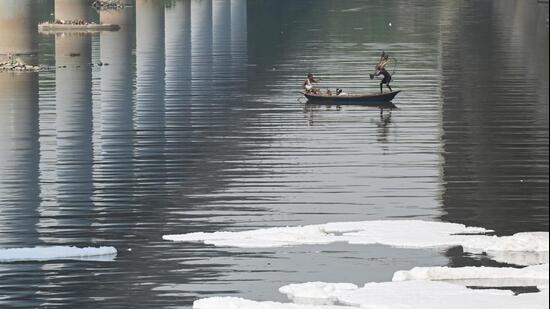
E-flow refers to the minimum levels of water required in a river to sustain its ecological health. According to experts, the 10 cumecs currently allocated to Delhi is grossly insufficient, leaving the river dry and unable to flush out pollutants. The 102-km Munak canal, constructed between 2003 and 2012, carries nearly 37% of Delhi’s raw water from Haryana daily, through the Carrier Lined Channel (CLC) and Delhi Sub-Branch (DSB), to the Haiderpur water treatment plant.
Also Read | 1,300 tonnes cattle waste from Delhi enters Yamuna everyday: MCD report
The proposals to increase the river’s e-flow were presented in the Yamuna rejuvenation review meeting held by the union home secretary last week. According to the documents reviewed by HT, the Haryana government put forward the proposals.
To reduce water losses in the Munak canal system, the first plan proposes laying down 25km of fresh pipelines from the Khubru to Kakroi head of the canal system at an estimated cost of ₹750 crore. This should be followed by the rehabilitation of 41.6km of the DSB. The canal currently sees more than 30% water transmission loss and, after the remodelling, could see losses go down below 5%, said officials.
{{/usCountry}}To reduce water losses in the Munak canal system, the first plan proposes laying down 25km of fresh pipelines from the Khubru to Kakroi head of the canal system at an estimated cost of ₹750 crore. This should be followed by the rehabilitation of 41.6km of the DSB. The canal currently sees more than 30% water transmission loss and, after the remodelling, could see losses go down below 5%, said officials.
{{/usCountry}}Also Read | Water surges in Delhi's Yamuna river after heavy rain, crosses warning level mark in Hindon
“Haryana has proposed that the entire cost of remodeling the system should be borne by Delhi and the Union government. Haryana will ensure that 330 cusecs of water reaches Haiderpur. The water saved in transmission loss should be diverted to the river as part of the e-flow,” said one of the officials.
To ensure adequate e-flow in the lean season (typically the summer months), the second long-term proposal pertains to reserving at least 30% of inflow water after the construction of three upcoming dams on tributaries of Yamuna.
At least 20% of water made available through Lakhwar Dam (104 cusecs), Renukaji Dam on Giri river, and Kishau Dam on Tons river (493 cusecs) be reserved to boost the e-flow. If all basin states agree to this arrangement, the three dams that are likely to be commissioned between 2031 and 2034 could provide up to 754 cusecs of extra water.
Doubling the flow in Delhi, experts said, will help dilute toxins in the river and allow at least some aquatic life to survive. In 2023, a parliamentary panel on water resources had called for an e-flow of at least 23 cumecs to ensure basic ecological functioning and prevent visible symptoms of pollution such as frothing.
HT had earlier reported that Yamuna rejuvenation project, which is being monitored by the central government, has taken up multiple proposals for improving e-flow in river, including development of closed conduit systems for carrying highly treated water from Coronation pillar and Yamuna Vihar STP to Wazirabad, diversion of water from Ganga system to Yamuna via the Eastern Jamuna Canal, among others.
Stay updated with all top Cities including, Bengaluru, Delhi, Mumbai and more across India. Stay informed on the latest happenings in World News along with Delhi Election 2025 and Delhi Election Result 2025 Live, New Delhi Election Result Live, Kalkaji Election Result Live at Hindustan Times.
Stay updated with all top Cities including, Bengaluru, Delhi, Mumbai and more across India. Stay informed on the latest happenings in World News along with Delhi Election 2025 and Delhi Election Result 2025 Live, New Delhi Election Result Live, Kalkaji Election Result Live at Hindustan Times.