E-Paper



Delhi’s Dwarka rainwater system polluting water table: Panel
Instructions were issued to zonal revenue officers concerned to withdraw the rebate from such societies or institutions

 Prefer HTon Google


The rainwater harvesting (RWH) systems installed in the residential societies in Dwarka are ill-maintained and are causing groundwater contamination in over a dozen societies, a joint inspection by the National Green Tribunal (NGT)-appointed expert committee comprising the Delhi Jal Board (DJB) and the Delhi Pollution Control Committee (DPCC) has found.
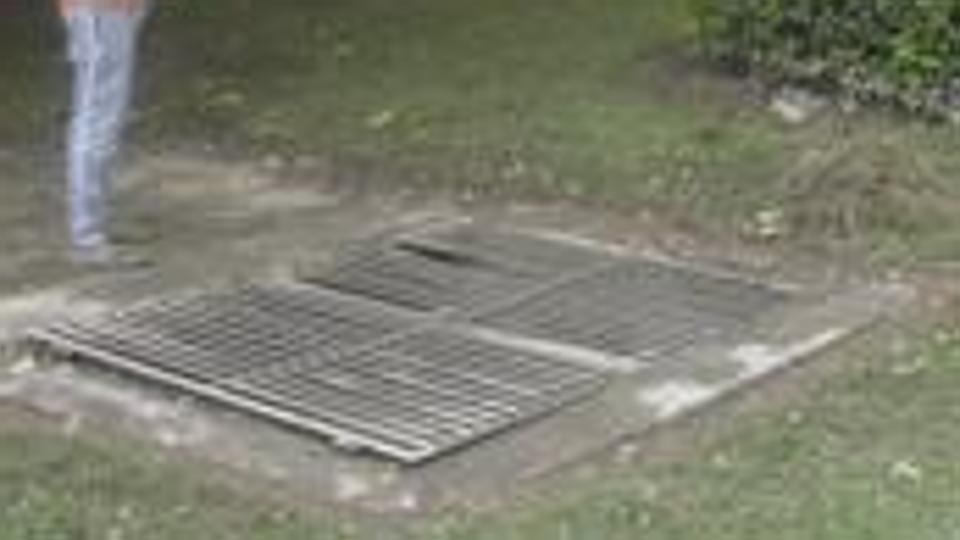
According to a report submitted by the committee to NGT earlier this week, the team inspected all 354 of Dwarka’s Cooperative Group Housing Societies (CGHS). The committee then collected water samples from RWH structures at 235 societies and found high ammonical nitrogen and high total dissolved solids (TDS) in 180 of them. The report said during the inspection, the team found common pipelines for the RWH system and wastewater.
Ammonican nitrogen is a measure for the amount of ammonia in the water. It is a toxic pollutant often found in landfill leachate and in waste products.
The committee has also asked DJB to withdraw the rebate from such societies where the rainwater structures were not functional or only partially functional.
A 10% rebate on the water bill is given to properties with an RWH system. It is also mandatory for government buildings in Delhi to install RWH. However, the maintenance of these structures has been a longstanding problem.
“The RWH systems were found as per design of the Delhi Jal Board/ Central Ground Water Authority (CGWA) but common pipelines for rooftop rainwater harvesting structure and other wastewater including washing area and floor washing area were found connected. As a result, the common pipeline may be contaminating the groundwater in the form of Ammonical Nitrogen and TDS,” the report said.
The report also said that according to DJB’s policy, instructions were issued to zonal revenue officers concerned to withdraw the rebate from such societies or institutions.
NGT had, in February, directed the Delhi government to file an action taken report after a petition was filed in the tribunal alleging contamination of water in the RWH systems installed in housing societies in Dwarka. Following this, a joint committee was formed to carry out such an inspection.
The report also said DJB issued a public notice on February 14, directing residential societies with non-functional or partially functional RWH systems to take remedial action by March 31 and furnish compliance reports to DJB.
“Since compliance reports from individual societies were not received, DJB issued individual notices to all societies in which contamination was found,” the report said.
The report also said that on April 28, DJB wrote to the Federation of Dwarka CGHS requesting to ensure that no contamination of groundwater takes place through RWH systems.
“DJB is in the process of framing a policy wherein annual self-certifications from all institutions, societies, schools, and residential complexes are required, where installation of RWH system is mandatory. The self-certification will specify whether the RWH system is as per the guidelines of DJB or CGWA and whether the same is working efficiently or not. In the event of a failure in providing the Annual Certificate, the benefits extended by DJB for installation of RWH System would be withdrawn and the rebate given in preceding years shall also be recovered,” said the report.
The report added that the Ministry of Jal Shakti issued a guideline regarding the prevention of contamination via RWH systems on March 31 this year, and the Delhi government will adopt and implement the guidelines.
Sudha Sinha, a former residents’ welfare association president and resident of Delhi Apartments CGHS Limited society in Sector 22, Dwarka, – one of the societies which issued a notice, said the Federation of CGHS societies issues fitness certificates to each society over its RWH systems and that contamination on account of high ammonical nitrogen may require technical assistance from the DJB.
“Societies can only maintain the structure, but only DJB can tell why ammonical nitrogen is high. Such inspections should be done regularly and not on NGT orders alone. We have also found that some RWH systems have faulty designs and the sewer systems may mix with the groundwater,” she said, adding DJB was also not providing any funds to rectify such problems.
Rejimon CK, founder, Dwarka Forum RWA, echoed similar views. He said that most CGHSs were getting run-off water from rooftops and that the government should assist the particular society in case contamination was reported.
“The government should first look at societies that do not even have an RWH system in place. DJB should also work with each RWA and identify the possible sources of contamination, beyond regular cleaning,” he said.
The Delhi government made RWH systems mandatory in 2012 and according to the law, non-compliance can attract a penalty of 1.5 times the water bill amount. Earlier on Wednesday, the Delhi government also proposed slapping an environmental compensation of up to ₹5 lakh on property owners with an area of at least 100 square metres who fail to maintain a functional rainwater harvesting system.
Shashank Shekhar, assistant professor, department of geology at Delhi University, said high ammonical nitrogen in the recharge pits indicates that sewage may somehow be entering or mixing with the rainwater. “This contamination could be occurring at the area where the groundwater accumulates, or enters from the top. High ammonia in water leads to the formation of chloramine, which is toxic for the human body. This is also the reason Delhi’s water supply is impacted when the ammonia content increases in the Yamuna,” said Shekhar.