After a brief respite on Monday, when strong winds kept Delhi’s maximum temperature at 38.1 degrees Celsius (°C), the temperature rose to 38.7°C on Tuesday, with the India Meteorological Department (IMD) forecasting that mercury will breach the 40-degree mark on Wednesday, rise to 41°C on Thursday, and to 42°C by Friday.
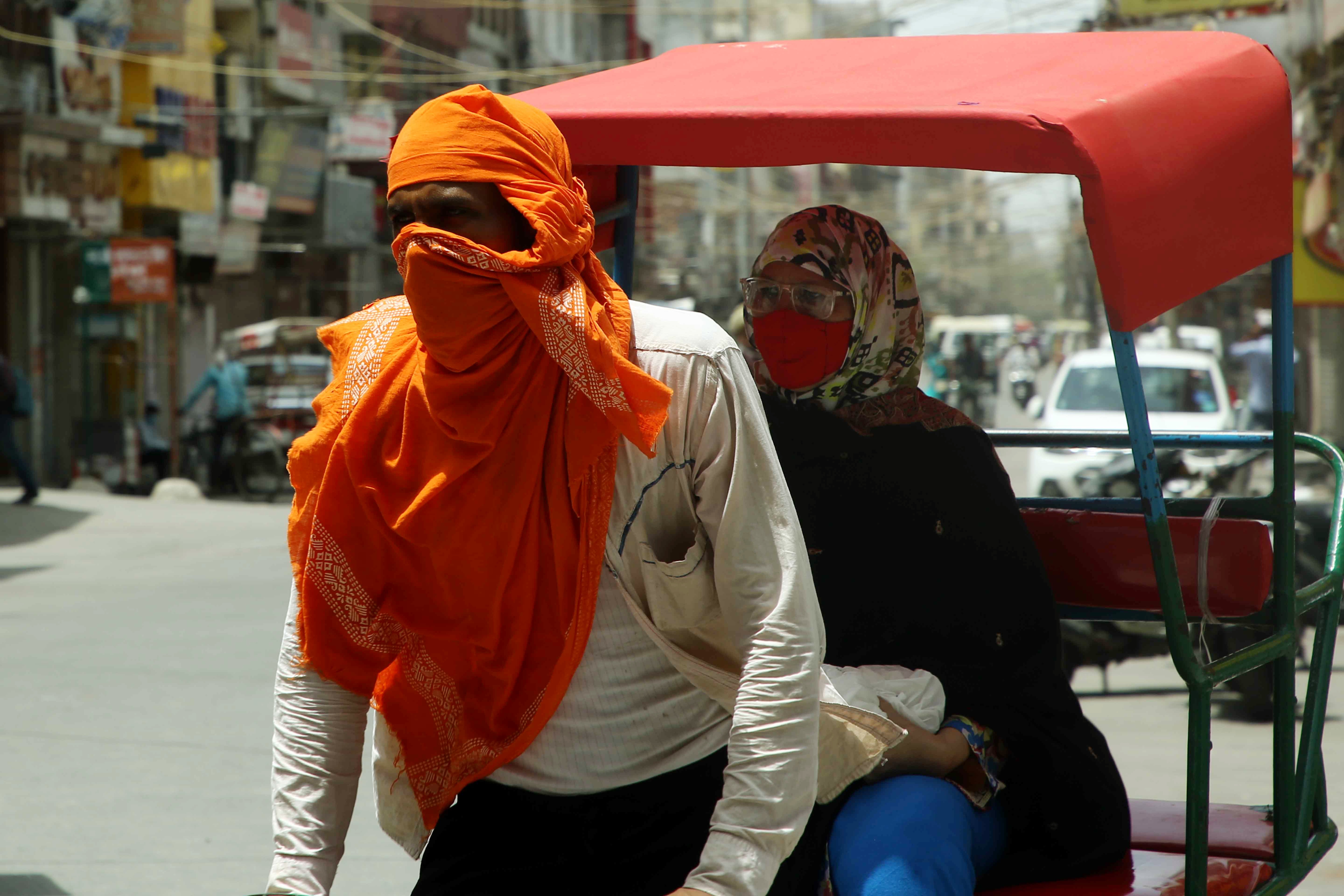
Issuing a “yellow” alert on Tuesday for the next six days, the IMD said “heatwave” to “severe heatwave” conditions are likely to prevail over the Capital until April 11 on account of warm westerly and northwesterly winds and clear sky conditions.
Safdarjung, Delhi’s base station for weather, recorded a maximum temperature of 38.7°C on Tuesday, which is four degrees above normal for this time of the year. At least four locations in Delhi recorded heatwave conditions as mercury crossed 40 degrees -- the highest was at Yamuna Sports Complex (40.7°C), followed by Pitampura (40.6°C), Ridge (40.4°C) and Najafgarh (40.2°C).
IMD issues a “yellow” alert to warn the public of a weather-related phenomenon which, in this case, is the high possibility of heatwave to severe heatwave conditions occurring across Delhi. A heatwave is when the maximum temperature is over 40°C and 4.5 degrees above normal, and severe heatwave is declared when the temperature is above 40°C and 6.5 degrees above normal.
“There is no chance of rain in the next six days. Wind speed will pick up slightly and range between 5-15 kmph but this will mostly be dry, warm westerly winds. Delhi will also see clear skies, which heats the surface faster,” said IMD scientist RK Jenamani.
{{/usCountry}}“There is no chance of rain in the next six days. Wind speed will pick up slightly and range between 5-15 kmph but this will mostly be dry, warm westerly winds. Delhi will also see clear skies, which heats the surface faster,” said IMD scientist RK Jenamani.
{{/usCountry}}The highest maximum temperature recorded at Safdarjung so far this year was 39.6°C, on March 30. “Mercury is expected to cross the 40-degree mark at Safdarjung this week and it may go as high as 42,” Jenamani said.
According to IMD, the average temperature for the start of April is 33.5°C and it shoots up to 38.6°C towards the end of the month.
Last year, the highest maximum temperature recorded in April was 42.2°C on April 29. In 2020, highest temperature for the month was recorded at 40.1°C on April 16, and 2019 saw 42.1°C on April 26.
Since 2011, the highest maximum temperature seen in April is 43.2°C, recorded on April 21, 2017. In terms of minimum temperature, Delhi recorded a low of 19°C on Tuesday, which is around normal for this time of the year. Forecast for Wednesday shows while the maximum will touch 40°C at Safdarjung, the minimum will still hover around the 19-degree mark.
Delhi ended March with a mean maximum temperature of 32.9°C, the fourth highest for the month since 1951. It was 33.1°C in 2021, 33.4°C in 2004, and 34.4°C in 1953. In terms of the mean minimum temperature (17.6°C), this was Delhi’s second hottest March since 1951. The highest mean minimum temperature -- 18.5°C -- was recorded in 1953 and 2010.
Stay updated with all top Cities including, Bengaluru, Delhi, Mumbai and more across India. Stay informed on the latest happenings in World News along with Delhi Election 2025 and Delhi Election Result 2025 Live, New Delhi Election Result Live, Kalkaji Election Result Live at Hindustan Times.
Stay updated with all top Cities including, Bengaluru, Delhi, Mumbai and more across India. Stay informed on the latest happenings in World News along with Delhi Election 2025 and Delhi Election Result 2025 Live, New Delhi Election Result Live, Kalkaji Election Result Live at Hindustan Times.