
 E-Paper



India working to ease financing of electric vehicles: Govt official
Heavy commercial vehicles are responsible for over 70% of vehicular pollution in India despite being less than 2% of total vehicles, a recent study found

 Prefer HTon Google


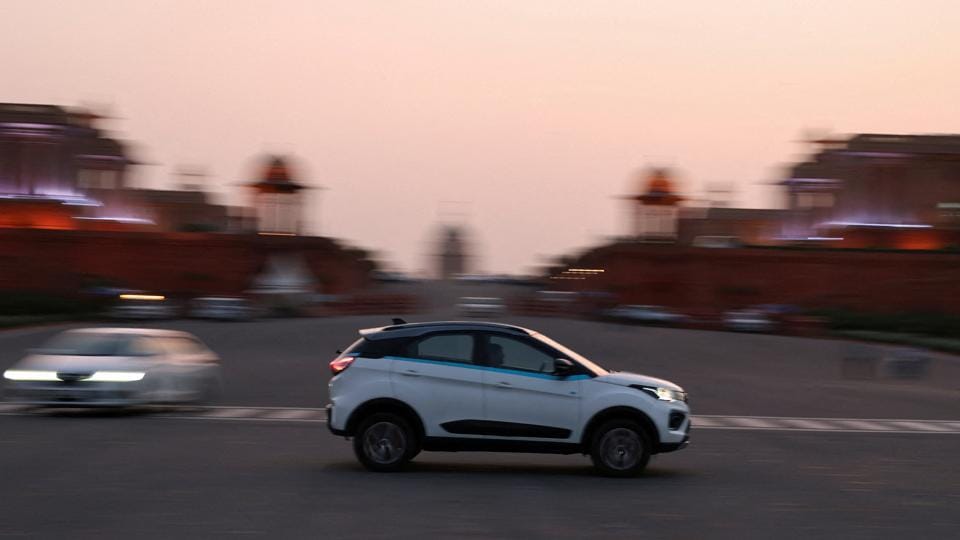
The Centre is working towards mechanisms to ease financing of electric vehicles in line with India’s 2070 net-zero goal, a senior government official said on Monday.
Decarbonising the commercial transport sector is also crucial from a public health perspective. Heavy commercial vehicles (HCVs) such as buses, trucks, and dumpers are responsible for over 70% of vehicular particulate pollution (PM2.5 and PM10) in India, despite being less than 2% of the total vehicle population, a recent study by the Center for Study of Science, Technology and Policy (CSTEP) found.
“We at the government of India have been talking internally to various ministries regarding what can be done to ease the financing. Interest rates of loans taken for electric vehicles are a little higher than those of ICE (internal combustion engine) vehicles, while repayment tenures are shorter. Mostly smaller (commercial) banks and NBFCs (non-banking financial corporations) are financing EVs as big banks are not lending,” Hanif Qureshi, additional secretary at the Ministry of Heavy Industries, said during a session at the Indian Clean Transportation Summit organised by the International Council on Clean Transportation (ICCT) in the national capital.
The senior officer said that the ministry, the department of financial services of finance ministry, SIDBI (Small Industries Development Bank of India), and NABARD (National Bank for Agriculture and Rural Development), have prepared a working paper on the issue and are exploring instruments that can address the needs of the industry. He said one solution being considered is a security mechanism where the risk will be shared between lenders and development financial institutions such as SIDBI.
Qureshi said various government measures towards EV adoption are already showing encouraging results, even though India has been a late entrant among nations to adopt cleaner transportation strategies, mentioning FAME (Faster Adoption and Manufacturing of Hybrid & Electric Vehicles) 1 and 2 schemes launched in 2015 and 2019, followed by the “PM Electric Drive Revolution in Innovative Vehicle Enhancement (PM E-DRIVE)” Scheme in 2024.
He said the 2021 Production Linked Incentive (PLI) Scheme for Electric Vehicles (EVs) with an allocation of ₹25,938 crore over five years was aimed at attracting investment worth ₹42,000 crores, and already more than half of that, around ₹27,000 crores of investment into manufacturing has been made. He said this has addressed the issue of local manufacturing and creating jobs. Similarly, he said the PLI scheme for advanced chemistry cells for EV batteries has also shown results. “Though the scheme targeted a capacity of 50 gigawatt-hours (GWh) but it is expected that a capacity of 100 GWh will be established by the time the scheme is over,” he said.
Currently, India’s electric vehicle (EV) adoption rate in the commercial category is seeing rapid growth owing to a low base, with a 122.5% year-on-year increase recorded in June, according to data by the Federation of Automobile Dealers’ Associations (FADA).

Stay updated with all top Cities including, Bengaluru, Delhi, Mumbai and more across India. Stay informed on the latest happenings in World News along with Delhi Election 2025 and Delhi Election Result 2025 Live, New Delhi Election Result Live, Kalkaji Election Result Live at Hindustan Times.


