
 E-Paper



Marital rape a crime of cruelty in India, Delhi govt tells high court
The high court is hearing a bunch of pleas seeking to criminalise marital rape in India.

 Prefer HTon Google


While stating that courts do not have the power to legislate into effect a new criminal offence, the Delhi government on Friday told the Delhi high court that martial rape is treated as a “crime of cruelty” in India.
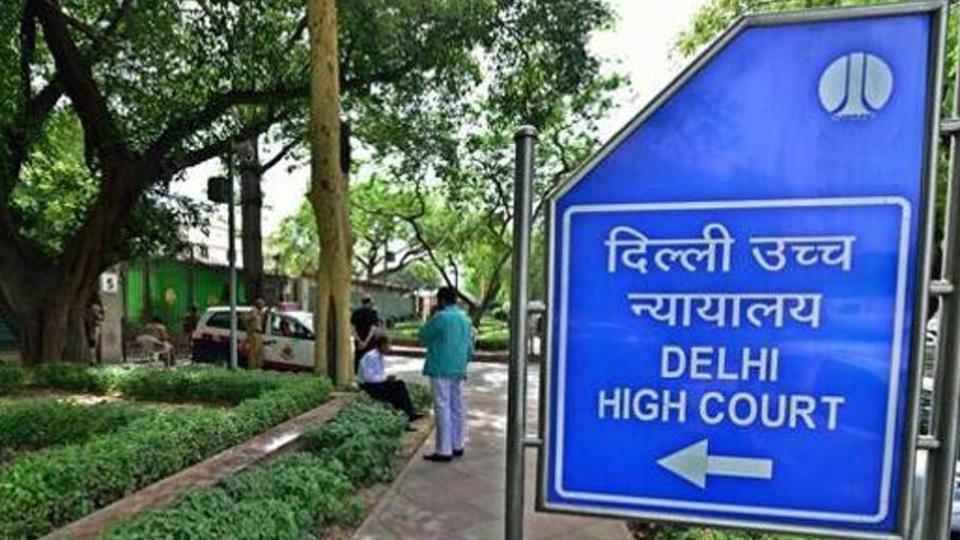
The high court is hearing a bunch of pleas seeking to criminalise marital rape in India. Exceptions to Section 375 of the Indian Penal Code (IPC), which deals with rape, decriminalises marital rape and mandates that sexual intercourse that a man has with his own wife (the wife not being under fifteen years of age) is not rape.
A bench of justices Rajiv Shakdher and C Hari Shankar was hearing public interest pleas by NGOs RIT Foundation and All India Democratic Women’s Association and two individuals, a man and a woman, who sought the striking down of the exception to Section 375, arguing that it discriminated against married women who were sexually assaulted by their husbands.
The petitions were heard after a gap of two years owing to the Covid-19 pandemic when only extremely urgent matters were being heard by courts.
During the hearing on Friday, the Delhi government’s additional standing counsel Nandita Rao told the court that married women and unmarried women were placed differently under every single law.
“Marital rape is a crime of cruelty in India. Married women and unmarried women are different under every single law,” Rao said.
She also contended that even in the case of one of the petitioners, who claimed to be a victim of repeated marital rape, the FIR stood registered for an offence under Section 498A of the IPC (Husband or relative of husband of a woman subjecting her to cruelty).
Senior advocate Colin Gonsalves, representing the petitioner woman, argued that courts all over the world have recognised marital rape as an offence and abrogated the concept of a wife’s irrevocable consent for establishing sexual relations.
He also said the value system and women rights have evolved with the passage of time and relied on a series of judgments passed by courts in the United Kingdom, the United States, Canada, the European Union and Nepal as well as international treaties to submit that an argument of a wife’s assumed consent was untenable.
He also said the Nepal Supreme Court has observed that the Hindu religion did not exempt the “heinous act of rape of a wife”.
Gonsalves further objected to the notion that marital rape was a “western concept” and highlighted a United Nations report which indicated the prevalence of sexual violence among married couples in certain Indian states.
“Marital rape is the biggest form of sexual violence which happens in the confines of our homes. How many times does rape take place in the institution of marriage and is never reported? This figure is not reported or analysed,” he submitted.
In 2018, the Delhi government had told the predecessor bench hearing the case -- headed by then acting chief justice Gita Mittal -- that wherever a spouse indulged in sexual relations without the willingness of the other, it was already an offence under the IPC and a woman was entitled to refuse sexual relations with her husband as the right to body integrity and privacy under Article 21 (protection of life and personal liberty) of the Constitution.
The central government, in its affidavit, said marital rape cannot be made a criminal offence as it could become a phenomenon that may destabilise the institution of marriage and an easy tool for harassing husbands.
The hearing in the case will continue on January 10.


