Mercury crossed the 40-degree mark in parts of Delhi for the first time this year on Monday, touching as high as 42°C at Narela, prompting the India Meteorological Department (IMD) to declare “severe heatwave” conditions in several areas for the next two days.
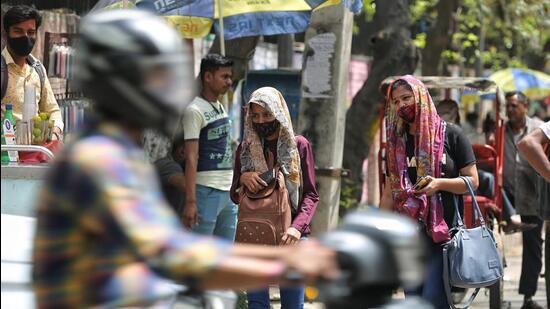
However, Safdarjung, the base station for Delhi’s weather, recorded a maximum of 39.1°C – seven degrees above normal for this time of the year and the highest so far this year. The minimum temperature was 22.2°C – four degrees above normal.
The IMD has issued a “yellow alert” for the next two days, forecasting continuation of severe heatwave conditions in parts of Delhi and the maximum hovering between 39°C and 41°C.
Over the last two days, most parts of Delhi have seen the temperature rise by 5-8 degrees.
Safdarjung, which recorded a maximum of 34.5 degrees on Saturday on account of high wind speed, saw the temperature rise to 36.8°C on Sunday before breaching the 39-degree mark on Monday. The normal average maximum for the last week of March is 32°C.
The IMD declares “heatwave” in a region if the maximum temperature is above 40°C and is 4.5 degrees higher than the normal mark for two consecutive days. Similarly, a “severe heatwave” is declared when the maximum temperature is above 40°C and is 6.5 degrees higher than the normal for two days.
{{/usCountry}}The IMD declares “heatwave” in a region if the maximum temperature is above 40°C and is 4.5 degrees higher than the normal mark for two consecutive days. Similarly, a “severe heatwave” is declared when the maximum temperature is above 40°C and is 6.5 degrees higher than the normal for two days.
{{/usCountry}}While the maximum temperature has been 5-8 degrees above normal in most parts of Delhi since March 16, not a single station had touched the 40-degree mark till now.
Before Monday, the highest maximum recorded this year was 38.3°C at Safdarjung on March 20, when two other weather stations -- at Yamuna Sports Complex station and Pitampura -- both recorded highs of 39.9°C.
“While Safdarjung crossed the 39-degree mark, several stations in Delhi breached the 40-degree mark, which is the threshold for a heatwave. We have declared chances of severe heatwave in Delhi for the next two days as well with March likely to end with a maximum temperature ranging from 39°C to 41°C,” said IMD scientist RK Jenamani.
While Narela was Delhi’s hottest location at 42°C, the other locations to breach the 40-degree barrier were the Yamuna Sports Complex station (41.5°C), Pitampura (41.1°C), Najafgarh (40.7°C), Ayanagar (40.2°C), Ridge (40.1°C) and Lodhi road (40°C).
Delhi has seen an unusually hot March this year, largely due to the absence of rainfall. While the normal monthly rain for March is 15.9mm, Delhi has not seen any rain so far this month.
In comparison, February and January both saw excess rain this year. Delhi received 88.2mm of rainfall in January – the highest in the last 121 years. In February, the Capital received 29.7mm of rainfall, the highest in the last eight years.
Met officials said Delhi may break several heat records this month, with chances of a 40-degree maximum temperature expected at Safdarjung over the next two days. Delhi recorded a maximum temperature of 40.1°C last March, the highest since March 1945, when Delhi recorded 40.6°C at Safdarjung. The maximum temperature for March touched 33.3°C in 2020, 39.2°C in 2019, 38.6°C in 2018 and 38.8°C in 2017.
Stay updated with all top Cities including, Bengaluru, Delhi, Mumbai and more across India. Stay informed on the latest happenings in World News along with Delhi Election 2025 and Delhi Election Result 2025 Live, New Delhi Election Result Live, Kalkaji Election Result Live at Hindustan Times.
Stay updated with all top Cities including, Bengaluru, Delhi, Mumbai and more across India. Stay informed on the latest happenings in World News along with Delhi Election 2025 and Delhi Election Result 2025 Live, New Delhi Election Result Live, Kalkaji Election Result Live at Hindustan Times.