E-Paper



Panel to check emissions from drain in South Delhi
NGT asked the committee to channelise and treat the sewage in the drain and submit a compliance report within four months


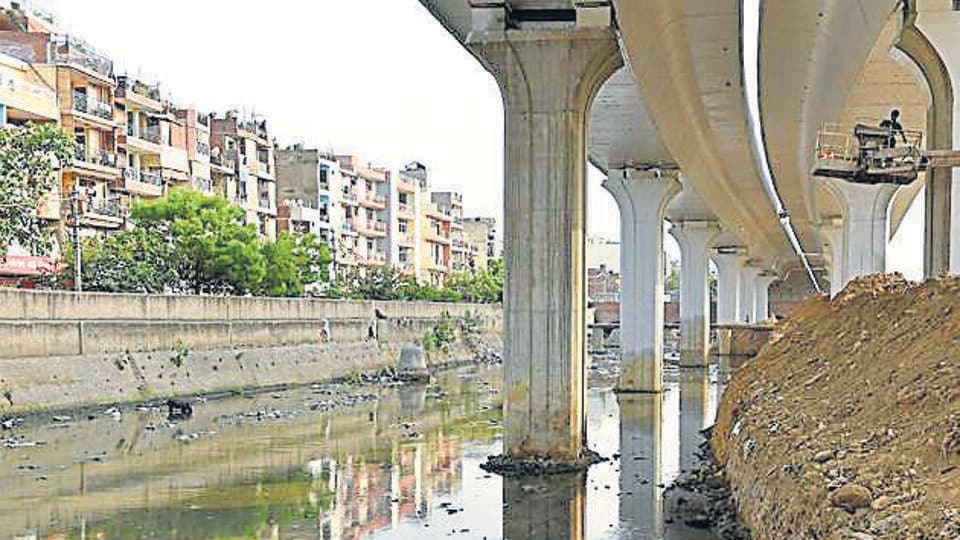
The National Green Tribunal (NGT) has formed a joint committee to look into the issues of sewage and toxic gases raised by residents in different parts of south Delhi with regard to the 6.5 km-long Kushak stormwater drain.
The tribunal, during a hearing held on Friday, asked the committee to channelise and treat the sewage in the drain and submit a compliance report within four months.
A bench of justice Adarsh Kumar Goel, while hearing a plea filed by a Greater Kailash-I resident, also ordered that the drain cannot be covered unless the issues above mentioned concerns were addressed.
“We are informed that Kushak drain is an approximately 6.5 km-long stormwater drain near South Extension, which carries stormwater and sewage from several south Delhi localities such as Mehrauli-Badarpur Road, Chirag Dilli, INA, Defence Colony and Pushp Vihar. It meets the Barapullah drain near Nizamuddin West and then flows into the Yamuna river. It is necessary that the same is kept free from sewage. Channelising or treating and using sewage scientifically as per norms is responsibility of statutory authorities like Municipal Corporation and DJB to effectuate right of citizens to clean environment,” the green bench said in its order, which was released on Saturday.
The plea alleged violation of environmental norms in maintaining the storm water drain, which passes from the back of houses in GK-I’s B block.
“Solution may not be to cover the entire drain as suggested, on the grounds that major part of the drain has already been covered. Covering of a drain can be allowed only if a proper separate pipeline to carry sewage is provided and only rainwater is carried in the Kushak drain, which is not the case here. Covering drain will result in gases getting trapped which can be hazardous,” the order adds, stating that the solution can be to prevent sewage from entering the drain, with periodic cleaning and de-silting also taking place simultaneously.
It then ordered the formation of a committee comprising officials from the Central Pollution Control Board (CPCB), Delhi Pollution Control Committee (DPCC), Delhi Jal Board and the Municipal Corporation of Delhi (MCD).
The panel has been asked to meet within two weeks to take stock of the situation and involve locals too.