E-Paper



One in four groundwater samples highly saline in Capital: CGWA report
Of 95 samples collected in the Capital, 24 samples or 25.3% had high electrical conductivity (salinity), which was the second highest in the country

 Prefer HTon Google


New Delhi
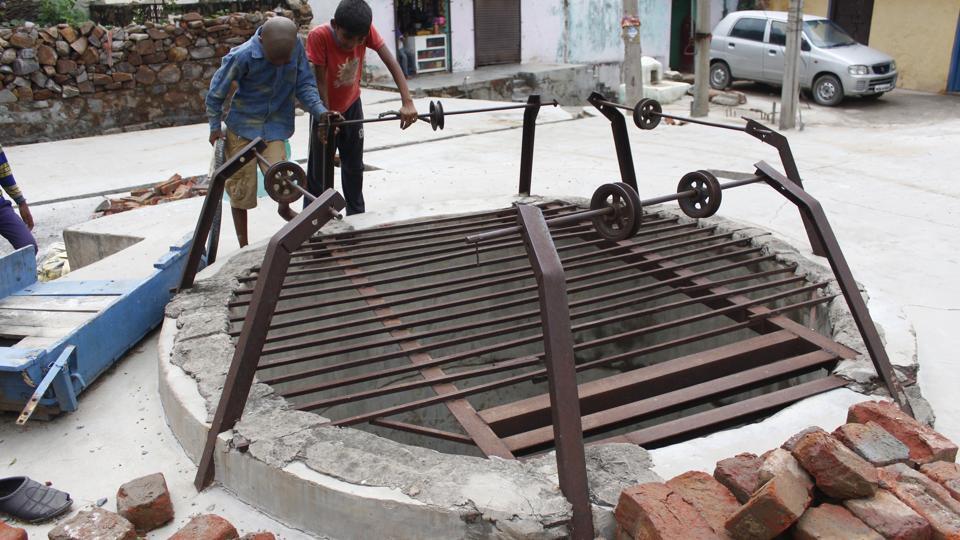
One in every four groundwater samples collected from the Capital in 2022-23 was highly saline, with an electrical conductivity of over the permissible limit of 3,000 microsecond per centimetre (µS/cm), according to a submission made by the Central Groundwater Authority (CGWA) to the National Green Tribunal (NGT) earlier this month.
Of 95 samples collected in the Capital, 24 samples or 25.3% had high electrical conductivity (salinity), which was the second highest in the country — behind only Rajasthan, where 30.5% of the total samples had high electrical conductivity (EC), the report said.
EC is a measure of how well water conducts electricity, with a higher amount of minerals leading to better conductivity. In groundwater, EC between 750µS/cm and 3,000µS/cm is classified as “permissible”, with readings over 3,000 often considered “highly saline”. In Delhi, readings went as high as 9,623µS/cm, which was recorded in Barwala, northwest Delhi, followed by 8,679µS/cm from a sample in Sandesh Vihar, located near Pitampura in northwest Delhi.
The report was filed on September 10 after NGT took cognisance of news reports from October 2023 that stated the country’s groundwater levels will hit record lows in 2025.CGWA shared groundwater data for all states and Union territories, which included data on heavy metals and other indicators where states are failing to meet standards.
“BIS (Bureau of Indian Standards) has recommended a drinking water standard for total dissolved solids a limit of 500mg/L (corresponding to EC of about 750µS/cm) that can be extended to a TDS of 2,000 mg/L (or 3,000 µS/cm) in case of no alternate source,” the report said.
Only around 6.04% (937 of 15,507) of the total samples tested across the country had high salinity, indicating Delhi was worse off the national average by over four times, the study found.
High salinity, experts said, not only makes groundwater undrinkable, but can also damage crops, rust iron quicker and unsettle the foundation of buildings over time.
“We see areas with high EC generally have a high groundwater table, as the water is rarely utilised. Such groundwater cannot be used for drinking purposes and if it is used for irrigation, the crops will not survive,” said Shashank Shekhar, professor, department of geology, Delhi University, who has carried out multiple studies on Delhi’s groundwater.
Shekhar said corrosion is the main threat in areas with high salinity. “Iron rusts several times faster with high EC. At the same time, buildings and their foundation can get damaged much quicker over time. Thus, it is important to check for EC before building in these areas,” he said.
He said high salinity in Delhi was mainly natural, barring areas near landfills, where leachate is leading to a substantial increase of nutrients in the groundwater table.
The report said New Delhi, north Delhi, northwest Delhi, southwest Delhi and west Delhi are worst affected.