
 E-Paper



Survey finds 9.1 million cubic metres of silt choking Najafgarh drain
The Najafgarh drain faces severe pollution and silt accumulation. A clean-up mission aims to restore its capacity and reduce waterlogging.

 Prefer HTon Google


Buried beneath layers of sludge and neglect, the Najafgarh drain, once the Sahibi river, has emerged as a critical fault line in Delhi’s flood control and pollution management system. A government-commissioned bathymetric survey has found that over 150 sub-drains from Delhi and Gurugram empty into the 57km channel, while nearly 9.1 million cubic metres of silt have accumulated on its bed.
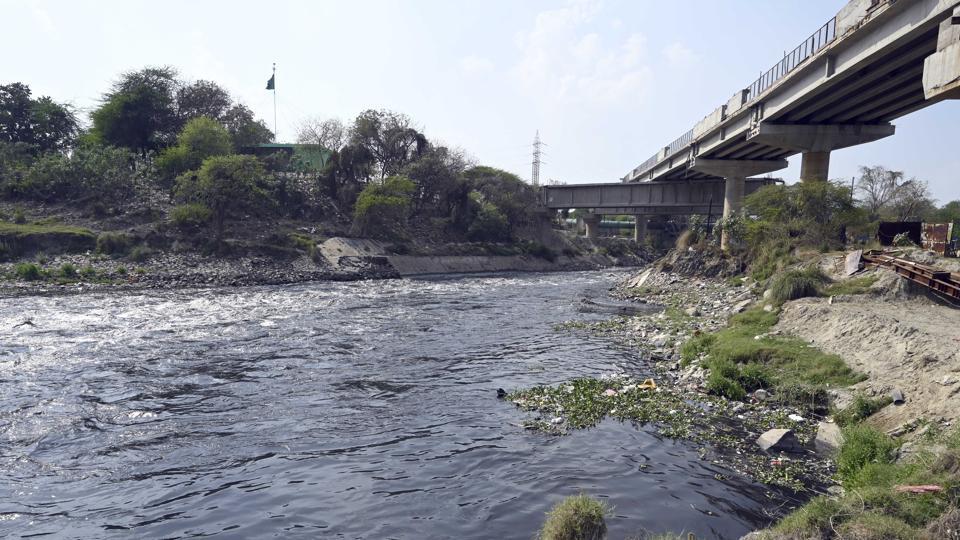

Officials say the findings have laid bare the scale of deterioration and are now guiding an ambitious clean-up under “Mission Sahibi”.
A senior official from the Irrigation and Flood Control (I&FC) department said they have begun desilting heavily clogged stretches on priority. “The objective is to ensure unobstructed flow of rainwater and reduce the risk of waterlogging. Additionally, drain banks are being upgraded and strengthened, enhancing structural stability. This campaign runs for over 13 hours daily and involves the use of amphibious excavators,” the official said.
The project is aimed at reducing waterlogging in catchment areas such as Dwarka, Matiala, Palam, Uttam Nagar, Mundka, Janakpuri and Vikaspuri.
The immediate focus is the stretch between Ambrahi Bridge and Kakrola Village Bridge. Officials said embankments are also being strengthened. The Najafgarh drain contributes nearly 70% of the wastewater entering the Yamuna in Delhi, making its restoration central to the larger river rejuvenation effort.
“Overall, the Najafgarh drain is 57.14km long and has a complex system of 150 big and small drains originating in Gurugram and Delhi. We are using 32 advanced machines for the desilting work, which will restore the original water-carrying capacity of the drain,” the official said.
Earlier interventions focused primarily on 32 major feeder drains and 74 smaller sub-drains, while the main channel continued to choke. Its reduced carrying capacity has been blamed for recurrent waterlogging in Dwarka and other parts of Delhi.
On July 11, Union home minister Amit Shah chaired a review meeting on the Yamuna and directed that drone surveys be conducted of the Najafgarh and Shahdara drains. He stressed the need to double Delhi’s sewage treatment capacity to 1,500 MGD (million gallons per day) by 2028 as part of a multipronged strategy to rejuvenate the Yamuna.
Bhim Singh Rawat, a Yamuna activist and member of the South Asia Network on Dams, Rivers and People (SANDRP), said, “Delhi’s overall sewage generation estimates are also faulty as we do not factor in the groundwater being used by people in the sewage output. This could be a massive chunk.”
He added that there is a significant contribution of sewage from Harayana via Badshahpur and drain number 8. “The Shahdara drain gets its pollution load from Uttar Pradesh. Cleaning the Yamuna will have to be a coordinated interstate effort. More importantly, the government should put the findings of the survey in the public domain to involve the community.”


Stay updated with all top Cities including, Bengaluru, Delhi, Mumbai and more across India. Stay informed on the latest happenings in World News along with Delhi Election 2025 and Delhi Election Result 2025 Live, New Delhi Election Result Live, Kalkaji Election Result Live at Hindustan Times.


