The Yamuna Cleaning Cell, a multiagency body constituted by the Delhi government to expedite Yamuna cleaning projects last year, has fixed a timeline for specific interventions to tackle water pollution in two drains -- Najafgarh and Supplementary -- that dump maximum sewage into the river.
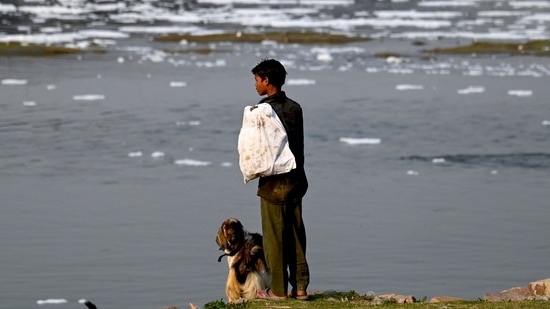
A senior official of the Delhi Jal Board, one of the agencies that are part of the cleaning cell, said the body has planned to use floating wetlands, aerators, construct temporary weirs and dredge the drain beds to ensure that majority of the pollutants are cleared before these drains discharge into Yamuna. According to official estimates, together with the Shahdara drain, the two major water bodies contribute to nearly 70% of the total sewage in the Yamuna water.
The DJB official said the cleaning cell has also fixed deadlines for interventions in the Najafgarh and Supplementary drains. Large sections of the drains are expected to have floating wetlands and aerators by March, and other interventions such as dredging in some sections will be done by June, a report by the cell said.
The floating wetland technology uses hormone-treated plants, such as Cyprus and Canna, to soak up pollutants. Each floating rafter is made up of square sections made of PVC pipes which keep the frame floating. It is lined with geo-net which supports the plants. A blend of different plants is used on each float to increase the nutrient uptake.
{{/usCountry}}The floating wetland technology uses hormone-treated plants, such as Cyprus and Canna, to soak up pollutants. Each floating rafter is made up of square sections made of PVC pipes which keep the frame floating. It is lined with geo-net which supports the plants. A blend of different plants is used on each float to increase the nutrient uptake.
{{/usCountry}}“The interventions are being done by the Irrigation and Flood Control department and DJB. Desilting of drains up to desired bed level will be carried out to remove accumulated silt, and temporary weirs consisting of sand bags are being constructed along the drains to create ponds for installation of aerators and other measures. Permanent check dams are also being set up so that floating aerators and wetland-based treatment technology can be utilised,” the DJB official said.
Irrigation and flood control department has also hired a consultant for the stretch of Najafgarh drain from Chhawla in southwest Delhi to west Delhi’s Basai Darapur.
Delhi government decided to constitute a Yamuna Cleaning Cell (YCC) in November last year. It is headed by DJB CEO.
According to the last report of YCC, five weirs have already been constructed on Supplementary drain between Rithala and Wazirabad. Of these two were damaged due to record rainfall in January. “This stretch will have floating wetlands for which technical advice is being taken from Jamia Millia Islamia. Similarly, DJB will finalise a tender to install aerators by February-end. The deadline for both interventions has been fixed as March 31,” the DJB official added.
Jyoti Sharma, head of FORCE- a Delhi based a water conservation and sanitation organisation, said, “We need to make the people living near the drains...stakeholders. People should be empowered and they should able to raise red-flags when the drains carry industrial waste.”
Stay updated with all top Cities including, Bengaluru, Delhi, Mumbai and more across India. Stay informed on the latest happenings in World News along with Delhi Election 2025 and Delhi Election Result 2025 Live, New Delhi Election Result Live, Kalkaji Election Result Live at Hindustan Times.
Stay updated with all top Cities including, Bengaluru, Delhi, Mumbai and more across India. Stay informed on the latest happenings in World News along with Delhi Election 2025 and Delhi Election Result 2025 Live, New Delhi Election Result Live, Kalkaji Election Result Live at Hindustan Times.