Appa Jadhav, a farmer of Rakshasbhuvan, Beed district, has faced the worst that the weather can bring to any farmer. That it is Diwali, only shines the light brighter on dark times for the district of Beed.
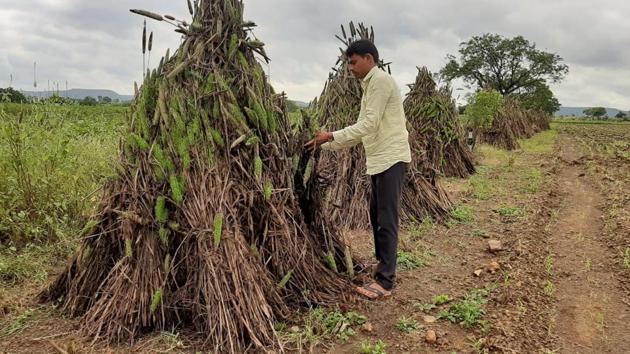
Till the end of September, Beed recorded a 44 per cent rainfall deficit, putting it in the drought zone. Farmers like Jadhav had lost their kharif crop and were sowing for the rabi harvest.
Between October 1 and October 23, Beed has recorded a 150 per cent rain surplus, as compared to its yearly average for the same period.
The India Meteorological Department (IMD) readings show that the district recorded 604.1 mm of rainfall by October 27, as against an overall average for the year of 666.36 mm.
Today, Jadhav’s soybean crop stands in two-feet of water. He sowed soybean on two acres and bajra on three acres; all completely destroyed due to non-stop rains since October 1.
Cotton, soybean, jowar and bajra crops, the main produce in this region, have all been destroyed.
“We have reported damaged crops in many parts of the district as a result of the current heavy rain and thunderstorm activity. The initial panchanama (assessment) orders have issued at the village level,” said RS Nikam, superintending agriculture officer, Beed district.
{{/usCountry}}“We have reported damaged crops in many parts of the district as a result of the current heavy rain and thunderstorm activity. The initial panchanama (assessment) orders have issued at the village level,” said RS Nikam, superintending agriculture officer, Beed district.
{{/usCountry}}“It is difficult to say what the exact loss will be at this stage. We have to wait for the panchanama,” said Nikam.
“Earlier in the kharif season, we were praying for rain, but now we are praying for the rain to stop to save our early Rabi crops,’’ said Appa Jadhav.
Shankar Patodkar, Beed farmer, planted cotton on five acres. He had borrowed money from the bank to enable the plantation of his kharif crop.
“That was destroyed by lack of rain, now my cotton crop has been ruined by unseasonal non-stop rain. I am worried about repayment of my loans,” says Patodkar
For farmers of Beed, as the Diwali festival winds down there is a chill in the air. Rain is now the biggest enemy.
How delayed rains destroyed Beed’s cotton crop
September end to mid-October: what is needed
- Cotton passes through bud initiation and flowering
- Requires bright sunlight for development
- Heavy rainfall and cloudy weather has destroyed the crop
Shankar Patodkar, Beed farmer, planted cotton on five acres: “The entire cotton crop has been damaged by this heavy rain. Most of the cotton turned blackish and reddish. How can we sell such bad quality cotton?”