
 E-Paper



Gambusia fish to help Mohali health department combat mosquitoes this year
Nearly 86 water bodies in villages and towns have been earmarked as ‘hotspots’ wherein these fish will be released

 Prefer HTon Google


In an effort to tackle vector-borne diseases during monsoon, the district health department has released Gambusia fish, which feed on larvae of mosquitoes, into various water bodies in Mohali.
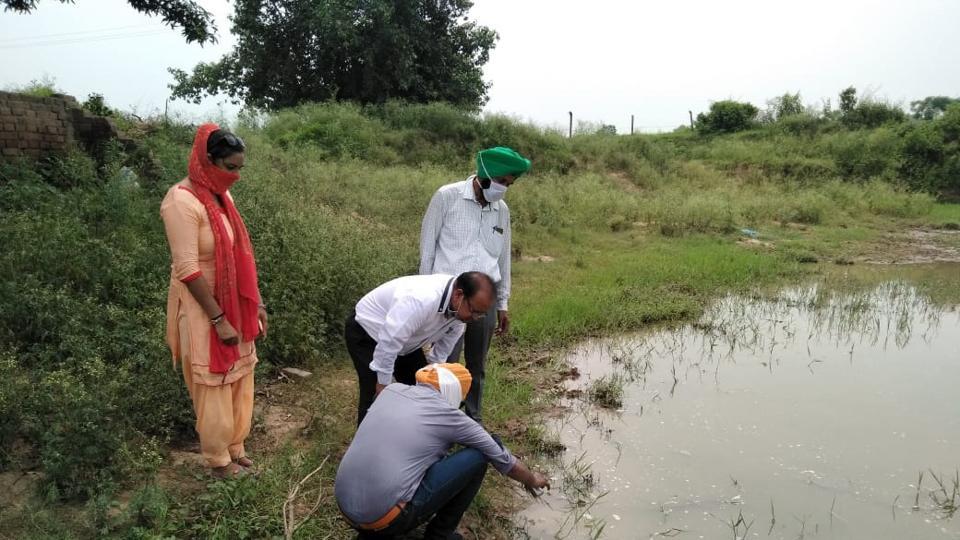
Senior medical officer of Boothgarh in Majri area, Dr Dilbagh Singh said, “We have released Gambusia fish into 18 water bodies in villages of Boothgarh block as killing mosquito larvae through Gambusia is an eco-friendly way of dealing with mosquito breeding. The Gambusia fish will be released in other water bodies by next week.”
Dr Dilbagh said, “These biocontrol measures are a lot easier to introduce in villages. Mohali health department started breeding Gambusia fish, which is said to be effective in checking mosquito breeding. The species, which predominantly feeds on the larvae is also called ‘mosquito fish’ and is being used as a biological control measure.”
He said that nearly 86 water bodies in villages and towns have been earmarked as ‘hotspots’ wherein these fish will be released in open wells and water bodies. “An adult Gambusia fish can consume nearly 150 larvae a day,” he added.
The problem of mosquitoes breeding in clear water, especially Aedes aegypti mosquitoes which carry the dengue virus can be controlled through them. While the fish are bred at the office, they are fed rice husks and groundnut oil cakes said health inspector Gurtej Singh.
He said that an adult mosquitofish can eat up to 150 mosquito larvae in an 8-hour period. This makes them an excellent biological tool for mosquito control because the fish consume the larvae before they have a chance to develop into adult mosquitoes. He further appealed to the public to approach the fish seed farm for collecting mosquito fish for releasing at stagnant water points to check and control mosquito breeding.
The department gets Gambusia fish from Gharuan, where people have fish farms.


